























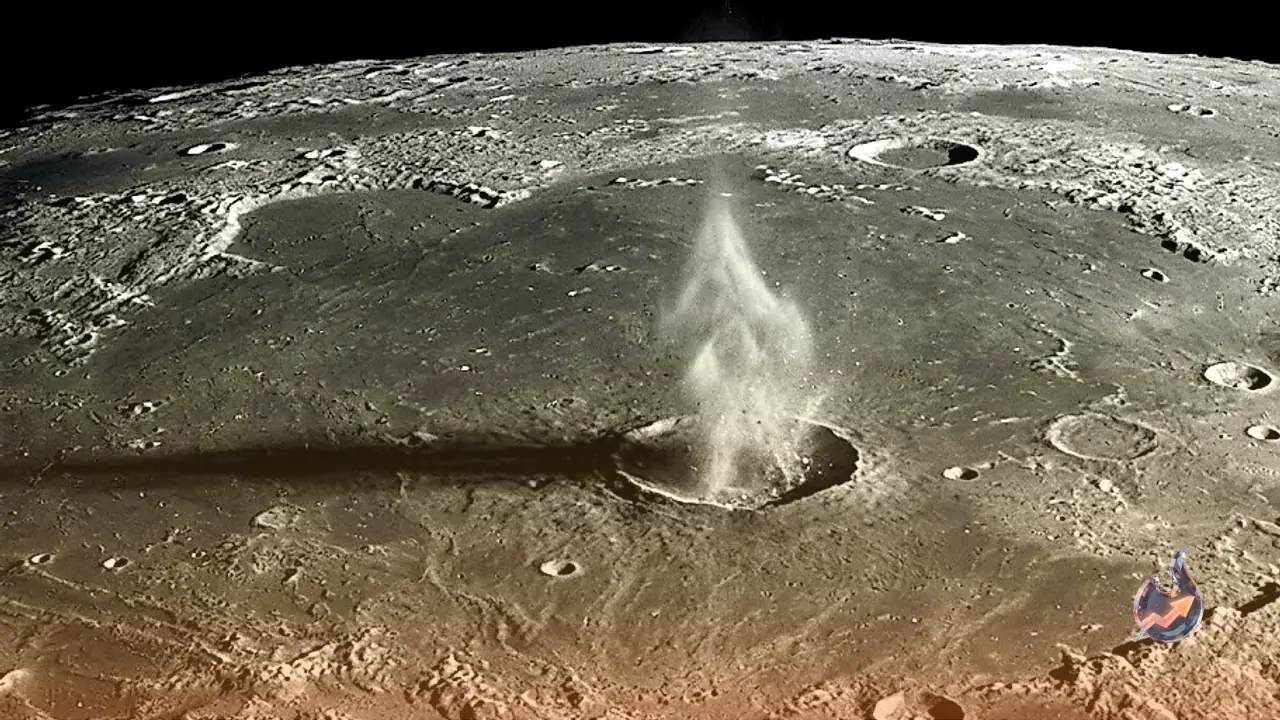

A discarded upper stage of a SpaceX Falcon 9 rocket that had been floating uncontrolled in deep space for over a year finally collided with the lunar surface early Wednesday morning. Weighing approximately 4,000 kilograms, the spent booster struck the Moon at a dizzying velocity of 8,690 km/h. Traveling at more than seven times the speed of sound, the high-energy collision hurled a substantial plume of lunar dust and gas high above the surface, which was tracked by powerful astronomical instruments on Earth.
How the Rocket Reached the Lunar Surface
The lunar impact was not part of any planned maneuver by SpaceX. In January 2025, the Falcon 9 launch vehicle successfully deployed Firefly Aerospace's lunar lander toward its deep-space destination. Having fulfilled its primary task, the rocket's second stage was left adrift in orbit. Over the following months, subtle gravitational forces gradually altered the booster's path, setting it on a course that scientists had previously calculated would terminate on the Moon. Astronomers around the globe had been monitoring its trajectory in anticipation of the crash.
High-Speed Impact and Plume Characteristics
Upon striking the Moon, the 4,000 kg metallic structure released energy equivalent to detonating roughly three tons of TNT. The rocket disintegrated into tiny fragments upon impact. The event occurred near the Moon's terminator line, the distinct boundary separating lunar daylight from darkness. This specific location allowed the ejecta cloud of displaced soil and vapor to catch sunlight and gleam against the dark backdrop of space. Despite the tremendous kinetic force, the resulting crater remains relatively small and cannot be resolved from Earth with the naked eye.
Telescopic Observations and Spectroscopic Findings
While no spacecraft currently orbiting the Moon were positioned to capture close-up images of the collision, ground-based observatories captured vital data. The Very Large Telescope at the Paranal Observatory in Chile, operated by the European Southern Observatory, recorded the expanding impact plume. Scientists observed the glowing cloud of dust and gas for about 5 to 10 minutes following the impact. Spectroscopic analysis confirmed the presence of sodium and lithium gas signatures within the plume, offering researchers valuable insights into the vaporized materials from both the rocket hardware and the lunar regolith.
SpaceX Confirmation and Deep Space Debris
SpaceX confirmed that the booster had simply remained in space post-mission, undergoing natural orbital decay until it crashed near Einstein Crater on the western limb of the Moon. This crash adds another piece of human hardware to the historical inventory of space junk and derelict spacecraft that have impacted the lunar surface over recent decades, highlighting the ongoing conversation regarding space debris management beyond Earth orbit.