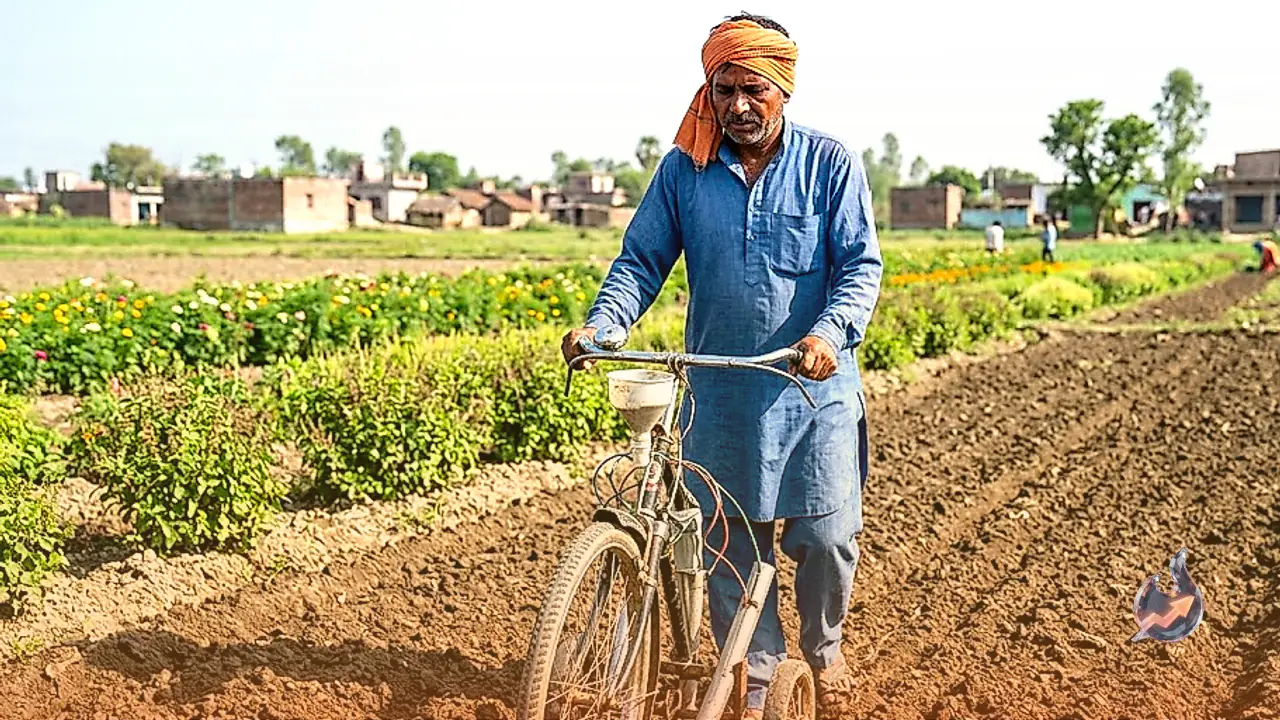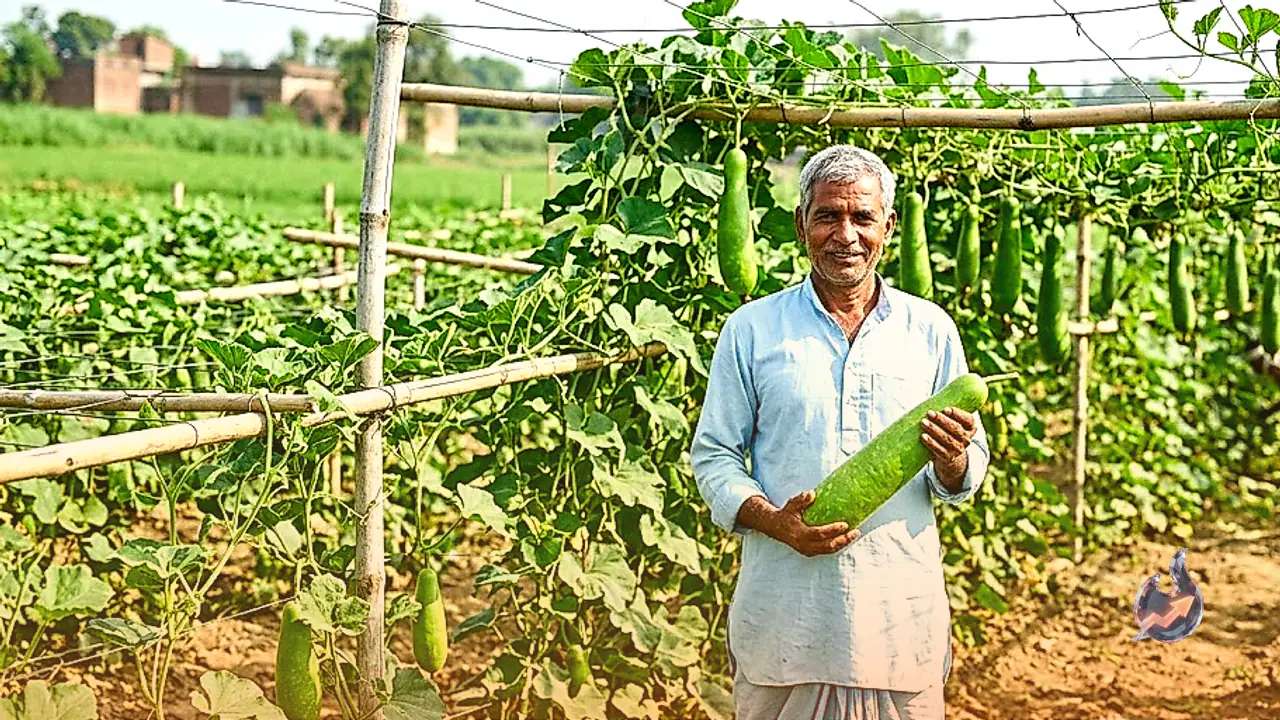























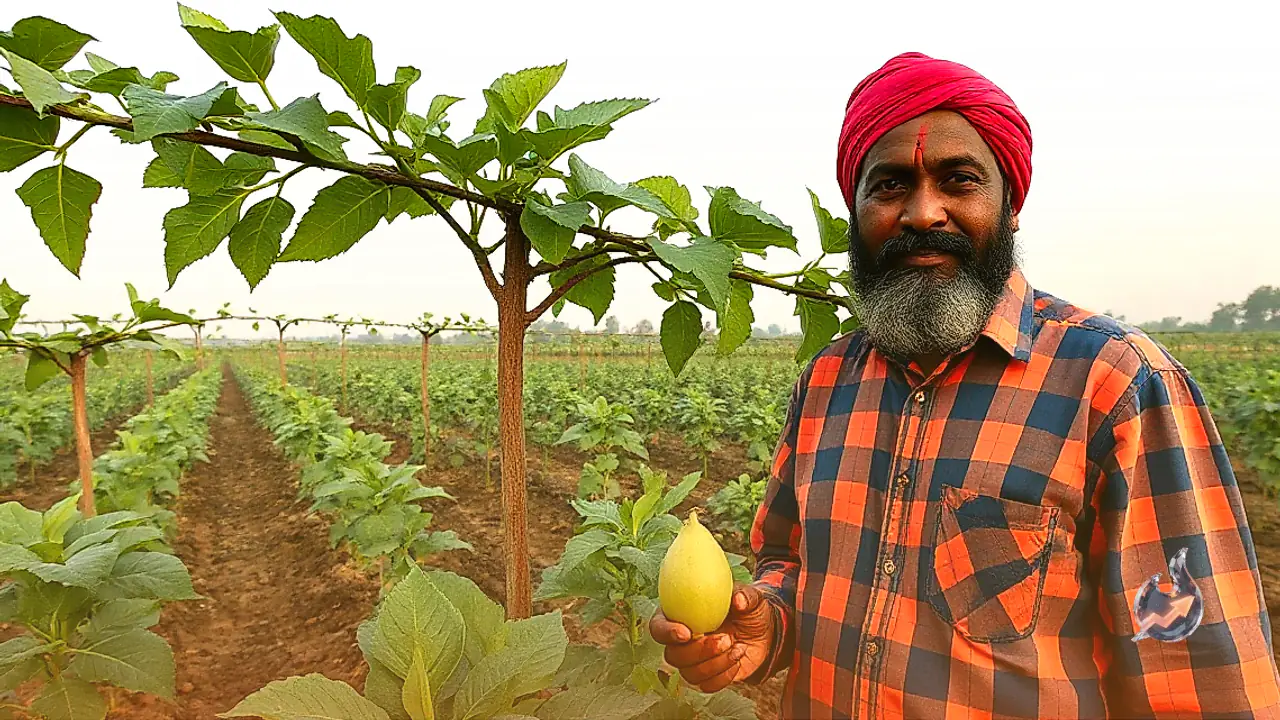

In an era where escalating input costs and unpredictable weather patterns challenge conventional agriculture, innovative farming practices are opening new avenues for revenue generation. At the Itiyathok development block in Gonda district, Uttar Pradesh, progressive farmer Nankau Goswami has demonstrated a practical approach to land utilization by integrating short-term vegetable cultivation with long-term timber production. Rather than restricting his land to a single traditional crop, Goswami has planted bitter gourd across his two-bigha plot while simultaneously establishing Eucalyptus saplings along the borders and vacant sections of his farmland.
The Trellis System and Financial Dynamics of Bitter Gourd Cultivation
To maximize yields from bitter gourd within a constrained space, Nankau Goswami implemented a structured machan, or trellis system, using poles and wires. Traditional bitter gourd farming allows vines to spread across the soil, which not only consumes substantial ground area but also increases the risk of crop damage and disease. The elevated trellis allows the vines to climb vertically, ensuring optimal exposure to sunlight and airflow. This space-saving technique enables efficient land management while keeping the underlying ground accessible for other agricultural activities.
The financial figures highlight the efficiency of this short-term venture. Working on approximately two bighas of land, Goswami invested between 40,000 and 50,000 rupees in total setup and operational costs. Bitter gourd matures rapidly, providing a continuous harvest over an extended period once picking commences. Based on current market dynamics, Goswami anticipates generating a total revenue ranging between 1 lakh and 1.5 lakh rupees within a timeframe of 2 to 3 months. This regular yield provides an immediate cash flow to meet routine operational expenses.
Building Long-Term Capital with Eucalyptus Plantations
While the bitter gourd crop secures short-term liquid income, the strategic plantation of Eucalyptus caters to future financial stability. Goswami utilized previously idle boundary space and empty pockets around the field to plant Eucalyptus saplings. Although these trees do not yield immediate financial returns, they mature over several years into high-value timber assets. When harvested, the fully grown trees can command substantial market prices, delivering a lucrative lump-sum payout. This dual approach essentially pairs regular cash flow with a long-term capital asset on the exact same parcel of land.
Key Takeaways and Precautions for Farming Communities
The multi-cropping initiative in Gonda serves as a viable blueprint for small and marginal farmers seeking to enhance land productivity. Goswami believes that with strategic planning, appropriate crop spacing, and resourceful management, agricultural incomes can be significantly multiplied. However, he cautions that adopting tree-based intercropping requires careful evaluation. Farmers considering Eucalyptus saplings must assess soil health, ensure adequate plant spacing, verify water availability, and seek guidance from local agricultural experts to prevent root competition or soil degradation.