


















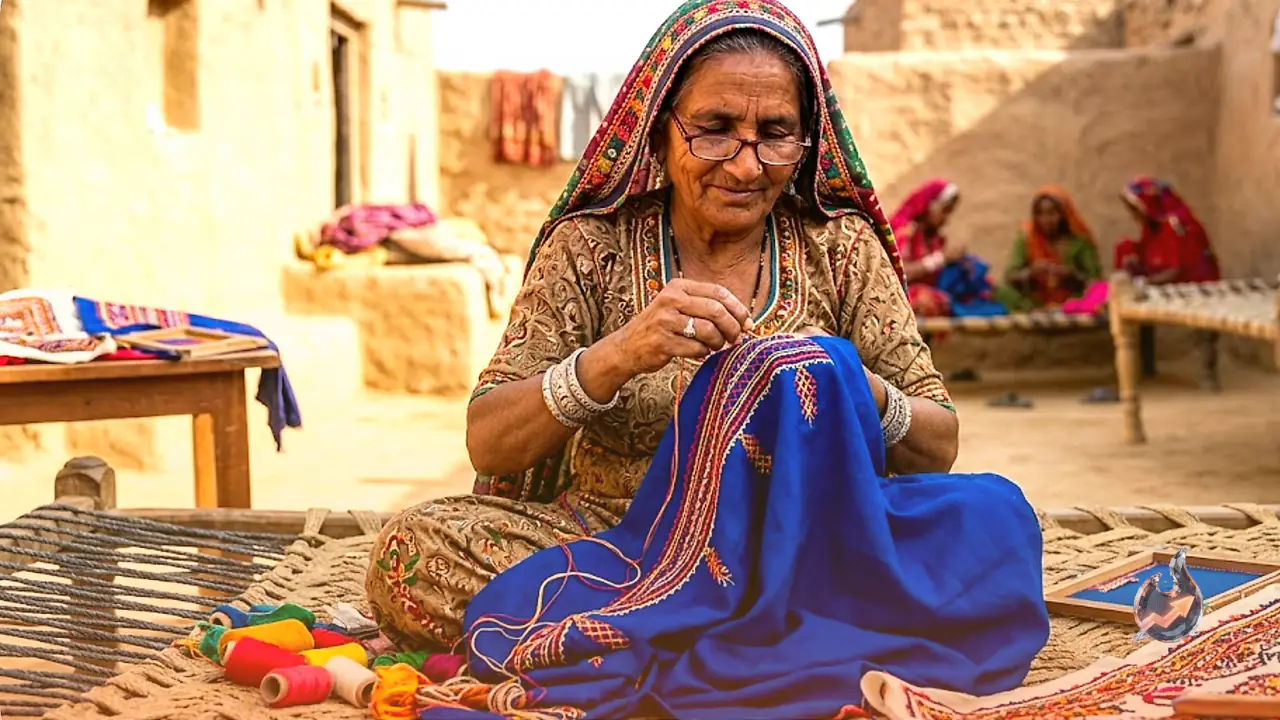

The desert region of Barmer, situated right on the border between India and Pakistan, was once recognized mainly for its geopolitical and strategic significance. However, this dusty outpost has undergone a massive transformation in recent years, emerging as a thriving global center for exquisite hand-embroidered textiles. While geographical borders shifted and families were forced to relocate, the creative heritage of these communities remained entirely untouched by the trauma of migration. Hundreds of Hindu families who crossed over from Pakistan to settle in India have transformed their traditional craft into a powerful tool for survival, self-expression, and financial independence, proving that art knows no physical boundaries.
These displaced families continue to weave a magical world of patterns using nothing but simple needles and threads to perform the traditional 'Soof' embroidery. What began as a desperate means of earning a basic livelihood after suffering the devastating pain of partition and displacement has now blossomed into a proud and distinct identity for these families. The hard work, dedication, and meticulous attention to detail embedded in their products have enabled these crafts to transcend regional boundaries, finding a highly appreciative audience in overseas markets where sustainable fashion and authentic home decor are in immense demand.
The Magic of Thread, Mirror, and Precision
At the heart of this cultural revival is the Soof embroidery, a painstaking and highly intricate form of needlework that requires immense patience and skill. Working without any assistance from modern machinery, these artisan women use colorful threads, tiny glistening mirrors, and complex geometric patterns to breathe life into plain fabrics. Every single piece is a testament to the artisan's undivided attention, patience, and unmatched hand-skills. This completely manual process ensures that every item remains unique, retaining a human touch that machines can never replicate.
With the active support of the SURE organization, these women are not only securing a steady livelihood but are also passing this invaluable ancestral heritage down to the younger generation of daughters in their families. Their product range is incredibly diverse, featuring beautifully crafted bags, ornamental wall hangings, cushion covers, ethnic garments, bedsheets, and a variety of home decor accessories that instantly captivate buyers with their unique aesthetic appeal. The zero-machine policy is the primary USP of these goods, making them highly attractive to modern conscious consumers.
From Remote Hamlets to Elite Western Showrooms
The turning point for these rural artisans came when they were introduced to modern design preferences and market dynamics through specialized training programs. Under the guidance of Lata Kachhwaha, the president of the SURE organization, these artisans learned to align their traditional techniques with contemporary global tastes. This strategic intervention opened up massive opportunities that were previously beyond their reach. Today, these handcrafted products are highly sought after not just at local Rajasthani exhibitions and craft fairs, but also in major Indian metros like Delhi, Mumbai, Ahmedabad, and Bengaluru.
Beyond national borders, international tourists and major export houses have also fallen in love with the sheer precision of Soof embroidery. Consequently, premium merchandise created in these border villages is now being shipped directly to luxury showrooms across the United States, the United Kingdom, Germany, and several other European nations. This direct export pipeline has bypassed middle-men, giving these refugee women a prestigious global platform and the international recognition they richly deserve.
A Chorus of Self-Reliance in Border Villages
Walk into the remote border villages of Barmer, and you will find a common thread of resilience binding the community together. In settlements such as Dhanau, Chohtan, Ramsar, Gadra Road, Bhojariya, Bawri, Bakhasar, Sedwa, and Alamsar, almost every second household has women diligently engaged in this intricate needlework. The sound of needles piercing cloth echoes through these tiny hamlets, signaling a quiet economic revolution.
For these families, who were forced to leave behind their ancestral homes, agricultural lands, and entire properties during their displacement, this craft has been nothing short of a lifesaver. Instead of relying on charity or struggling to find manual labor, these proud families are using their generational talents to build respectable lives. The hum of collective labor in these tiny hamlets stands as a powerful testament to human resilience, demonstrating how a traditional art form can rebuild lives shattered by historical borders, restoring dignity and economic power to those who had lost everything.