





















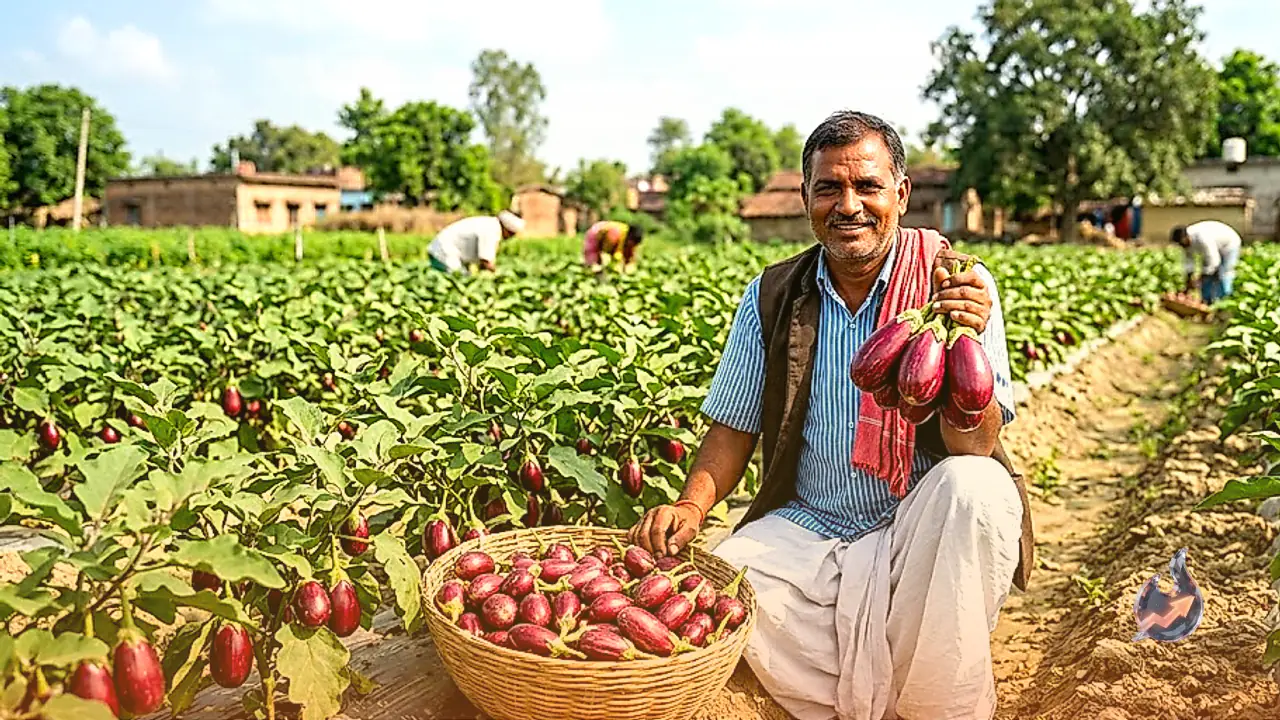

Adopting modern techniques and meticulous management on a small plot of land can generate exceptional agricultural yields. A progressive farmer from Darbhanga district in Bihar has demonstrated this by turning a modest 10 kattha plot into a highly productive eggplant farm. By focusing on systematic cultivation methods, his field now delivers up to 300 kilograms of brinjal during every harvesting cycle, setting a benchmark for smallholder farmers across the Mithilanchal region.
High-Yield Red Brinjal Variety and Early Production Math
The farmer, Vakil Yadav, selected an advanced red brinjal variety for his 10 kattha field. This specific crop strain showed rapid growth and strong fruiting capacity shortly after planting. According to Vakil Yadav, each individual plant comfortably yields between 2 and 4 kilograms of eggplants during the initial stages of harvesting.
Consistent crop management has kept the production high throughout the cycle. In a recent harvest completed just two days ago, the plot produced exactly 300 kilograms of fresh eggplant. Achieving such high output from a limited land area highlights how modern farming strategies can dramatically increase productivity.
Soil Preparation and Precision Fertilizer Application
The primary secret behind this bumper harvest lies in thorough soil preparation and timed nutrient application. Vakil Yadav began by deep plowing the land with a tractor to create loose, friable, and level soil. This fine tilth enabled the roots of the eggplant seedlings to penetrate deeply and absorb nutrients efficiently.
Following land preparation, organized raised beds were constructed across the plot. Fertilizer management was equally precise, using Di-ammonium Phosphate (DAP) at a rate of 1 kilogram per kattha. The DAP was applied in two distinct phases: the first application occurred right before transplanting the saplings, and the second was given shortly after transplanting to sustain early growth.
Raised Bed Planting and Timely Field Management
Rather than planting on flat ground, Vakil Yadav opted for raised bed ridges. This structural arrangement provided effective drainage, preventing waterlogging around the root zone, while making manual weeding far more accessible. Removing weeds efficiently ensured that the crops received maximum nutrients without competing with unwanted plants.
Weather conditions also worked in favor of the crop, as timely rainfall reduced the need for artificial irrigation and cut down overall operational costs. Emphasizing the core philosophy behind his success, Vakil Yadav noted, "There is no magic needed in farming; timely hard work and the right technique are the keys to a good yield."