



















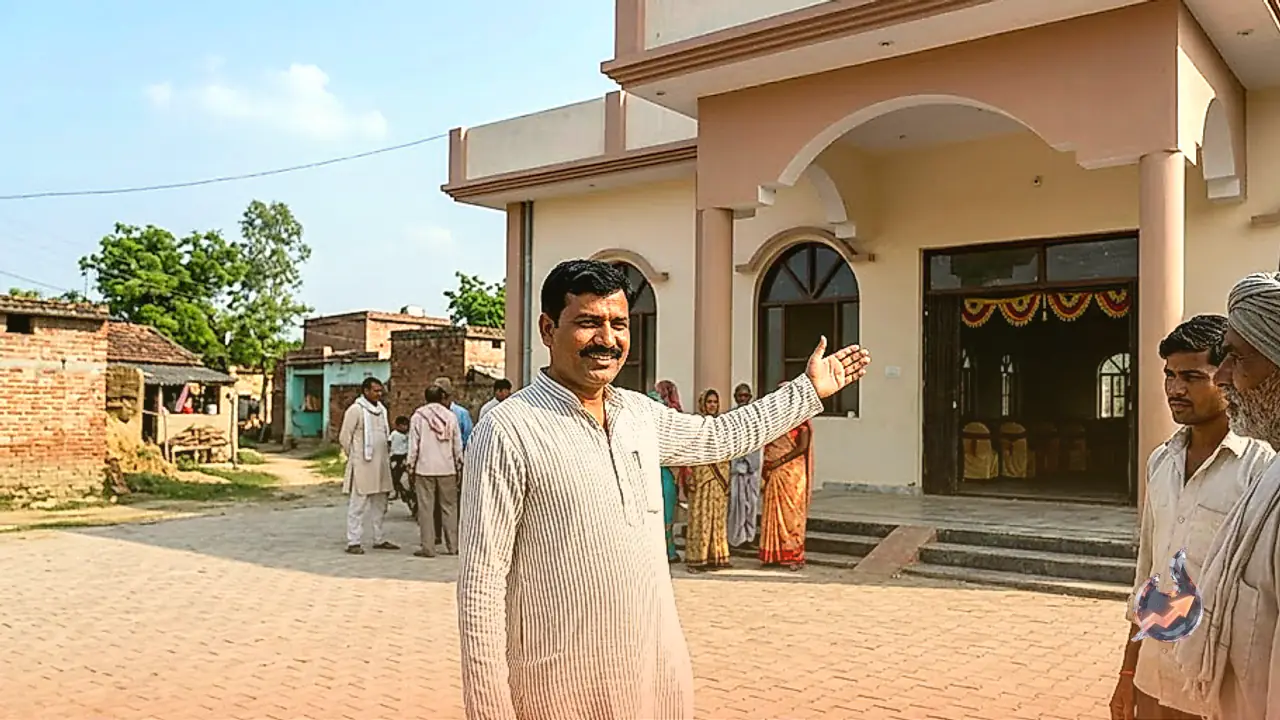

Ahirauli alias Bajaha village, situated in the Nichlaul development block of Maharajganj district in Uttar Pradesh, has set an inspiring benchmark for rural development. Village head Arvind Kushwaha has utilized a government cash award to construct a fully equipped, modern marriage hall dedicated to local residents. In rural areas, finding adequate space and essential infrastructure for wedding ceremonies and community functions has long been a persistent struggle. As booking commercial venues in nearby towns costs middle-class families tens of thousands or even lakhs of rupees, this new community hall offers city-grade facilities right inside the village without any financial burden on the residents.
Relieving Financial Strain on Rural Families
Organizing wedding rituals, engagement ceremonies, and major social gatherings requires large, structured venues. However, open spaces are increasingly shrinking in both urban and rural settlements. Previously, villagers from Ahirauli Bajaha were forced to travel to neighboring towns to reserve banquet halls, incurring exorbitant rental charges. This expenditure placed a heavy financial strain on lower- and middle-income households. Recognizing this pressing challenge, village head Arvind Kushwaha conceptualized a dedicated public marriage hall within the village limits. This proactive initiative has drawn widespread praise across the entire Maharajganj district, turning the village into a subject of discussion.
City-Standard Amenities and Modern Infrastructure
The newly constructed marriage hall in Ahirauli Bajaha matches the facilities offered by commercial banquet halls in nearby urban hubs. The venue design prioritizes practical utility and guest comfort for large gatherings. An elevated stage has been crafted for conducting marriage rituals and ceremonies smoothly. Directly facing the stage is a spacious central courtyard capable of accommodating hundreds of chairs for seated guests. Furthermore, private rooms have been built on both sides of the hall to accommodate the bride and groom's families and store event supplies. The facility also features separate, well-maintained restroom amenities for men and women.
Dedicated Catering and Cooking Facilities
Food management forms a critical component of any Indian wedding or public event, and the facility design reflects careful planning for dining operations. The marriage hall complex features a large, dedicated catering area where guests can dine comfortably. Adjacent to the dining space is an expansive, clean kitchen zone tailored for large-scale food preparation by caterers and cooks. Beyond the built structures, the overall premises offer ample open ground, allowing hundreds of visitors to move freely and park vehicles without overcrowding. This comprehensive layout provides immense relief to local families seeking a hassle-free event venue.
From Government Recognition to Infrastructure Building
This marriage hall project is not an isolated achievement for village head Arvind Kushwaha, who has a proven record of progressive development works in the Gram Panchayat. Earlier, he spearheaded the construction of a model Amrit Sarovar pond in the village. Impressed by its aesthetic appeal and construction quality, the Ministry of Panchayati Raj, Government of India, showcased photos of the pond on its official social media platforms. Additionally, the village Anganwadi center was transformed into a child-friendly learning center equipped with modern educational tools, which also earned formal appreciation from the central ministry.
Emergence as a Model Smart Village
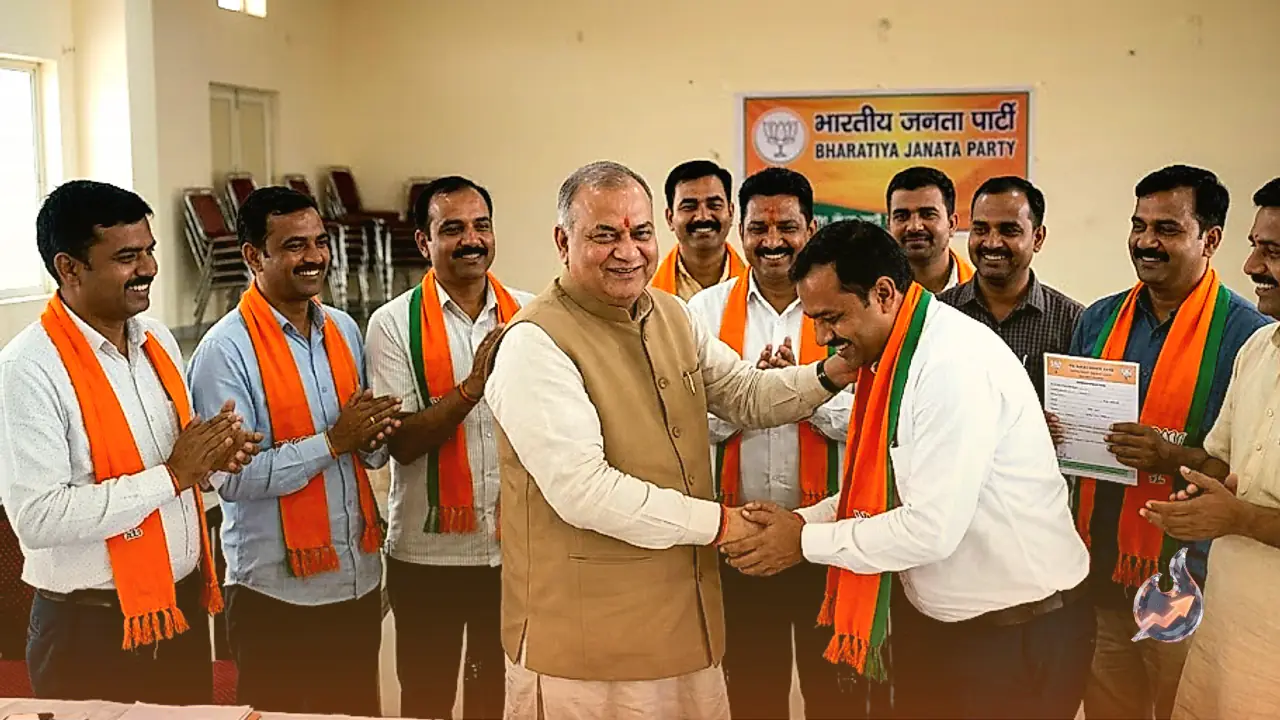
In recognition of these exemplary development initiatives, the government honored Gram Pradhan Arvind Kushwaha with a cash prize of 35 lakh rupees. Rather than diverting the funds elsewhere, Kushwaha reinvested the entire 35 lakh rupees into constructing the public marriage hall to solve a long-standing community problem. Today, Ahirauli Bajaha stands out as a model smart village in the Nichlaul block and the wider Maharajganj district. Local residents express deep appreciation for the village head's vision, noting that the initiative has eliminated heavy wedding expenses while establishing their village as a beacon of rural self-reliance.