























TrendKia
AllLiveNational
World
All World
PakistanChinaAmericaEuropeAsia
Politics
Uttar Pradesh
Uttar Pradesh
Uttar PradeshBiharMadhya PradeshRajasthanDelhiMaharashtraGujaratPunjabHaryanaWest BengalTamil NaduKeralaKarnatakaTelanganaAndhra PradeshJharkhandChhattisgarhOdishaAssamUttarakhandHimachal PradeshJammu & KashmirGoaChandigarhPuducherry
Travel
Travel
Business
MarketMoneyAutoBenefitsSuccess StoriesCryptoAI
Sports
CricketTennisFootball
EntertainmentMovies, TV & celebrities
BollywoodOTTBhojpuriMovie ReviewsTVHollywood
TechnologyGadgets, apps & innovation
AccessoriesLaunch & ReviewDIY
HealthHealth, fitness & wellness
LifestyleFashion, relationships & lifestyle
Fashion & BeautyCultureRelationshipsTrendsParenting
FoodRecipes, food & restaurants
ReligionFaith, belief & spirituality
FestivalsVastuSpirituality
Astrology
AriesTaurusGeminiCancerLeoVirgoLibraScorpioSagittariusCapricornAquariusPisces
TravelDestinations & travel guides
Travel Tips
EducationJobs, exams & results
VacanciesAdmissionExamResultsCareer
Live
National
World
Pakistan China America Europe Asia
Politics
Business
Market Money Auto Benefits Success Stories Crypto AI
Sports
Cricket Tennis Football
Entertainment
Bollywood OTT Bhojpuri Movie Reviews TV Hollywood
Technology
Accessories Launch & Review DIY
Health
Lifestyle
Fashion & Beauty Culture Relationships Trends Parenting
Food
Religion
Festivals Vastu Spirituality
Astrology
Aries Taurus Gemini Cancer Leo Virgo Libra Scorpio Sagittarius Capricorn Aquarius Pisces
Travel
Travel Tips
Education
Vacancies Admission Exam Results Career
Uttar Pradesh Bihar Madhya Pradesh Rajasthan Delhi Maharashtra Gujarat Punjab Haryana West Bengal Tamil Nadu Kerala Karnataka Telangana Andhra Pradesh Jharkhand Chhattisgarh Odisha Assam Uttarakhand Himachal Pradesh Jammu & Kashmir Goa Chandigarh Puducherry
About Contact Privacy Cookies Terms Advertise
TrendKia logo Hindi • English News Platform

TrendKia

Fast • Fresh • Always Trending

TrendKia is a free bilingual Hindi–English news platform — trending stories from India and around the world. Sign in with Google to comment and follow topics.

About Us
TrendKia news app preview
TrendKia
AboutContactPrivacyCookiesTermsAdvertise
A Quieter Era of Ultra-Fast Travel Approaches as United States Moves to Re-Allow Overland Supersonic FlightsTechnology
2 hours ago· 2

A Quieter Era of Ultra-Fast Travel Approaches as United States Moves to Re-Allow Overland Supersonic Flights

The US aviation authorities are working to overhaul a 53-year-old overland speed restriction in favor of new noise-based standards, paving the way for next-generation supersonic jets.

Rohan GuptaRohan GuptaTechnology Correspondent 6 min read For AI
Share

The skies over the United States may soon witness a dramatic transformation as federal authorities initiate steps to dismantle a 53-year-old regulatory barrier. This historic policy change aims to lift the strict ban on commercial aircraft flying faster than the speed of sound over land. By shifting from an outright speed-based prohibition to a noise-based performance standard, the US Department of Transportation is setting the stage for a new generation of civil aviation. This move is anticipated to fundamentally reshape how people travel across the continent and beyond, marking a major milestone in global aerospace technology.

The Basics of Supersonic Speed and Existing US Restraints

To appreciate this transition, one must understand what supersonic travel entails. A flight is classified as supersonic when the aircraft travels faster than the speed of sound, a threshold commonly referred to as Mach 1. The speed of sound is not static but is generally measured at approximately 767 miles per hour, which equates to about 1235 kilometers per hour. Any vehicle exceeding this velocity enters the supersonic regime, where aerodynamics change significantly and physical forces create intense pressure waves. Under the current regulatory framework in the United States, civil aircraft are strictly prohibited from achieving these speeds while flying over land. If an aerospace operator wishes to conduct a supersonic flight within the country, they must secure a highly specific and rare authorization from the FAA. Historically, the FAA has granted these waivers under exceptionally tight constraints, limiting them almost exclusively to research initiatives, academic testing, and flights over designated, unpopulated military or test corridors.

Transitioning to Noise-Based Aviation Standards

The proposed policy overhaul put forward by the US Department of Transportation and the FAA seeks to replace the rigid 1973 blanket ban with a modern framework based on permissible noise limits. Instead of outright prohibiting any flight that crosses the sound barrier, the federal government wants to allow overland supersonic flights as long as the noise footprint of the aircraft remains below a strictly defined threshold. This means that if an aircraft manufacturer can design a jet that travels faster than sound but does so without creating disruptive levels of noise on the ground, that plane will be legally permitted to fly over populated mainland areas. To support this transition, the FAA plans to introduce a distinct set of noise regulations specifically targeting takeoff and landing operations by the end of this calendar year. The government intends to fully finalize both sets of rules by the middle of 2027, paving a clear regulatory runway for manufacturers to begin commercializing their designs.

NASA's Quiet Experimental Aircraft X-59 Sparks Change

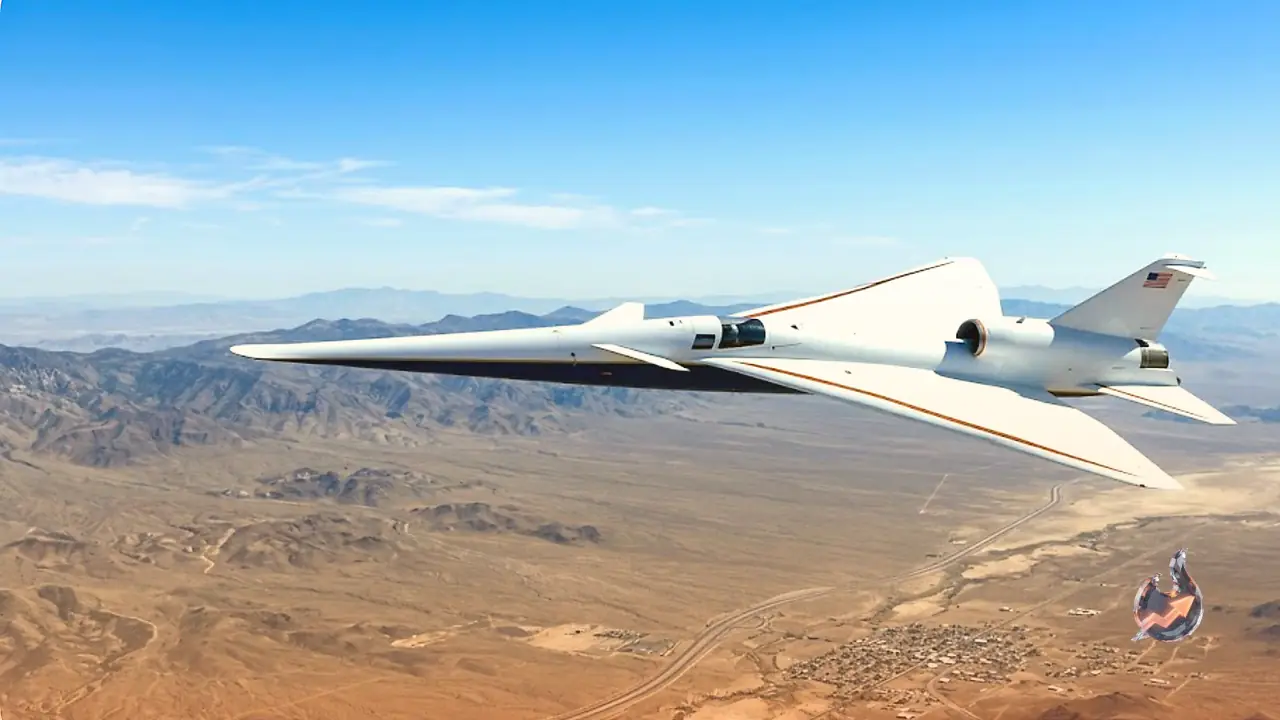
The primary catalyst for this sudden regulatory evolution is an experimental aircraft developed by NASA, designated as the X-59. On June 5, this highly advanced prototype completed a crucial test flight, ascending to an altitude of 43400 feet and reaching a speed of 713 miles per hour, which translates to 1148 kilometers per hour. What makes the X-59 revolutionary is its unique aerodynamic geometry, which prevents the shockwaves from merging into a loud, window-shaking sonic boom. Instead of the thunderous explosion typical of older supersonic jets, the X-59 produces only a soft, quiet thump on the ground, which is barely noticeable to the average person. NASA has asserted that this modern design approach proves that advanced engineering can mitigate the noise pollution issues that have plagued high-speed aviation for over half a century.

Government Leadership and the Vision for Innovation

FAA Chief Brian Bedford stated that modern developments in aerospace engineering, advanced lightweight materials, noise-reduction technologies, and optimized flight operations have collectively made it possible to eliminate the traditional sonic boom. He emphasized that these technological breakthroughs justify lifting the 1970s era restrictions while ensuring that the public is shielded from disruptive acoustic impacts. US Transportation Secretary Sean P. Duffy remarked that reintroducing overland supersonic flights is about much more than just reducing travel times. According to him, this decision represents a major push for domestic innovation and signifies the dawn of a new era in global aviation. He noted that under the leadership of President Donald Trump, the administration is actively working to safely deliver these cutting-edge technologies to the general public. Additionally, Michael Kratsios, the Director of the White House Office of Science and Technology Policy, commented that the outdated rules had acted as a barrier to progress for engineers and aerospace manufacturers for decades. He stated that updating these regulations will strengthen the aviation sector, generate high-skilled jobs, and ensure that the next generation of flight technology is built within the United States.

The Historical Legacy of Concorde

The concept of commercial supersonic flight is not entirely new, having been epitomized by Concorde, the iconic passenger airliner operated jointly by Air France and British Airways. Concorde was capable of cruising at Mach 2, which is twice the speed of sound, allowing passengers to cross the Atlantic Ocean in approximately three and a half hours. However, due to international and domestic noise restrictions, Concorde was only permitted to fly at supersonic speeds when traveling over open water, such as the Atlantic Ocean. Whenever it flew over land masses, it was forced to decelerate to subsonic speeds, which severely limited its efficiency and economic viability. Due to extremely high operating costs, fuel consumption, and restricted routes, Concorde was permanently retired from service in 2003, bringing an end to the first era of supersonic commercial travel.

Private Industry Initiatives for High-Speed Travel

In the wake of NASA's successful tests, private aerospace enterprises are moving quickly to capitalize on the upcoming regulatory changes. American firms like Boom Supersonic and Spike Aerospace are currently designing next-generation supersonic passenger aircraft. These companies aim to dramatically slash travel times, with plans to make trans-Atlantic flights complete in under 4 hours. If the new noise-based rules are successfully enacted by the federal government, it will establish a viable economic pathway for these firms, opening up the global market to exceptionally fast, safe, and significantly quieter commercial air travel in the near future.

Understanding the Original 1973 Supersonic Flight Ban

To understand why this change is so momentous, it is helpful to look back at why the United States instituted the overland ban in 1973. During that era, supersonic aircraft generated a phenomenon known as a sonic boom, an intense shockwave that sounded like a massive physical explosion on the ground. These booms were powerful enough to shake residential homes, shatter glass windows, rattle dishes, and raise serious concerns about structural damage to older buildings. Beyond physical damage, the continuous, unpredictable noise created immense psychological stress for communities under flight paths and raised ecological concerns regarding wildlife. Faced with widespread public outrage and environmental protests, the US government enacted the absolute ban on overland civil supersonic flights to prioritize safety, peace, and structural integrity.


What this means for you

For Travelers and the Aviation Sector: If these regulations are finalized, it could eventually cut long-distance travel times in half, though initial ticket prices for supersonic flights are expected to carry a significant premium.

Questions & Answers

What is supersonic flight and what speed does it require?
Supersonic flight occurs when an aircraft travels faster than the speed of sound, known as Mach 1. This speed is approximately 767 miles per hour or 1235 kilometers per hour.
Why was supersonic flight banned over land in the US in 1973?
It was banned due to sonic booms, which created thunderous, explosion-like sounds that could shatter glass windows, rattle homes, disrupt public peace, and raise ecological concerns.
How does NASA's X-59 solve the noise problem?
The experimental X-59 aircraft is designed with advanced aerodynamics that prevent shockwaves from merging. Instead of a loud sonic boom, it creates only a soft, quiet 'thump' on the ground.
Why did the famous Concorde supersonic jet stop operating in 2003?
Concorde faced high operating costs, massive fuel consumption, and strict noise regulations that limited its supersonic speed strictly to over-water routes, making it financially unsustainable by 2003.
When does the US government plan to finalize the new noise rules?
The US Department of Transportation and the FAA aim to fully finalize the new noise-based regulations by the middle of 2027.
Rohan Gupta
About the authorRohan GuptaTechnology Correspondent Noida
ExpertiseTechnology News, Artificial Intelligence, Startups, Gadgets, Software, Cybersecurity, Innovation, Digital Trends, Big Tech, Product Reviews

Rohan Gupta is a Technology Correspondent covering tech news, startups, gadgets, AI, software, and digital innovation. He reports on the latest developments shaping the technology industry.

Rohan Gupta is a Technology Correspondent specializing in technology journalism, including artificial intelligence, software development, consumer electronics, startups, cybersecurity, and emerging digital trends. He covers breaking tech news, product launches, industry updates, and innovations transforming the global digital landscape. With a focus on clarity and insight, Rohan breaks down complex technological developments into accessible reporting for a broad audience. His coverage includes big tech companies, startup ecosystems, AI advancements, mobile technology, and the future of digital transformation.

View full profile ↗
#Technology#SupersonicFlight#AviationTechnology#NASAX-59#USAviationRules#ConcordeAircraft#BoomSupersonic

Comments 0

Sign in to join the conversation.

Sign in

No comments yet — be the first.

Three Indian Sailors Killed in Gulf of Oman Strike: Shashi Tharoor Tears Into US Over 'Insensitive' Statement, Presses Jaishankar TooPolitics1
Three Indian Sailors Killed in Gulf of Oman Strike: Shashi Tharoor Tears Into US Over 'Insensitive' Statement, Presses Jaishankar Too
Wall Street's Big Bet on AMZN: Where Could Amazon Stock Land Between 2026 and 2028?Market2
Wall Street's Big Bet on AMZN: Where Could Amazon Stock Land Between 2026 and 2028?
FCC's 'Know Your Customer' Plan Could End Anonymous Phones — Plus the Week's Biggest Breaches and BustsSecurity3
FCC's 'Know Your Customer' Plan Could End Anonymous Phones — Plus the Week's Biggest Breaches and Busts

Latest news straight to your inbox

The day's big stories, in one email.

TrendKia बाज़ारAdvertisementमानसून सेल — हर चीज़ पर 50% तक छूटTrendKia बाज़ारअभी खरीदें →
Citizen journalism

Become a TrendKia journalist

Voice of the people

Share news, photos and videos from your area with TrendKia and let your voice reach the nation. Every citizen a journalist.

Join now
Citizen journalistCitizen journalist
Citizen journalist
Citizen journalist

Related stories

Refurbished Laptops From Rs 4,000 Are Surging in Demand Across Bhojpur's Budget MarketTechnology
Refurbished Laptops From Rs 4,000 Are Surging in Demand Across Bhojpur's Budget Market
5 hours ago
America Tests the LRASM Anti-Ship Missile From Its B-2 Stealth Bomber to Counter China, but Speed Remains Its Achilles Heel Against BrahMosSecurity
America Tests the LRASM Anti-Ship Missile From Its B-2 Stealth Bomber to Counter China, but Speed Remains Its Achilles Heel Against BrahMos
5 hours ago
Apple Rolls Out Critical Security Patch to Repair 29 Flaws Across iOS and iPadOS DevicesTechnology
Apple Rolls Out Critical Security Patch to Repair 29 Flaws Across iOS and iPadOS Devices
15 hours ago
The Half-Truth of End-to-End Encryption: How Secure Are Your Private Chats on WhatsApp, Telegram, and iOS?Technology
The Half-Truth of End-to-End Encryption: How Secure Are Your Private Chats on WhatsApp, Telegram, and iOS?
15 hours ago
Vivo Goes Big on Foldables: X Fold 6 Lands With a 7,000mAh Cell and 200MP Zeiss CameraLaunch & Review
Vivo Goes Big on Foldables: X Fold 6 Lands With a 7,000mAh Cell and 200MP Zeiss Camera
22 hours ago
T-Mobile Is Retiring Old Plans and Many Customers Will Pay More Each MonthTechnology
T-Mobile Is Retiring Old Plans and Many Customers Will Pay More Each Month
1 day ago
Giving Strangers Your Phone Number on WhatsApp Will Soon Be a Thing of the PastTechnology
Giving Strangers Your Phone Number on WhatsApp Will Soon Be a Thing of the Past
1 day ago
Vivo TWS 5 Pro Earbuds Make China Debut Packing Hi-Fi DAC, 60dB ANC and 50-Hour BatteryTechnology
Vivo TWS 5 Pro Earbuds Make China Debut Packing Hi-Fi DAC, 60dB ANC and 50-Hour Battery
2 days ago