























Torrential monsoon downpours sweeping across Delhi-NCR and several neighboring regions have resulted in extensive waterlogging, turning streets into streams and draining massive volumes of rainwater into waste channels. While thousands of gallons of freshwater wash away every hour during heavy rain events, this seasonal precipitation also presents a vital opportunity for long-term water conservation. For urban households that routinely face acute water scarcity during harsh summer months, capturing roof runoff can provide a dependable water reserve. Addressing the compounding crisis of falling groundwater tables, green-tech startup Nireen has engineered a budget-friendly rainwater harvesting unit built for residential adoption. Naishal Shah, Chief Executive Officer of Nireen, explained that the innovation delivers a highly affordable mechanism for homeowners to safeguard domestic water supplies and replenish localized underground aquifers.
An Economical Answer to Depleting Groundwater Levels
Depleting groundwater reserves represent a growing environmental challenge across urban centers and suburban belts in India. To make sustainable water management accessible to average households, the company has priced its specialized harvesting equipment at just ₹3225. A defining advantage of this system is its total independence from the electrical grid, requiring zero electricity, battery power, or mechanical fuel to operate. Following an initial one-time expenditure of ₹3225, the filtration unit provides continuous operational utility for more than 10 years without incurring running costs or recurring energy bills.
Elaborating on the core objective of the technology, CEO Naishal Shah pointed out that human settlements rely fundamentally on two main sources of freshwater: atmospheric precipitation and subterranean groundwater. When monsoon rainfall is routed directly back into the earth to recharge underground tables, communities maintain robust water reserves that cushion them against summer heatwaves. The device serves a double function by fulfilling immediate domestic water needs while systematically restoring regional ground water levels.
Dual Filtration Mechanism and Household Application Rules
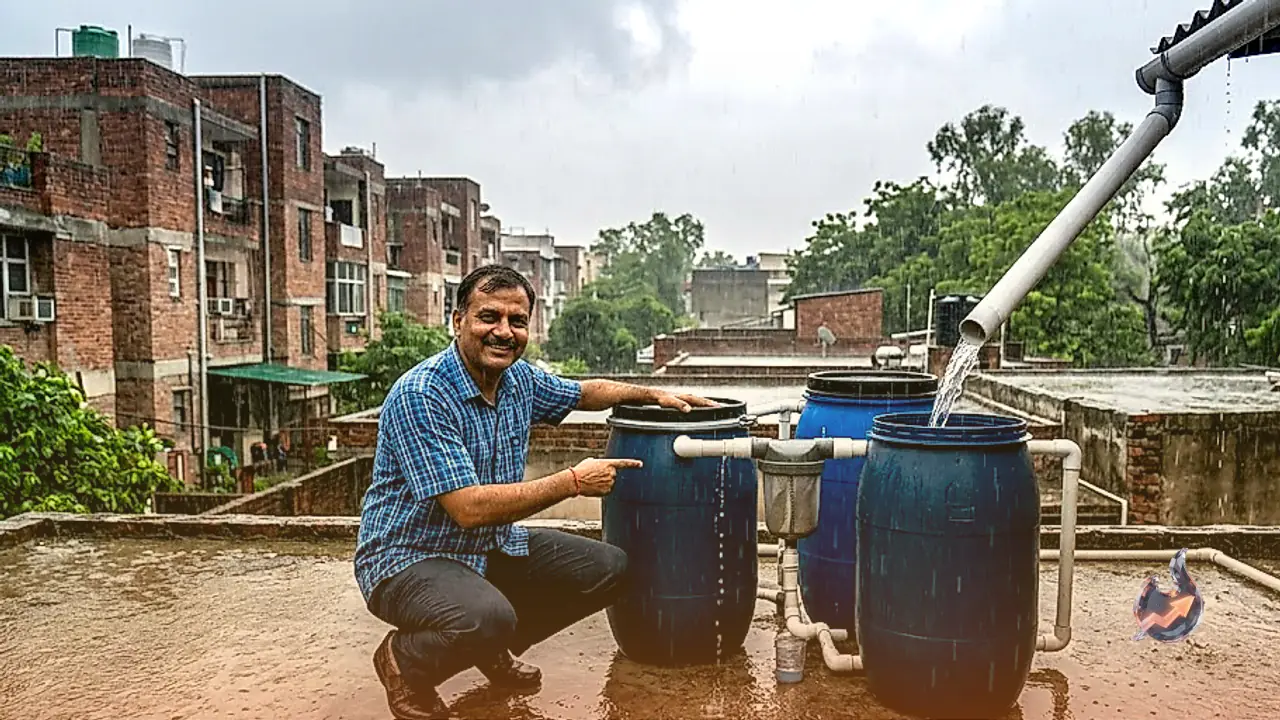
The design of the Nireen rainwater harvesting unit prioritizes ease of installation and low-maintenance operation. The system is mounted directly at the outlet location where rainwater accumulated on the roof flows downward through vertical drainage pipes. As runoff rushes through the unit, it passes through a specialized two-stage filtration process designed to trap suspended sediment, leaves, and physical contaminants. After undergoing double filtration, the captured rainwater emerges clean and ready for direct domestic deployment.
Homeowners can connect the outlet of the filtration system directly to their overhead storage tanks for immediate usage. The double-filtered water is well suited for routine household chores, including washing utensils, laundering clothes, floor cleaning, and general sanitation. For families intending to use the harvested rainwater for drinking, boiling the water thoroughly before consumption is mandatory to ensure complete safety. Alternatively, if the unit is installed at a point where filtered water drains straight into a ground percolation shaft, it significantly enhances the local groundwater table across the immediate neighborhood.
International Reach Across 5 Countries with 30,000 Units Shipped
The practical efficiency and affordability of Nireen's rainwater harvesting device have driven significant demand in both domestic and international markets. Naishal Shah confirmed that the enterprise has successfully manufactured and supplied over 30000 units to date. Beyond India, the product has been exported to 5 countries where adoption rates continue to climb steadily.
In key urban centers like Gurgaon and the broader Delhi-NCR belt, residents are rapidly retrofitting their properties with these harvesting systems. Heightened environmental awareness has led numerous homeowners to install two units simultaneously to harvest runoff from larger roof surfaces effectively. As municipal water supplies face seasonal pressures, collecting rainwater at the household level stands out as the most practical strategy for ensuring long-term water independence.