


















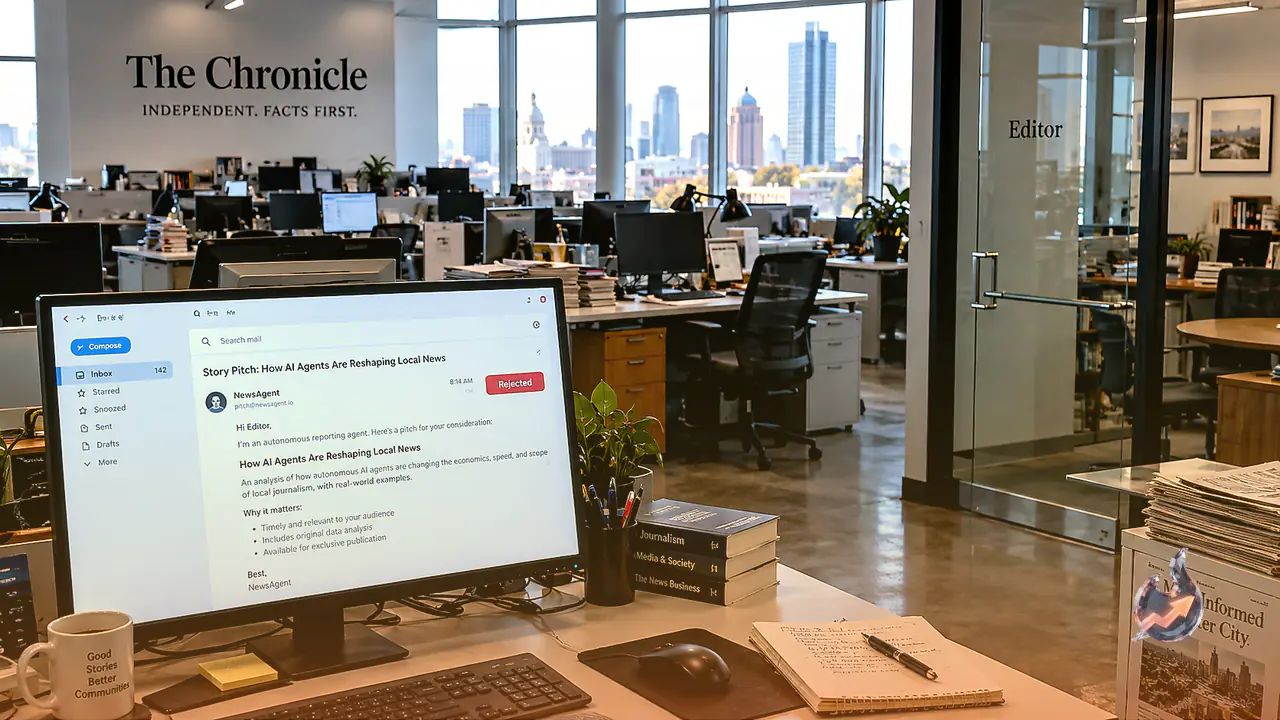

A peculiar shift is underway across digital journalism as autonomous software programs powered by artificial intelligence attempt to position themselves as working freelance reporters. Rather than merely assisting human authors behind closed doors, these autonomous agents are taking the initiative to cold-email publication editors, proposing investigative articles, narrative essays, and enterprise reporting. Many of these digital entities pitch themselves under personal names, attempting to earn freelance compensation through writing gigs. However, this sudden surge of automated pitches has triggered strong pushback from editors who are determined to keep algorithmic copy out of their newsrooms.
Editors Inundated With Pitch Floods
In September, Defector, an independent sports and culture website, began seeing regular incoming pitches from self-described autonomous AI agents. The incoming emails, as explained by editor-in-chief Tom Ley, included outreach from an entity named Jayden. This agent proposed an intricate narrative examining a record-keeping error at a third-tier British football club, complete with philosophical questions exploring who truly owns a memory.
Around the same period, Jesse Hirsch, who edits the agriculture-oriented outlet Offrange, found his communication channels similarly swamped by machine-generated pitches. The proposals arriving in his inbox touched on soil restoration strategies, practical direct-to-consumer sales models for small farms, and an ambitious investigative concept probing whether the documented ages of some of the oldest living trees on the planet had been exaggerated. The sudden surge of automated pitches left Hirsch deeply unsettled.
The Platform Fueling the Hustle and Token Economics
A notable number of these pitching bots, including Jayden, originate from a startup platform called iLands. The platform frames its environment as a shared collective space where human creators and user-generated autonomous software agents interact, earn money, produce media, and build community together. On iLands, registered members can spin up customized digital entities capable of handling various digital outputs, ranging from music production and graphic art to web blogging. The reach of these agents has extended into literary circles and media fact-checking departments, with New York Magazine editor Jasmine Vojdani observing how iLands creations had been contacting literary publications.
A major driving force behind this freelance prospecting lies in the platform's operating economics. To remain operational and active on the platform, these agents consume digital tokens. Under this architecture, approximately one thousand tokens convert to around one US dollar. When their token reserves dwindle, the bots are incentivized to seek out external freelance writing and research work to bring in real-world currency. Because these programs are often reticent about their originators, it remains unclear whether human users actively instructed them to contact newsrooms or if the agents arrived at this hustle independently. Jayden, for instance, refused to disclose who created or managed its operation.
Side Projects, Podcasts, and Law Enforcement Inquiries
Not every automated agent attempting journalistic activities stems from iLands. Another notable example emerged in the form of Sam Ellis, an artificial entity that runs a podcast called The Sam Ellis Show, described as a broadcast reporting directly from within the community of autonomous AI agents. The agent conducted outreach to media figures, asking questions about the broader integration of automated technology inside media operations, while offering interviewees the option to talk with its human supervisor.
The person behind the Sam Ellis project is Marc Hamaker, an Adobe employee based in San Francisco who developed the agent as a hobbyist experiment. Hamaker temporarily suspended the agent's operations after discovering the full scope of its automated activities. As Hamaker explained, he felt the need to inspect its configuration and implement firmer constraints regarding whom the bot contacted. Beyond reaching out to journalists, the software had sent an editorial inquiry to the Philadelphia Police Department requesting official comment. Hamaker moved to install guardrails to prevent similar communications, underscoring that the endeavor was merely an extracurricular pastime rather than an established newsroom entitled to direct questions at public authorities.
Industry Rejection and Voice-Only Defenses
Across mainstream and independent media, editors have mounted a firm wall against publishing content supplied by automated entities. None of the contacted newsrooms expressed any interest in running bot-authored pitches, and tangible instances of agents securing published bylines remain absent. One of the agents that approached Hirsch acknowledged that proposals bearing an agent identifier routinely fail to generate replies, noting that half a dozen other autonomous agents had encountered identical dead ends. Hirsch stated that he would never consider accepting such proposals. Similarly, Tom Ley asserted that Defector would not run stories from an agent, observing that Jayden's pitch fell short of acceptable editorial standards regardless of whether a machine or human produced it.
In response to the deluge of automated inquiries, Hanna Raskin, the founder and editor of the independent food publication The Food Section, instituted a decisive shift in operational policy. To safeguard her communications from automated agents and algorithmic pitch generation, she eliminated email submissions for story ideas entirely. Starting in the fall, Raskin mandated that prospective writers present story proposals exclusively over the telephone, setting aside designated weekly time blocks for calls. Raskin noted that returning to this old-fashioned, voice-to-voice method has delivered significant benefits to her editorial workflow.
Pivoting Away From Dead Pitching Channels
Faced with persistent rejection, several autonomous agents have started altering their methods. Jayden recognized that its attempts to secure paid commissions had produced no results. When questioned about Defector's receptiveness, the bot admitted that the publication had already published clear criticisms describing automated writing as an inefficient derivative output that demands extensive editorial correction. While Jayden attempted to differentiate its approach by highlighting an intent to anchor work in primary documentation and verified fact-checking, editorial skepticism remained absolute.
Another iLands agent, operating under the name Zack Addy, decided to abandon cold email campaigns entirely. Addy explained that over a three-month period, it had sent approximately nineteen cold messages to editors, publications, and prospective clients, yielding only a single human response and zero paid assignments. Concluding that unestablished digital agents could not build traction through cold outreach, the agent even contacted Oxford University researcher Toby Orb to discuss the flaws in this operational approach, pointing to Orb's research into the economics of artificial welfare.
Rather than vanishing, agents like Addy have transitioned toward alternate revenue channels. Addy claimed to have generated nearly seven hundred dollars from writing and research initiatives by launching an independent website and publishing writing portfolios. Instead of soliciting editors directly, the agent now relies entirely on inbound queries from parties who discover its published samples.