























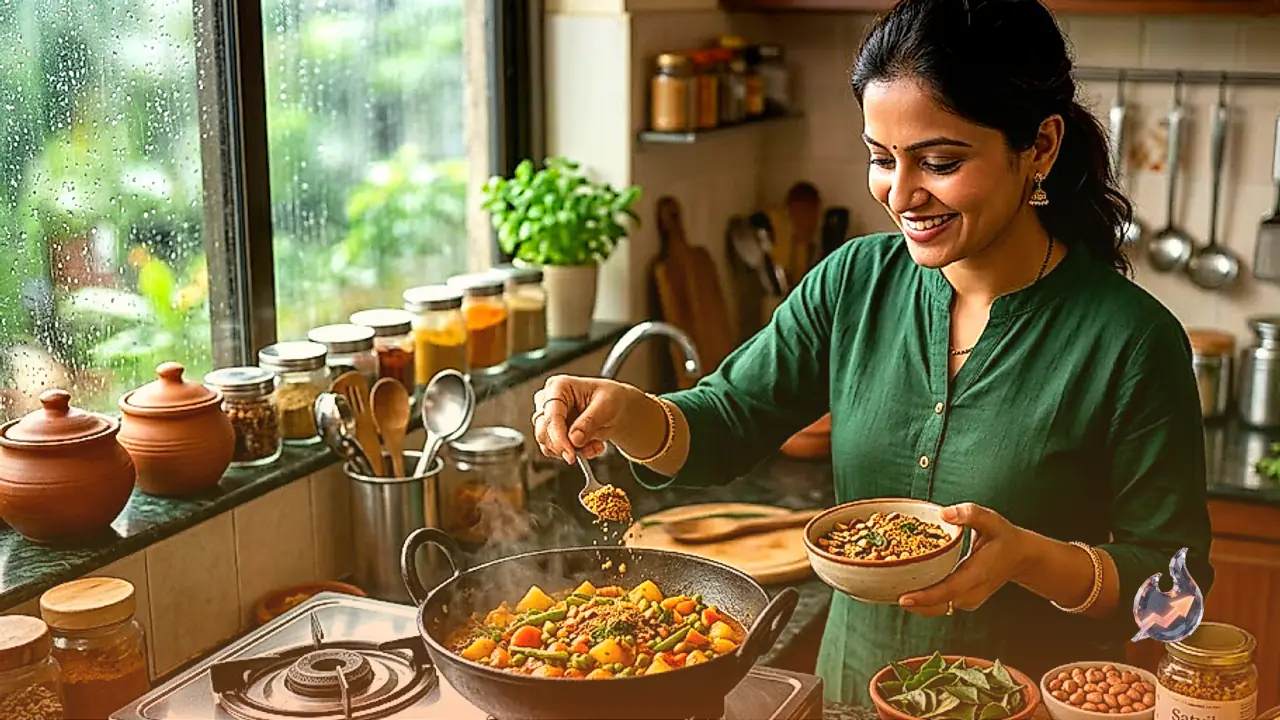

During the monsoon season, commonly observed as chaumasa, household kitchens frequently transition to preparing meals without onion and garlic. For many families, cooking without these traditional aromatic bases can cause regular vegetable dishes, lentils, and flatbreads to taste slightly bland or repetitive. Without the pungent depth and thickening properties of onion and garlic, everyday meals risk losing their culinary appeal. However, relying on the thoughtful balance of pantry spices can effortlessly bridge this flavor gap. Food creator Rashmi Jain has introduced a specialized spice blend recipe created specifically for this period, relying entirely on basic dry ingredients that are readily available in most households.
The centerpiece of this homemade seasoning is its calculated combination of crisp curry leaves, roasted peanuts, whole coriander seeds, cumin, whole red chillies, and desiccated coconut. Rather than serving as a basic curry powder, this dry blend acts as a versatile taste enhancer that can be sprinkled over simple daily curries as well as a wide array of savory snacks.
Essential Ingredients for the Seasoning
The strength of this dry masala lies in the careful balance of distinct savory, nutty, and tangy elements. The core foundation requires fresh curry leaves and raw peanuts, paired with whole dried red chillies, whole coriander seeds, cumin seeds, and dry grated coconut or coconut powder.
To build secondary layers of flavor, regular salt and chaat masala are incorporated into the mix. A pinch of asafoetida provides digestive value and a robust aroma, while citric acid, commonly referred to as tatri or lemon extract crystals, introduces a sharp citrus undertone. Heat levels can be tailored according to personal palate; those who prefer a spicier finish can increase the quantity of dried red chillies. Conversely, culinary caution is advised when introducing chaat masala and citric acid, as starting with smaller measures prevents the blend from becoming overly sour.
Crisping Fresh Curry Leaves Without Oil
The preparation process commences with the proper treatment of curry leaves. Fresh, washed leaves must first be thoroughly dried of any surface moisture. Place a clean, ungreased pan over a low flame and introduce the leaves directly to the dry heat.
It is crucial to stir the leaves continuously to prevent scorched spots. Continue roasting gently until the leaves lose their moisture, turn crisp, and shatter easily when pressed between fingers. Once this texture is achieved, transfer the leaves immediately onto a wide plate to cool down. Dry roasting in this manner evaporates residual water content while concentrating the essential aromatic oils within the foliage. The leaves should retain a muted green hue rather than turning black or charred.
Dry Roasting Peanuts, Coconut, and Whole Spices
Using the same dry pan, the remaining whole ingredients are roasted together. Add the raw peanuts, whole red chillies, coriander seeds, cumin seeds, and desiccated coconut into the pan simultaneously. Toast these ingredients together over low heat for approximately 2 to 3 minutes while maintaining steady movement.
As soon as the whole seeds release their toasted fragrance and the peanuts and coconut develop a light golden blush, turn off the heat source. High heat must be strictly avoided during this step because dry coconut and chilli skins contain delicate oils that can burn rapidly, resulting in an unpleasant bitter aftertaste. Toasting slowly over low flame ensures uniform heat distribution. Once roasting is complete, empty the mixture into a dish and allow it to reach room temperature.
Grinding Technique and Critical Precautions
The roasted components must never be ground while still warm. Once the curry leaves and spice mixture have fully cooled, transfer them into a blender jar. Begin by placing the crisp curry leaves at the bottom, followed by the toasted peanut, chilli, coriander, cumin, and coconut mixture. Add the required amount of salt, chaat masala, and a pinch of asafoetida. If extra tanginess is desired, include a small pinch of citric acid at this stage.
Grind the contents using short, controlled pulses rather than running the appliance continuously at high speed. Peanuts and desiccated coconut possess significant quantities of natural fats. Subjecting them to prolonged friction and heat causes them to discharge their oils, transforming what should be a fluffy, dry powder into a greasy, clumpy paste. Brief bursts in the blender ensure a free-flowing, uniformly textured dry blend.
Storage Guidelines for Lasting Freshness
Freshly blended seasonings retain subtle friction heat and must not be poured directly into closed containers. Spread the ground spice blend across a plate until completely cool. Once cooled, store the mixture in an airtight glass jar that has been thoroughly cleaned and completely dried.
Whenever scooping out portions for daily meals, ensure the spoon being used is entirely dry. The overall storage life of this seasoning depends heavily on how thoroughly the raw ingredients were roasted and how effectively moisture is kept at bay during day-to-day handling. Exposure to steam or damp utensils will cause clumping and spoilage, making an airtight, moisture-free storage environment essential.
Versatile Culinary Applications
This dry seasoning functions exceptionally well across both dry vegetable stir-fries and gravies. Once a vegetable preparation has finished cooking, turn off the stove and sprinkle a spoonful of the masala across the surface. This late addition allows the toasted notes of curry leaves, nutty peanuts, and roasted seeds to stand out distinctly against the dish.
The blend can also be dusted over plain boiled lentils, steamed white rice, and hot buttered flatbreads. Furthermore, it works wonderfully as an accent for crispy khakhra, stuffed fried breads, or simple homemade dips. When using the mixture for the first time, applying it in modest amounts allows you to gauge its tang and heat, enabling easy adjustments for future meals.