





















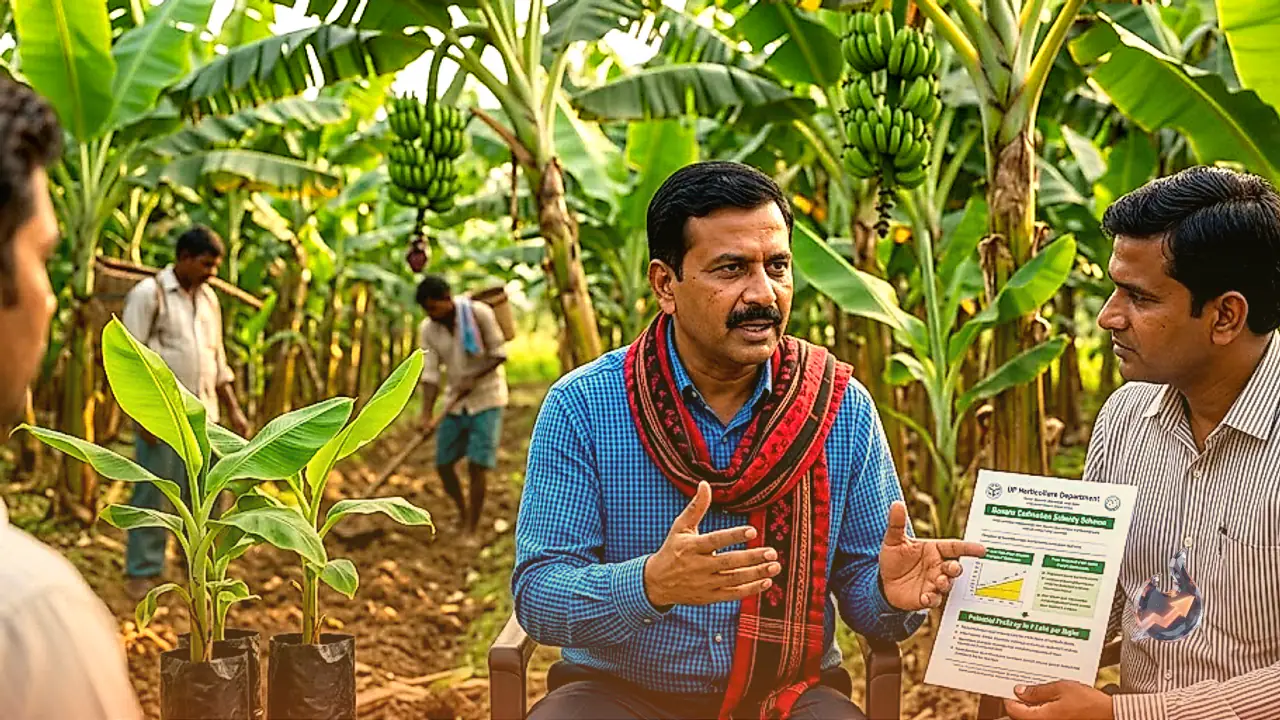

In an effort to boost high-value agriculture and raise rural incomes, the Horticulture Department in Mau district, Uttar Pradesh, is offering double-installment financial support to farmers taking up banana cultivation. Provided under the Integrated Horticulture Crop Scheme, this subsidy initiative aims to assist growers right from the planting stage up to the maturation cycle. According to District Horticulture Officer Ram Singh, banana farming offers year-round market demand and consistent economic stability, making it one of the most reliable commercial choices for local agricultural workers.
Two-Tier Subsidy Model for Sustainable Farming
The subsidy structure designed by the department supports farmers over a two-year timeframe rather than offering just a single upfront payment. During the first year of planting, the government provides financial assistance of 9.84 rupees per plant based on established scheme guidelines. To ensure that farmers continue proper field maintenance and nutritional management, an additional subsidy of approximately 3.87 rupees per plant is disbursed in the second year. This recurring support model helps farmers absorb operational expenses without straining their working capital.
Cost Analysis and Income Potential Per Bigha
Cultivating bananas on one bigha of land involves an initial investment ranging between 1,00,000 rupees and 1,50,000 rupees, which covers land preparation, saplings, irrigation setup, and fertilizers. When recommended package of practices is followed, total gross income from the yield of one bigha can reach between 3,00,000 rupees and 4,00,000 rupees. After accounting for all production expenses, a farmer can secure a net profit of 1,50,000 rupees to 2,00,000 rupees over a growth period of 12 to 14 months.
Pest Management and Expert Guidance
While economic returns from banana plantations are high, the crop requires careful supervision. Banana plants are particularly vulnerable to pest infestations and fungal attacks, making timely application of sprays and systematic crop monitoring vital. District Horticulture Officer Ram Singh advises aspiring growers to visit established banana farms in their vicinity to gain practical field insights before starting. Learning effective management techniques firsthand ensures higher yields and guards against avoidable crop losses.
Required Documentation and Application Steps
Farmers interested in availing the benefits of the Integrated Horticulture Crop Scheme must register through the official horticulture portal. The mandatory documents needed for application include the farmer's Aadhaar card, bank passbook, land Khatauni records, and recent photographs. Farmers who face difficulties with online registration can visit the District Horticulture Department office in person to receive registration assistance. Once the application is verified and processed, the eligible subsidy amount is disbursed according to official guidelines.