


















The echo of the 1857 War of Independence resounded powerfully across eastern Uttar Pradesh, where the Nichlaul region in Maharajganj district emerged as a formidable stronghold of resistance. Located adjacent to the Nepal border, this territory was governed by Raja Ratnasen, also known as Maharaja Randol Singh. Under his leadership, local forces successfully ousted colonial authority, establishing an independent administration that remained free from British control for a considerable period.
A United Front of Regional Rulers and Landlords
The anti-colonial uprising in Nichlaul was part of a coordinated network of rebellion across the region. According to Dr. Brijesh Pandey, a history lecturer at Rajendra Prasad Tarachand Mahavidyalaya in Nichlaul, several prominent estates joined hands to challenge British rule. The rulers of Satashi Raj and Tamkuhi Raj in Gorakhpur, alongside Basi and Raja Ratnasen of Nichlaul, forged a united alliance. Local landlords actively supported this movement, temporarily crippling the East India Company administration and liberating the countryside from foreign governance.
Deployment of Gorkha Troops and the Fall of the Stronghold
Alarmed by the widespread insurrection, the British Commissioner summoned reinforcements to regain control over the strategic border region. The deployment of Gorkha troops applied immense military pressure on the local freedom fighters. As the tactical advantage shifted toward the colonial forces, Maharaja Randol Singh was compelled to evacuate his stronghold. To avoid capture and preserve the resistance effort, he sought refuge with a loyal local landlord.
Demolition of the Fort and Confiscation of the Estate
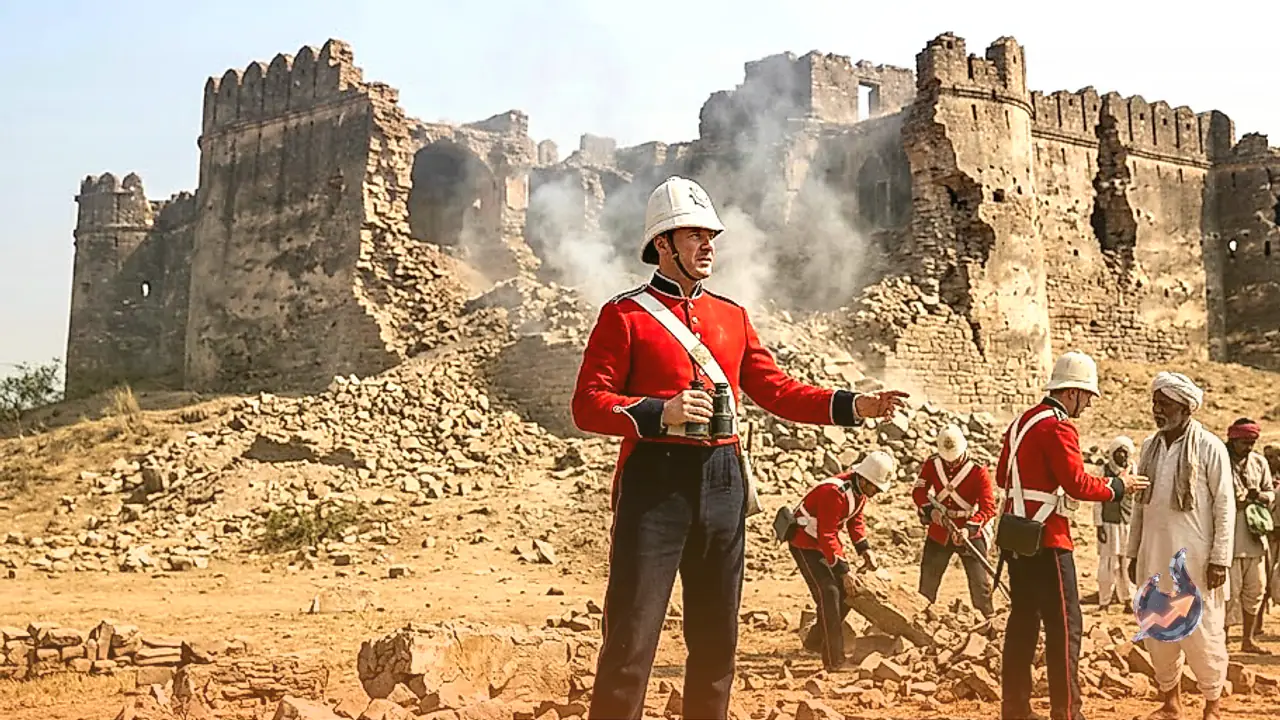
Upon reaching the deserted fort at Nichlaul, British troops found that Raja Ratnasen had escaped. In retaliation, colonial commanders ordered the complete destruction of the fortress, blowing it up with heavy explosives. Following the demolition, the British government confiscated the entire estate and redistributed the land among smaller loyalist landlords, effectively stripping Raja Ratnasen lineage of their ancestral power. Today, the ruined remnants of the Nichlaul fort stand as quiet reminders of this historic anti-colonial sacrifice.