




















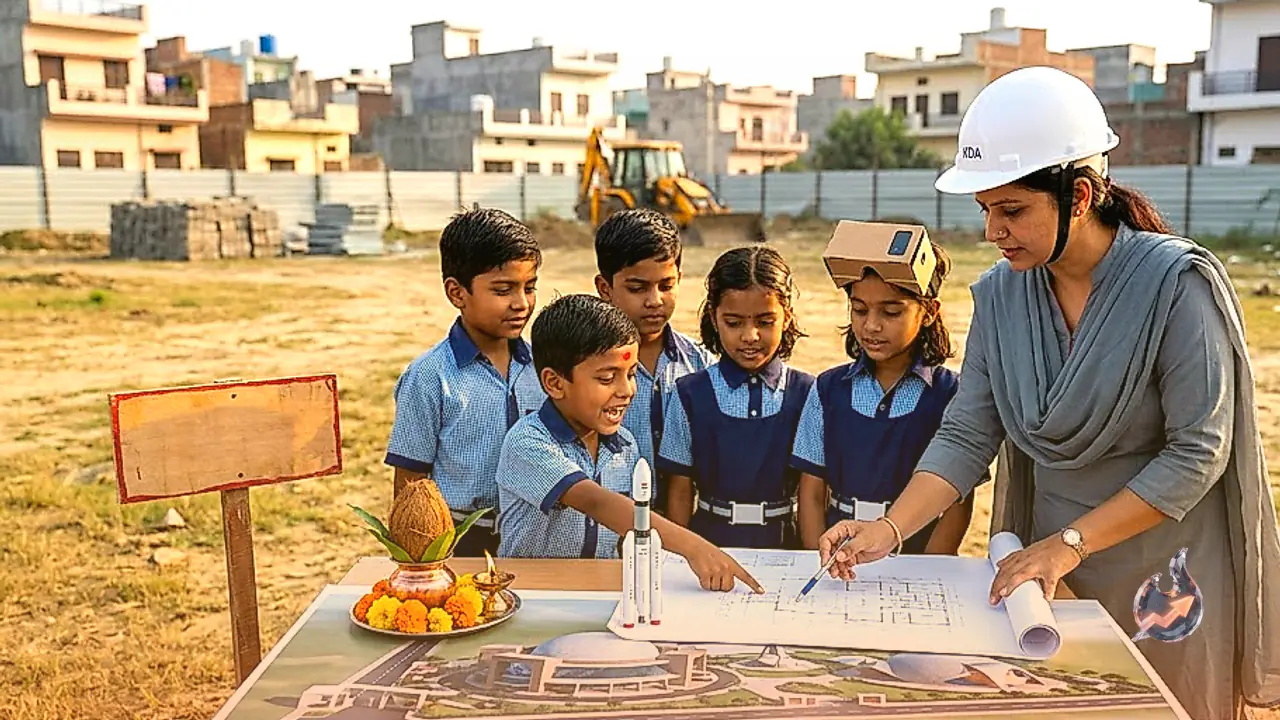

Children and families residing in the industrial city of Kanpur have reason to celebrate as the Kanpur Development Authority (KDA) has approved the construction of an advanced Space Park. Designed to serve the residents of the Jawaharpuram and Shatabdi Nagar housing schemes, the facility will feature a state-of-the-art 3D planetarium to introduce visitors to the wonders of space science. Grounded in an educational theme, the initiative aims to combine recreational activities with scientific learning, creating a dedicated hub for young learners and space enthusiasts.
Hi-Tech Features and 3D Planetarium Experience
The proposed Space Park will incorporate cutting-edge immersive technology to deliver a hands-on learning environment. Visitors will be able to experience outer space using Virtual Reality (VR) and Augmented Reality (AR) setups. The park will also house interactive scientific models and detailed satellite displays. To encourage active student participation, KDA plans to organize regular science-based activities and workshops. Furthermore, KDA will collaborate with prestigious organizations like the Indian Space Research Organisation (ISRO) to provide authentic and comprehensive information about India's space achievements.
Direct Benefit for 15,000 Housing Flat Families
The development fulfills a long-standing demand from the residents of nearly 15,000 flats constructed under the Jawaharpuram and Shatabdi Nagar housing schemes. Local families had frequently expressed the need for a modern public park offering open recreational spaces alongside engaging educational facilities for children. Addressing these community requirements, KDA Secretary Abhay Pandey confirmed that work on the project's budget allocation and preliminary design has officially commenced. This project will be the first of its kind in the Kanpur division, modeled after successful space parks established in Jhansi, Moradabad, and Bareilly.
Fostering Scientific Temper and Child Development
Beyond entertainment, the Space Park is anticipated to serve as a catalyst for holistic child development in the region. By shifting from traditional classroom learning to experiential engagement with interactive models, VR, and AR, the park will help children grasp complex astronomical concepts with ease. Urban planners and educational experts note that this exposure will enhance children's physical and cognitive abilities while instilling a strong scientific temper, encouraging practical curiosity and creative thinking in their everyday lives.