



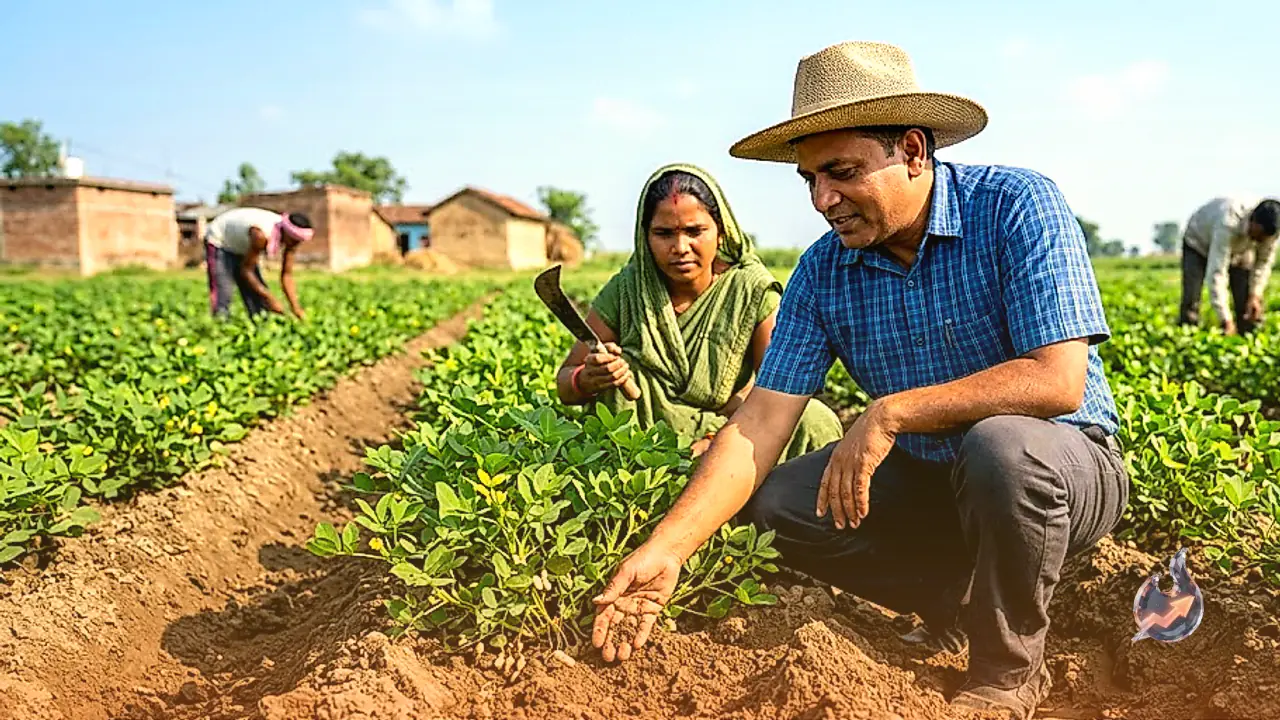


















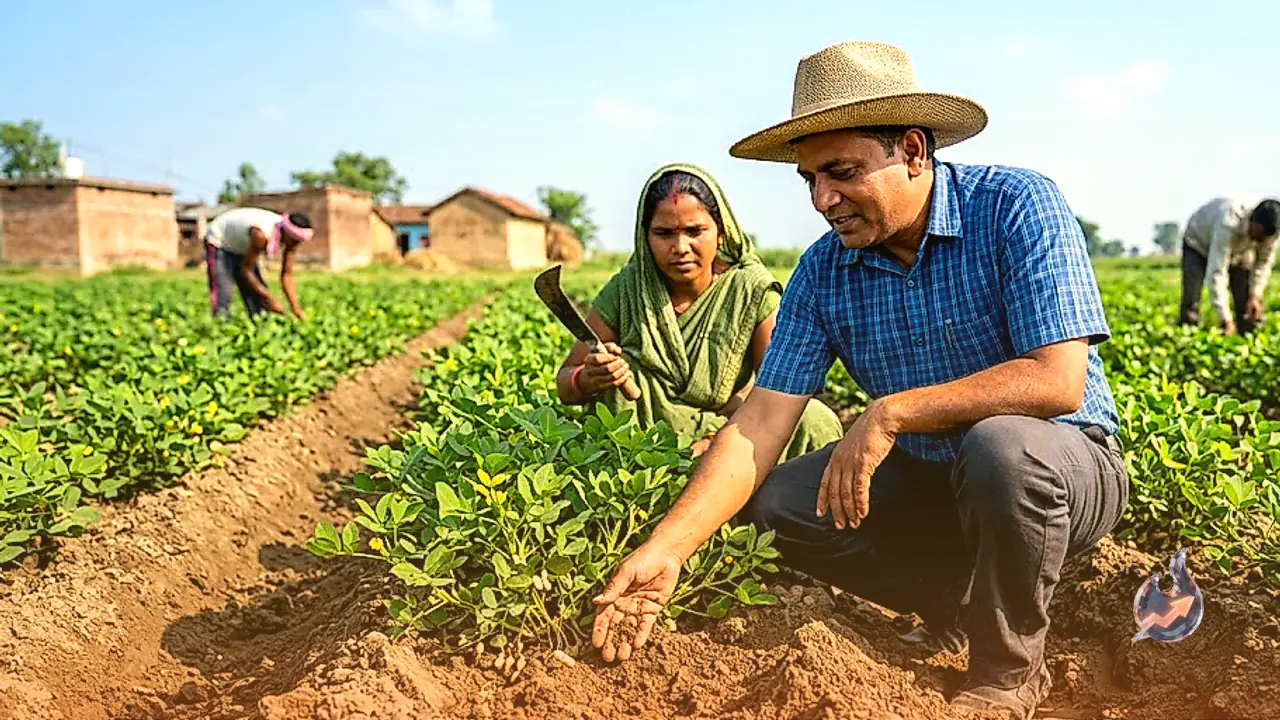

Farmers across Ballia now have a practical opportunity to introduce peanut cultivation across their sandy loam and karail fields as a profitable oilseed option. In collaboration with the local agriculture department, postgraduate students in agricultural sciences are conducting field evaluations to examine how blending organic inputs with chemical fertilizers influences soil health, plant productivity, and grain quality. This agronomic initiative aims to establish an alternative revenue pipeline for local farming families looking to diversify their seasonal output.
Foundation Nutrition During Seed Sowing
Setting up the field with precise soil nutrients determines early root establishment and overall crop vitality. Prof. Ashok Kumar Singh, who serves as the Head of Department for Soil Science and Agricultural Chemistry at Shri Murli Manohar Town Post Graduate College Ballia, emphasizes disciplined nutrient application at the very beginning of the cycle. When preparing the land, cultivators need to supply 12 kilograms of potash and approximately 15 kilograms of sulfur per bigha. A deficit in these specific elements triggers leaf yellowing and visible brownish patches, quickly lowering vegetative vigor and degrading the final crop value.
Managing Tikka Disease and Fungal Outbreaks
Peanut plots often face severe exposure to a harmful fungal infection known as tikka disease. The pathogen manifests through circular spots forming over leaf blades, which can escalate rapidly and destroy entire agricultural stands if left unchecked. Growers seeing early warning signs must apply recommended fungicides without delay.
- Primary Spray Formulation: Mix 200 grams of copper oxychloride, Dithane M-45, or Indofil M-45 in 100 liters of water and spray the field thoroughly.
- Targeted Alternative Control: Preparing and dispersing a 0.02 percent solution of carbendazim or hexaconazole serves as an equally potent remedy against the spread of infection.
Peg Penetration Dynamics and Earthing Up Protocols
The transition from flowering to pod development follows a distinctive biological pattern, where flower stalks penetrate beneath the soil roughly 60 to 65 days after blooming. Farmers must complete earthing up around the base of the crop exactly 10 days before this subterranean insertion begins. Mounding loose soil provides an ideal physical barrier and texture for pegs to penetrate deep without resistance, accelerating pod expansion.
Disciplined earthing up not only raises aggregate farm volume but also guarantees superior pod filling, enabling pods to develop at least three healthy seeds each. Furthermore, as the developing pods mature close to harvest, keeping watch over the fields is critical to ward off feeding birds such as crows. Adhering to these practical guidelines allows cultivators to extract optimal output from the regional soil.