























Residents of Kunda Khurd village, located in the Mughalsarai assembly constituency of Uttar Pradesh's Chandauli district, are grappling with an existential crisis as the raging Ganga river causes severe bank erosion. Swelling water levels over recent days have intensified the collapse of large land parcels into the river's surging currents. With soil eroding relentlessly day and night, local families fear that significant portions of their ancestral village could soon be permanently swallowed by the Ganga unless immediate mitigation measures are deployed.
Swelling Ganga River Causes Alarming Soil Erosion
The situation along the bank of the Ganga at Kunda Khurd presents a grim visual of natural destruction. Even standing near the riverfront, visitors can hear the ominous sound of massive earth chunks cracking and sliding into the roaring river. Local inhabitants report that while land erosion has been a recurring issue along this stretch over the years, the pace of destruction has accelerated dramatically over the past 15 days. As the water level of the Ganga continues to rise, the river current is taking an increasingly aggressive toll on the adjacent shoreline.
Historic 400 Year Old Sacred Peepal Tree Submerged
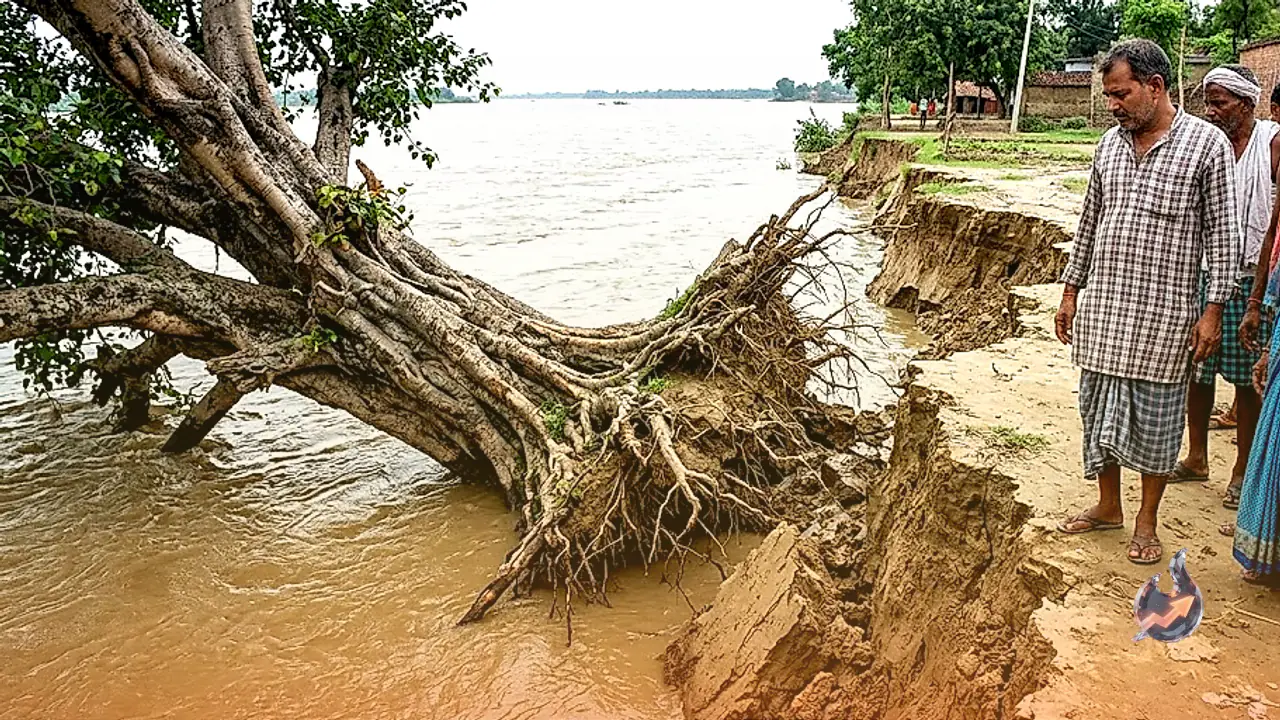
Among the most poignant losses caused by the severe erosion is the complete destruction of an ancient Peepal tree that stood near the riverbank. Locals estimate the sacred tree to have been between 400 and 500 years old. Far more than just a piece of greenery, the tree served as a cherished landmark and a deep symbol of spiritual faith and community identity for generations of villagers. Many generations had sought shade under its branches, and numerous religious ceremonies and social gatherings were held around its base over the centuries. Undermined by the relentless cutting of the bank, its root system collapsed completely, sending the massive tree into the Ganga. Adding to the gravity of the situation, a buffalo trapped in the collapsing land near the tree also lost its life.
Over 10 Bighas of Agricultural Land and Key Routes Lost
Detailing the extent of damage, local resident Pintu Yadav explained that at least 10 bighas of fertile agricultural land have already been lost to the Ganga during this recent spell of erosion. While erosion has affected the area for several years, Pintu Yadav emphasized that the current velocity of land collapse is unprecedented. The severe cutting has destroyed essential pathways and access routes that residents used to reach the riverfront for bathing and daily chores. Expressing urgent concerns, he appealed to the administration to immediately undertake structural safety measures, including the construction of a permanent bathing ghat and robust anti-erosion embankments along the riverbank.
Unrelenting Fear Day and Night and Threat to Livestock
Another local resident, Shrawan Singh, noted that while bank erosion has plagued the village across generations, the present scale of destruction is particularly alarming. In past years, several large trees and substantial plots of land were claimed by the river, and the current wave of erosion has now damaged a section of the main access road leading toward the village. Shrawan Singh shared that villagers are living in constant anxiety day and night, unable to sleep peacefully due to the fear that the ground beneath their homes might suddenly cave into the Ganga. Pastoral farmers are equally worried about their livestock, as animals grazing or tied near the river edge face heightened risks of falling into the collapsing terrain.
Allegations of Administrative Delay and Threat to Ancient Temples
Local inhabitant Rajesh highlighted that river waters have been rising steadily for about one week, driving a rapid increase in soil cutting. He expressed disappointment over the absence of administrative officials on the ground during this critical phase, stressing that official inspection and protective interventions are most vital when water levels peak. Rajesh warned that the continuing erosion now threatens ancient religious shrines and local temples situated close to the riverbank. He cautioned that if protective barriers are not erected without delay, these revered cultural sites, along with surrounding residential areas, could be lost forever into the Ganga.
Urgent Calls for Permanent Safety Embankments and Protection Walls
The community of Kunda Khurd is demanding a permanent, sustainable response from government authorities rather than temporary waiting for floodwaters to recede. Villagers argue that waiting for water levels to drop leaves the root problem unaddressed, ensuring a repeat of the disaster during the next high-water cycle. They are calling for heavy-duty anti-erosion embankments, protective retaining walls, and well-designed stone ghats to stabilize the riverbank. On the ground, the marks of vulnerability are stark, with wide land fissures expanding rapidly and exposed tree roots hanging in mid-air above the surging water. Locals warn that without swift intervention, a major part of Kunda Khurd could become history.
Villagers Await Decisive Action from Local Authorities
The advancing waters of the Ganga in Kunda Khurd no longer threaten just crops and agricultural plots; they endanger homes, village connectivity, sacred landmarks, and the future security of the entire population. As the river continues to erode the shoreline, vulnerable residents are looking anxiously toward responsible officials, waiting for effective administrative measures to be implemented before more of their village vanishes into the river.