






















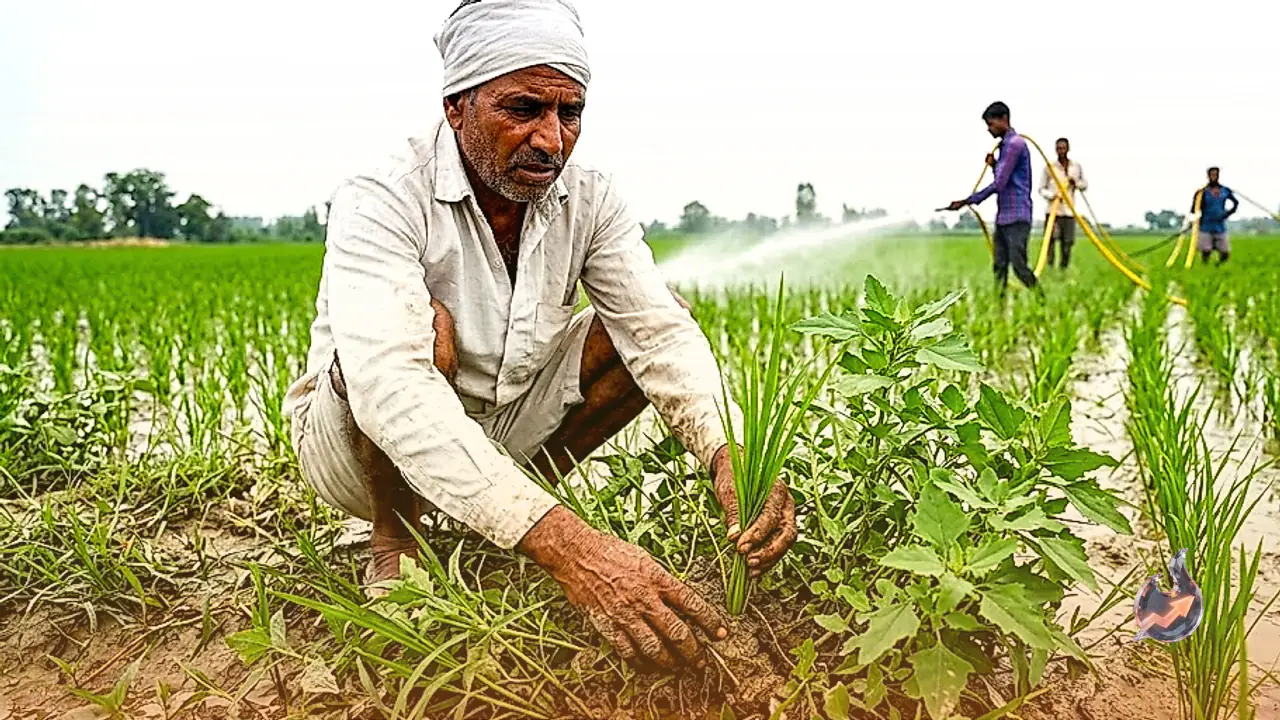

The first three to four weeks after paddy is transplanted are the most critical window for a field, because this is exactly when broadleaf weeds shoot up fast and start robbing young rice plants of water, nutrients and sunlight. Ranjod Singh, a farmer from Shahjahanpur, says that unless these weeds are brought under control within 20 to 35 days of transplanting, the entire crop takes a direct hit and a farmer's hard work can go to waste.
The weeds that trouble paddy fields the most
According to Ranjod Singh, the broadleaf weeds that cause the most trouble in paddy fields include bathua, khurand, mirchiya, kenkwa and jalkumbhi or water weeds. In scientific terms, bathua is known as Chenopodium album, khurand as Chrozophora rottleri and kenkwa as Commelina benghalensis. These plants start emerging from the soil almost as soon as transplanting is over, and because of their broad leaves they spread across an entire field within a matter of weeks. Once they take root, they multiply so fast that the main paddy crop's growth simply stalls.
Why this spread does so much damage
These weeds draw up the same nitrogen, phosphorus and potash through their roots that should actually be feeding the rice plants. Their large, broad leaves block sunlight from reaching the crop below, which slows down photosynthesis in the paddy leaves. On top of that, this dense cover of leaves gives harmful insects a safe place to hide, adding a separate pest risk. The end result is that rice plants stay thin and weak, they produce fewer tillers, and eventually both the weight and the quality of the grain suffer. Without timely control, overall yield can fall by 30 to 40 percent, a loss that hits any farming family hard.
Steps to try before reaching for chemicals
Ranjod Singh advises that farmers should not rely on chemicals alone and should instead follow integrated weed management, or IWM, because it is safer and more sustainable over the long run. This includes hand weeding, proper water management in the field, and choosing certified seeds for sowing. A deep tillage of the field before transplanting or sowing destroys weed seeds hiding in the soil early on, reducing trouble later. Keeping 4 to 5 centimetres of standing water in the field for three to four weeks after transplanting also stops broadleaf weed seeds from germinating in the first place, which cuts down the need for chemical spraying on its own.
When and how to spray if the infestation is severe
Ranjod Singh says that if the weed infestation is still severe despite these steps, spraying a chemical weedicide remains the last and most effective option. For this, 20 to 25 days after transplanting, once the weeds have grown 2 to 4 leaves, a mix of metsulfuron methyl and chlorimuron ethyl, sold as Almix, should be dissolved and sprayed at 8 grams per acre. The field must have enough moisture at the time of spraying, but it should not be waterlogged, otherwise the chemical fails to work properly. A flat fan nozzle should always be used so that the spray spreads evenly across every corner of the field. Ranjod Singh cautions that spraying repeatedly without proper judgment lets weeds build resistance to the chemical, and constant chemical use also harms the soil's fertility over time, so spraying should only be done when it is genuinely necessary.