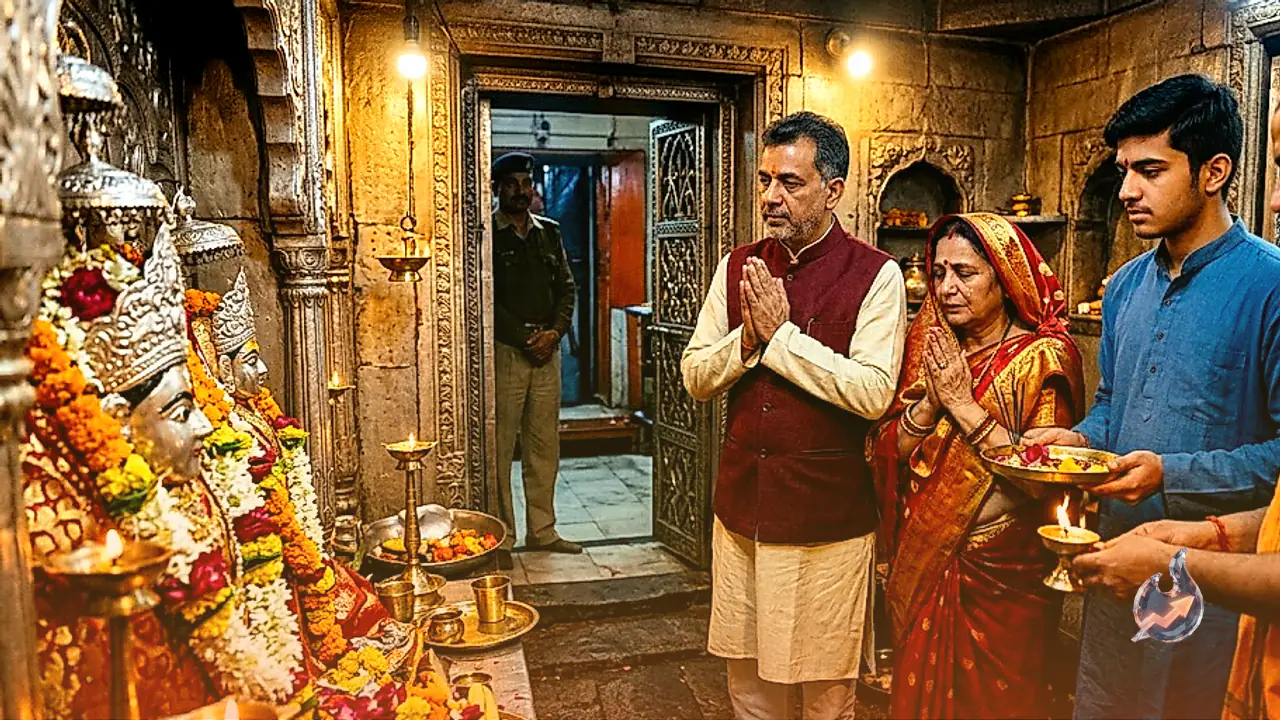


















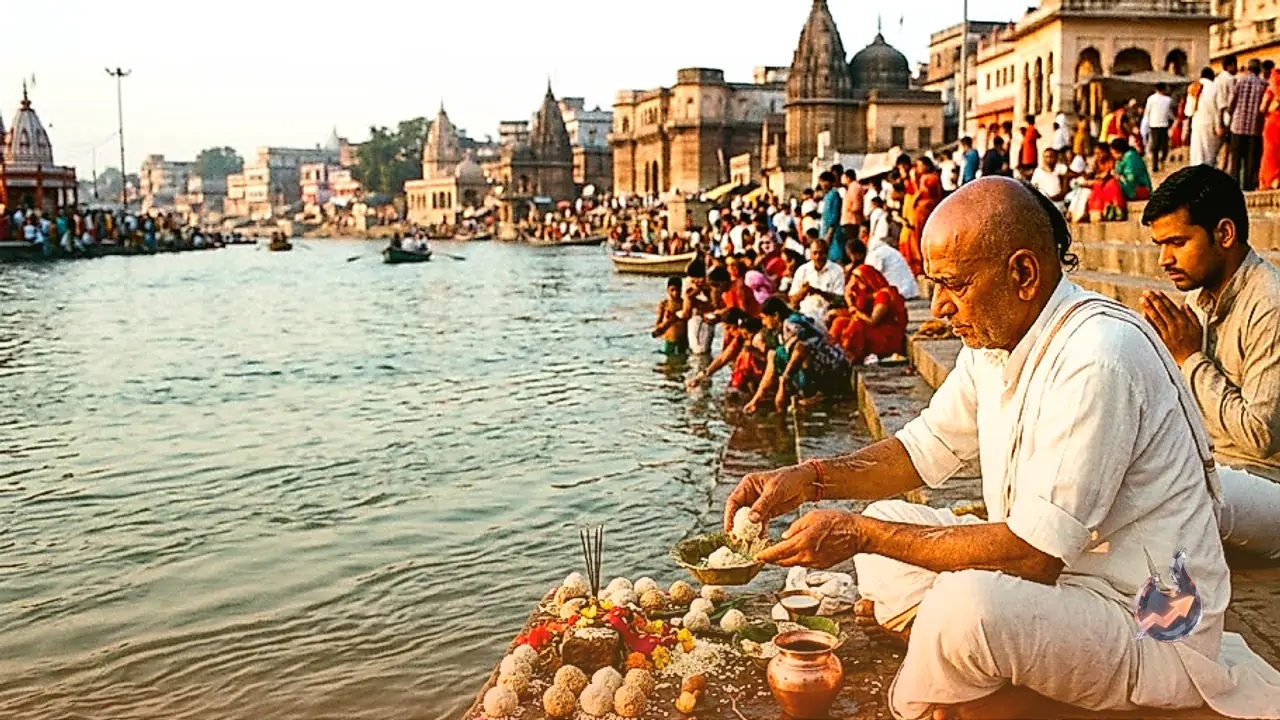

In Hindu dharma, the period of Pitru Paksha is regarded as the most sacred time to express profound respect and gratitude towards one's ancestors. During this time, people perform various religious rituals for the peace of their departed ancestors' souls. This year, Pitru Paksha is scheduled to commence on September 27 and will conclude on October 10. During this 15 day special period, devotees from all corners of the country travel to Haridwar to perform tarpan, jalanjali, and pind daan on the holy banks of the Ganga. Haridwar is widely known as the city of salvation, and when it comes to the shradh rituals of ancestors, the name of Har Ki Pauri naturally comes to everyone's mind. However, apart from Har Ki Pauri, there are several other highly significant and historical ghats in Haridwar where performing ancestral rites holds immense religious importance as described in the sacred scriptures.
Why These Specific Ghats of Haridwar are Sacred for Ancestral Rituals
According to religious beliefs and ancient texts, shradh and pind daan performed at specific designated locations during Pitru Paksha offer direct satisfaction to the souls of ancestors. Astrologer Pandit Shridhar Shastri explains that while most devotees consider Har Ki Pauri as the primary center for shradh rituals, Haridwar possesses several other distinct ghats that carry immense mythological significance. The holy scriptures mention that rituals performed with proper Vedic methods at these special sites bring peace to wandering souls, prompting them to bless their descendants with happiness, peace, and prosperity. Performing ancestral rites at these holy ghats not only brings welfare to the entire lineage but also removes numerous obstacles from a person's life.
Kushavart Ghat: Where Lord Ram Performed Shradh for His Ancestors
Located in close proximity to the Brahmakund of Har Ki Pauri, the Asthi Pravah Ghat and Kushavart Ghat are considered exceptionally supreme for performing ancestral rites. Among these, the history of Kushavart Ghat is deeply ancient and glorious. According to mythological beliefs, this ghat was the sacred penance ground of the great Sage Dattatreya. Furthermore, this ghat shares a profound connection with the Treta Yuga. It is believed that Lord Ram himself visited Kushavart Ghat to perform the shradh and tarpan rituals for his ancestors with complete Vedic rites. This historical and divine event significantly elevates the spiritual importance of this ghat.
There is a unique methodology for performing shradh at Kushavart Ghat. The scriptures mandate the offering of tilanjali here specifically using kusha, a type of sacred grass, along with black sesame seeds. It is believed that the offerings made here reach the ancestors directly. For this reason, devotees from distant places gather here to perform tarpan and pind daan, seeking to free the souls of their ancestors from the cycle of birth and death.
Shitla Mata Ghat of Kankhal and Neel Dhara
The Shitla Mata Ghat, located in the mythological region of Kankhal in Haridwar, is also considered highly critical for Pitru Paksha rituals. According to astrologer Pandit Shridhar Shastri, performing shanti havan and tarpan is a traditional practice at Shitla Mata Ghat. It is widely believed that performing a sacred fire ritual here mitigates the suffering of departed souls. Additionally, the Neel Dhara, also known as Chandi Ghat in Haridwar, is considered a highly sacred and fruitful location for achieving ancestral salvation. Performing tarpan in the main stream of the Ganga flowing here blesses devotees with endless virtues and helps ancestors achieve ultimate liberation.
Narayani Shila: A Land of Salvation Equivalent to Gaya
From a spiritual perspective, the historical Narayani Shila of Haridwar occupies a stellar position. This sacred stone is extensively described in Hindu scriptures and is believed to be the dwelling place of Lord Vishnu. Just as performing pind daan in Gaya, Bihar, holds supreme importance and is considered the ultimate land of salvation, a similar high merit is associated with performing pind daan at Narayani Shila in Haridwar. It is believed that souls that do not find peace anywhere else attain ultimate salvation or moksha once pind daan is performed for them at Narayani Shila. People also perform special prayers here for ancestors who met with an untimely death or whose date of death is unknown.
Special Rituals and Prayers for Pitru Dosh Rectification
If an individual has Pitru Dosh in their horoscope, which often manifests as stagnation in life, health issues, or domestic discord, astrologers recommend performing special prayers during Pitru Paksha at these sacred sites. Pandit Shridhar Shastri notes that to appease the ancestors and resolve Pitru Dosh, Brahmin Bhoj is organized at these holy ghats. In addition to this, pind daan, deep daan, and special Vedic havans are performed. The primary objective of all these religious practices is to show reverence to ancestors and pray to the Almighty for the peace of their souls. Driven by these deep-rooted beliefs and faith, lakhs of devotees from different states of India visit these holy ghats of Haridwar every year during Pitru Paksha to honor their ancestors.