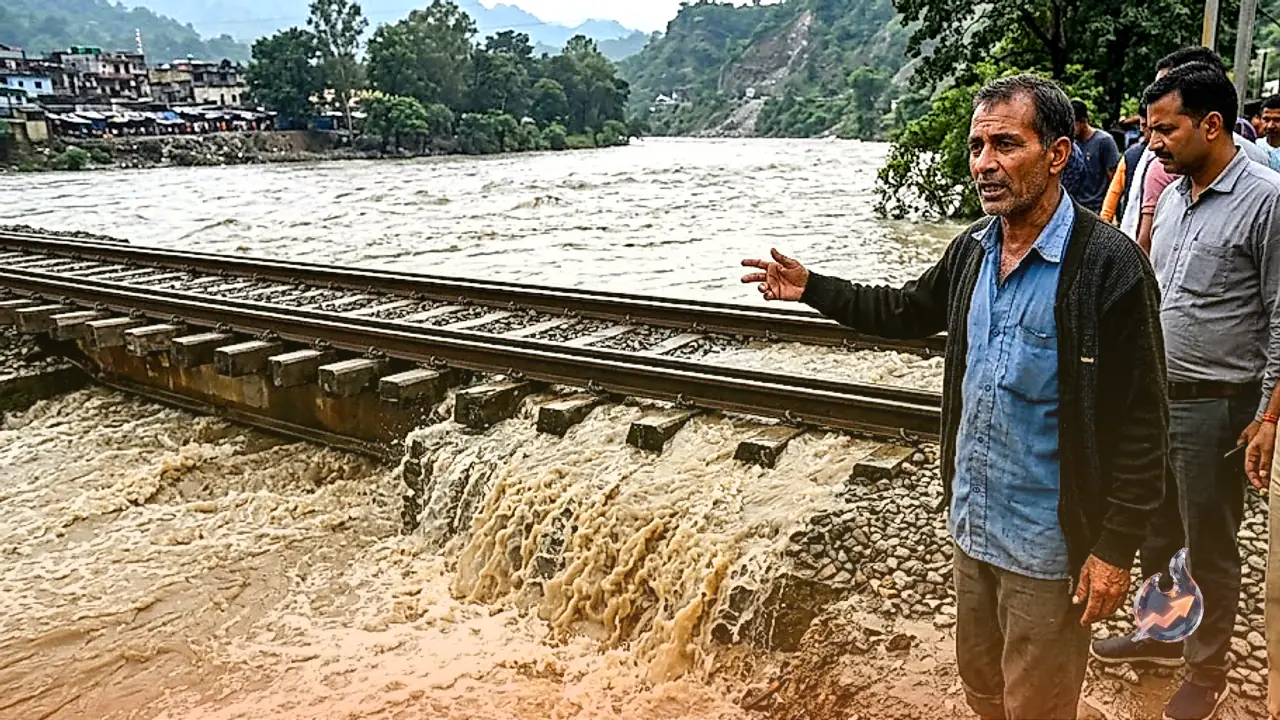




















The district administration of Bageshwar in Uttarakhand has initiated large-scale safety measures and structural planning to protect disaster-affected families residing in Hadbar village. For a considerable duration, residents of this village have lived under constant psychological stress and physical danger due to recurring heavy monsoon rains and the persistent risk of soil erosion and landslides. Addressing these severe environmental hazards, the local administration has prioritized providing a permanent safety framework and resilient residential housing to the affected villagers rather than limiting administrative assistance to short-term emergency relief packages. This comprehensive intervention by the district authorities has restored confidence among local inhabitants regarding the future security of their lives and personal properties.
Steps Toward Permanent Rehabilitation of Disaster Victims
The primary administrative objective of the Bageshwar district authorities is to formulate and execute sustainable, long-term solutions for the disaster victims of Hadbar village. Establishing secure housing for families displaced or continuously threatened by natural calamities remains essential to safeguarding the entire mountainous community. The long-term strategy aims to minimize potential risks to human life and private property during future heavy rainfall and landslide events. Moving beyond routine paperwork and bureaucratic delays, concrete action plans are actively being structured on the ground to guarantee that displaced families receive durable shelter, structural stability, and a reliable living environment for years to come.
Field Inspection of Affected Buildings by DM Apoorva Pandey
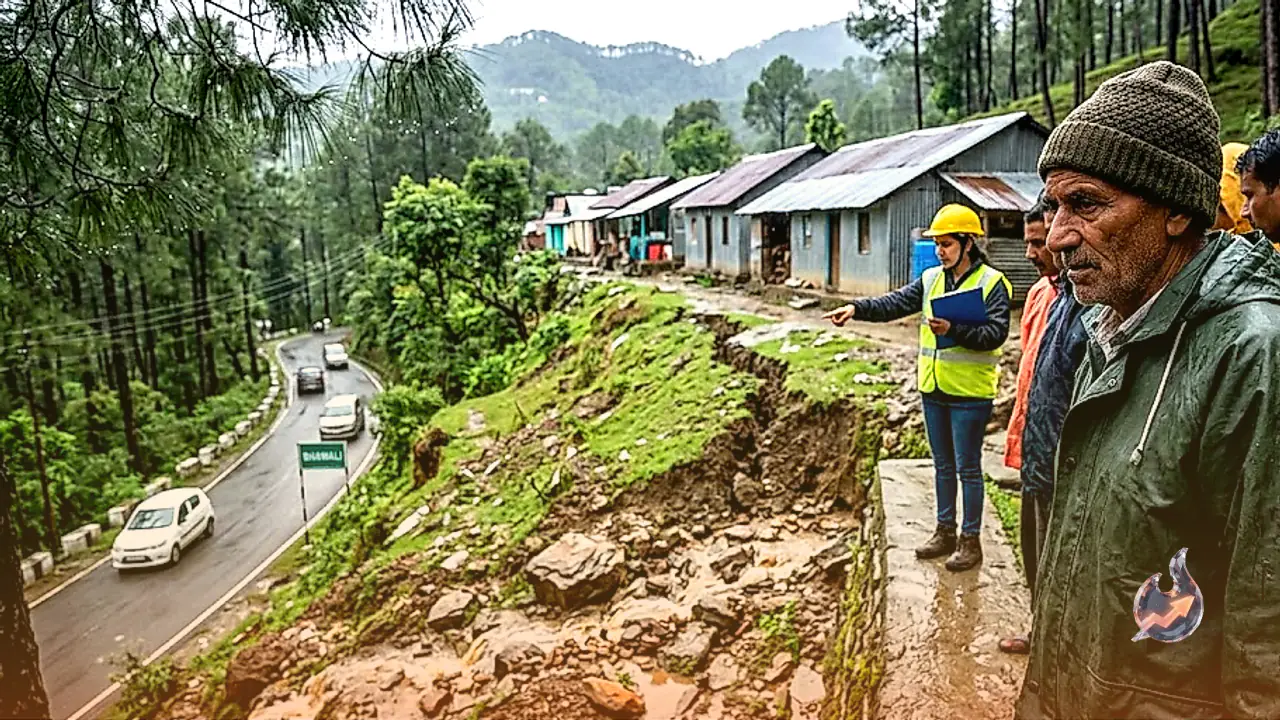
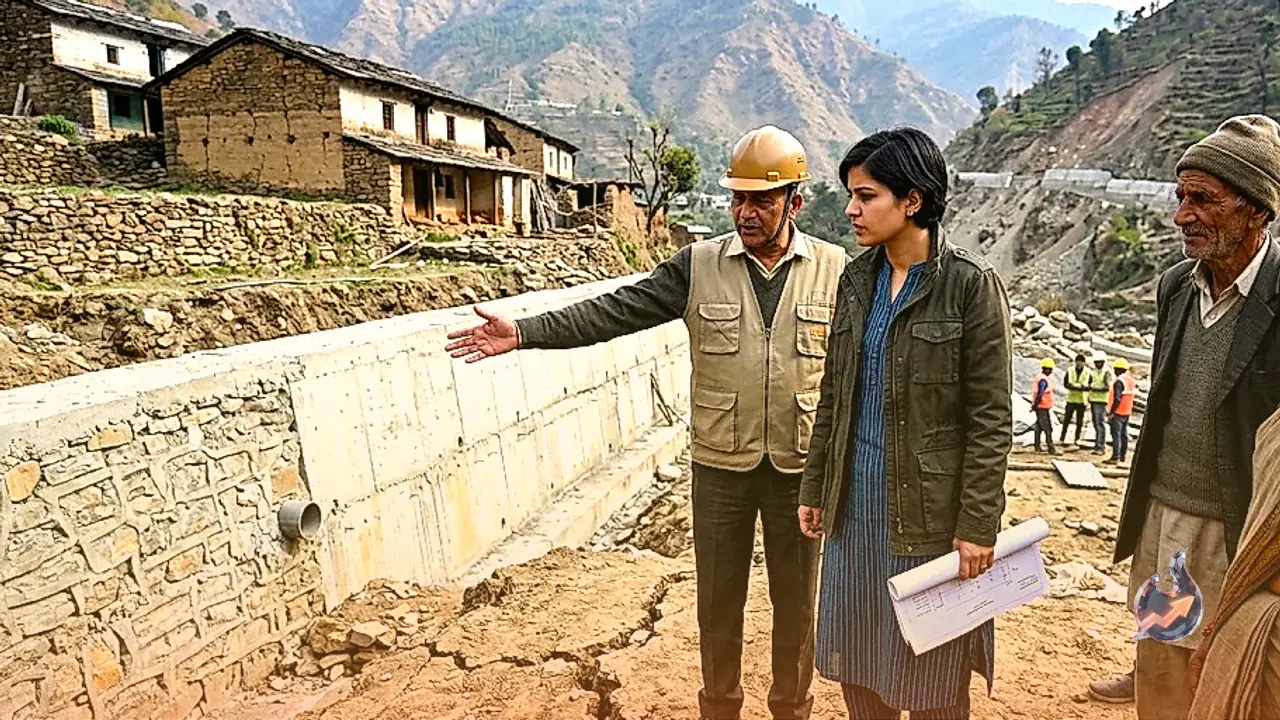
To evaluate the ground reality firsthand and assess the structural stability of the area, District Magistrate Apoorva Pandey personally visited Hadbar village. During her extensive walkthrough of the settlement, she interacted directly with the disaster-affected families to gain a detailed understanding of the daily hardships and safety concerns brought on by heavy monsoon rain. As part of the visit, the District Magistrate conducted a meticulous inspection of newly constructed housing units designed for the rehabilitated villagers. Her inspection revealed noticeable ground subsidence and deep cracks surrounding several of the newly built structures as well as within their residential courtyards. Expressing serious administrative concern over these structural vulnerabilities, the District Magistrate questioned site engineers and departmental officials regarding the exact technical causes, depth, and potential expansion of the soil displacement.
Formulating Technical Proposals for Ground Cracks and Soil Stability
District Magistrate Apoorva Pandey emphasized that the primary mandate of the district administration extends beyond providing temporary shelter, aiming instead to establish a permanently safe ecosystem for all affected residents. A detailed engineering proposal is currently being drafted to execute permanent technical treatments for the land cracks adjacent to the new residential structures. Under this protective strategy, reinforced retaining walls will be engineered and built in strict accordance with the geographical and geological demands of the hillside site. Departmental officials have been explicitly instructed to complete a comprehensive scientific and technical survey of the terrain before finalizing cost estimates and submitting official project proposals to the state government.
Upgrading Drainage Networks to Protect Building Foundations
A major compounding factor behind the ground instability and surface cracking in Hadbar village is the unmanaged accumulation of rainwater originating from adjacent roads and upper elevation slopes. During intense rainstorms, surface runoff streams down hillside pathways and collects directly around residential units, seeping into the surrounding soil and gradually undermining building foundations. To eliminate this critical hazard, the district administration is placing special emphasis on modernizing and expanding the village's drainage infrastructure. The proposed plan entails re-engineering, clearing, and widening stormwater channels to channel rainwater smoothly away from residential zones, thereby safeguarding housing foundations and preventing soil degradation.
Ensuring On-Ground Quality Control and Inter-Departmental Coordination
District Magistrate Apoorva Pandey has issued strict operational directives to ensure that all issues concerning rehabilitation, slope stabilization, and public safety are resolved on a high-priority basis. Administrative guidelines specify that rehabilitation measures must not remain restricted to departmental files, but must be translated into high-quality physical execution on the ground. Construction standards will be strictly monitored, and zero tolerance will be observed regarding compromised material quality or workmanship delays. Various line departments are being allocated distinct responsibilities covering structural reinforcement, slope retention, drainage construction, and land stabilization. Furthermore, the district administration will maintain continuous dialogue with local villagers to integrate their practical feedback and suggestions into the ongoing implementation process.