























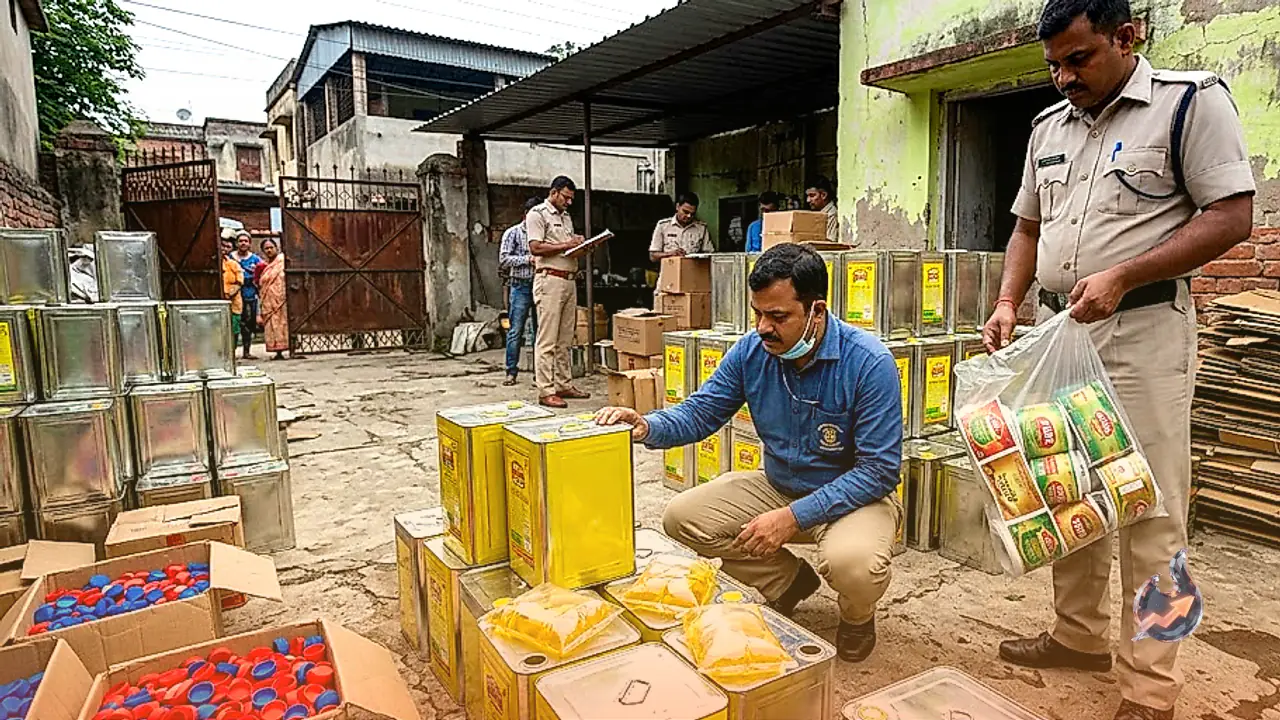

Authorities in Raniganj, West Bengal, launched a massive and coordinated crackdown against food adulteration on Friday, targeting multiple local businesses and distributors. The extensive operation was jointly carried out by the state food department, the enforcement branch, and the metrology department. Throughout the day, inspection teams visited various establishments across the city, including traditional sweet shops selling peda and batasa, spice vendors, and a snack manufacturing unit. The operation took a major turn when the team raided a suspected location in the Sarda Pally area of Girjapara based on confidential intelligence.
Raid at Edible Oil Supplier's Residence
Acting on a tip-off, officials descended upon the residence of local edible oil supplier Utpal Garai in Sarda Pally. During a thorough search of the premises, teams discovered a large stash of materials concealed inside indoor closets and a warehouse-like room. The recovery included a vast quantity of duplicate labels, brand stickers, oil container caps, and metal tins belonging to various prominent and established companies. Several of these tins were found to be already filled with oil, pointing toward a well-organized illegal packaging and distribution network operating from a residential area.
Suspicion of Chemical Adulteration
Based on preliminary findings at the scene, officials expressed strong suspicion that low-grade, cheaper oils were being mixed with other substances or chemicals. The blended oil was then allegedly packaged using counterfeit labels of reputed brands to deceive consumers and sell the substandard product in the open market. However, authorities emphasized that the exact nature of the adulterants mixed into the oil will only be definitively confirmed after the official laboratory test reports are processed and reviewed.
Brands Deny Authorization
Representatives of the various companies whose labels were recovered from the supplier's home were summoned to the location for questioning. Company officials inspected the seized materials and categorically stated that they had never granted the businessman any permission or license to use their brand logos, labels, or packaging. Expressing serious concern, the representatives alleged that their brand reputation was being exploited to flood the market with counterfeit edible oil, and they announced plans to file separate formal complaints regarding the copyright and trademark violations.
Inspections Across Sweet and Spice Shops
Prior to the major oil bust, the inspection team carried out checks at several other commercial spots in the city. They visited a sweet shop located directly opposite the Raniganj police station to inspect the use of food colorings and general sanitation standards. Following that, inspectors examined a spice store, checking various items including whole turmeric. Finding the quality of the whole turmeric questionable, officials demanded purchase invoices and sourcing details from the proprietor. The team also inspected a chanaachur manufacturing factory situated at Kalaligali in Shishubagan. While no major adulteration was detected at the snack factory, operators were issued strict warnings and guidelines concerning hygiene protocols, cleanliness, and maintenance of mandatory paperwork.
Ongoing Campaign and Legal Action
Food Safety Officer Ajay Bhandari stated that several items were seized during the marathon operation and official samples of the edible oil were collected for testing. The final determination regarding any harmful adulteration will rely entirely on the laboratory analysis of these samples, alongside an ongoing inquiry into the alleged misuse of branded labels. Officials reiterated that the campaign against food adulteration will continue unabated across the region. Strict legal action will be initiated against all individuals found culpable once the investigation reaches its conclusion.