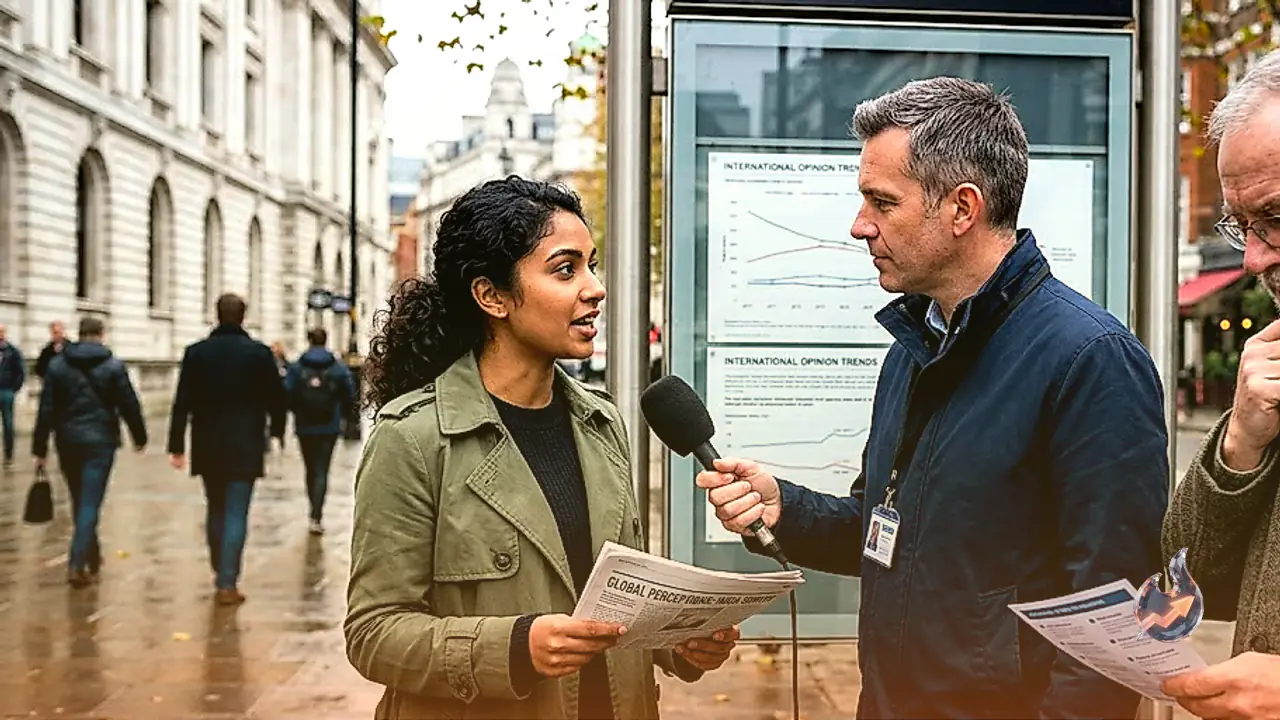























With the US midterm elections rapidly approaching, election officials across the nation are facing a complex challenge that extends far beyond physical voting machines or ballot processing. The dramatic rise of digital prediction markets, where users wager billions of dollars on political outcomes, has raised serious concerns within the electoral administration. In response to potential risks surrounding financial bias, market manipulation, and the unauthorized use of non-public information, election boards have begun implementing aggressive administrative defenses. Employees, poll workers, and temporary election staff are now being required to sign strict legal oaths foreswearing any financial participation in political betting markets, marking a pivotal moment in the battle to preserve public confidence in democratic outcomes.
New Integrity Oaths and the Drive to Safeguard Election Administration
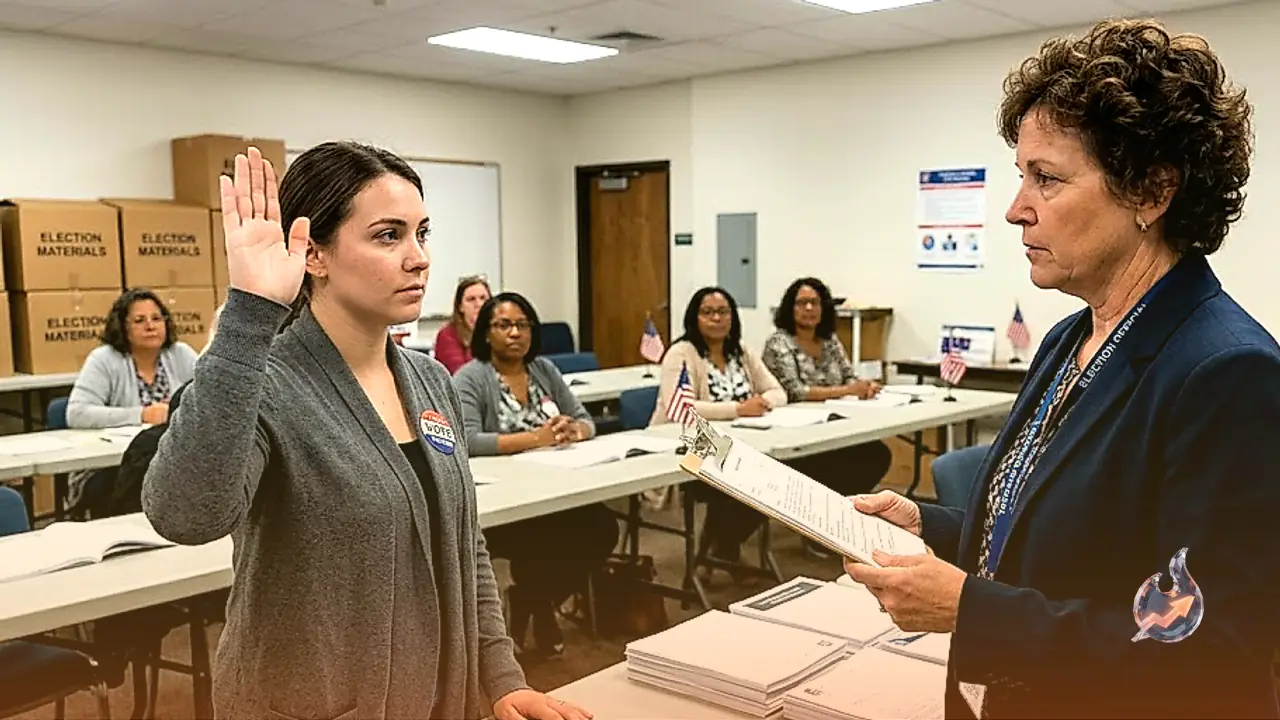
In Delaware County, Pennsylvania, the board of elections has taken direct measures to protect the integrity of the upcoming vote. Led by officials such as Allen, the board officially modified the legal oaths required of all personnel participating in election management. Under the updated language, every worker must explicitly affirm that they hold no direct or indirect financial interest in any bets, wagers, or prediction market contracts connected to the race. This requirement applies broadly across the organization, encompassing permanent administrative staff as well as approximately 2,500 temporary workers hired to assist with ballot processing on Election Day.
The policy reflects deep anxiety among administrators regarding the influence of financial speculation on public institutions. Officials view the rapid expansion of political prediction platforms as an existential threat to voter trust. Allen emphasized that prediction markets create monetary incentives for bad actors to tamper with election processes. Furthermore, administrators fear that individuals who lose substantial sums on failed wagers may direct their frustration and anger at local poll workers, creating unsafe conditions at voting sites.
The Misconception of Market Odds and Misinformation Risks
With under 100 days remaining before the midterms, election administrators are working to understand how prediction markets might complicate election operations. Recent primary contests have highlighted the stark discrepancies that can emerge between market probabilities and official certified results. During the Wisconsin gubernatorial primary, leading prediction platforms including Kalshi and Polymarket maintained high probabilities for progressive candidate Francesca Hong right until the initial vote tallies began reporting, even as traditional polling also failed to predict the eventual outcome. Such swings illustrate the inherent volatility of speculative political markets.
Administrative experts warn that voters frequently mistake prediction market probabilities for definitive forecasts or official counts. When voters place unwarranted faith in market odds, unexpected election outcomes can trigger intense skepticism and outrage. This dynamic creates fertile ground for election denialism and aggressive behavior against election workers, a trend that several election clerks report experiencing during recent voting cycles.
Rising Aggression and Threats Against Election Workers
Dean Logan, the county clerk for Los Angeles County, the largest voting jurisdiction in the United States, addressed these growing pressures during a panel hosted by the Partnership for Large Election Jurisdictions. Reflecting on recent primary contests, Dean Logan noted that market volatility directly contributed to heightened tension among observers and individuals with financial stakes in the outcome. He observed an unprecedented level of hostility and aggressive behavior directed toward election staff, far exceeding levels seen in previous election cycles.
In response to these safety concerns, prediction market operators have attempted to distance themselves from political violence. Jacki McGavick, a spokesperson for Kalshi, stated, "Threatening an election official or poll worker is a crime, and Kalshi condemns it in the strongest terms, full stop." Representatives from both Kalshi and Polymarket confirmed that their platforms strictly prohibit contracts or betting pools based on whether civil unrest or violence occurs at polling places.
Financial Arbitrage Versus Vulnerability in Low-Volume Races
A major vulnerability identified by election officials is the widespread public confusion regarding what prediction market odds actually signify. A survey conducted by the Partnership for Large Election Jurisdictions revealed that 75 percent of respondents could not accurately explain what market odds represented. More concerningly, 35 percent of participants incorrectly believed that market probabilities reflected official state vote counts or government projections.
Addressing this issue, Dean Logan stated, "The challenge is that many people don't distinguish between a market reflecting the views of participants and the official election process." When the general public confuses speculative betting odds with official election data, discrepancy between certified results and market trends can easily be weaponized by bad actors to fuel disinformation campaigns.
Amy Cohen, executive director of the National Association of State Election Directors, highlighted the communication challenges this creates. Amy Cohen noted, "That's hard, because you're combining two topics that the general public doesn't have a great understanding of, which is elections and prediction markets." When certified election tallies diverge from speculative betting trends, explaining the variance to a skeptical public becomes exceptionally difficult.
Market Efficiency Claims Versus Vulnerability in Local Races
Despite these administrative warnings, experienced political traders argue that fears of widespread market manipulation are overstated. Caleb Davies, a veteran politics trader, contends that while manipulation concerns sound plausible, they do not withstand rigorous economic analysis. According to Caleb Davies, if a rogue actor attempts to artificially inflate an underdog's odds by dumping capital into a contract, rational market participants will quickly spot the mispricing. Traders looking for profit will immediately sell the overvalued contract, driving the odds back to their equilibrium level almost instantly.
Polymarket spokesperson Annabel Walsh echoed this perspective, noting, "Other traders will recognize that there's an opportunity to turn a profit off of that artificial boost." Platforms point to real-world instances where temporary price distortions self-corrected within seconds. During the Los Angeles mayoral election, a massive speculative bet placed on candidate Spencer Pratt skewed odds on Kalshi, but opposing market pressure returned the odds to normal within nine seconds.
However, legal scholars point out that smaller, low-volume political races remain highly vulnerable. While high-profile contests attract millions of dollars in trading volume, lower-tier congressional or local races often feature only a few thousand dollars in total wagers. Andrew Cates, a Texas-based election law attorney, warned, "Anybody could place a big bet on a race and skew at least the perception of the odds of that person winning." In smaller contests, targeted financial bets can artificially alter perceived momentum and voter perceptions without facing immediate correction from institutional traders.
The Explosion of Political Betting Culture and Multi-Billion-Dollar Stakes
Political prediction markets were long confined to niche academic and hobbyist circles. PredictIt, a platform operating since 2014, maintains strict position caps limiting individual wagers to $3,500 per race to prevent market distortion. Toni Galeassi, public relations director for PredictIt, stated, "As prediction markets grow, we believe responsible market design, including appropriate limits and clear communication about what market probabilities represent are important." Toni Galeassi also emphasized that any threats directed toward election personnel are completely unacceptable.
In contrast, newer commercial platforms operate on a vastly larger financial scale. In 2024, reporting by Fortune indicated that over $3.2 billion was wagered globally on the outcome of the US presidential election. In one notable instance, a single French user on Polymarket net $80 million after correctly predicting a Donald Trump victory. Amanda Fischer, policy director at Better Markets and a former SEC official, observed, "This is our first real, full election cycle for national elections where prediction markets have been fully unleashed." Both Kalshi and Polymarket now operate dedicated midterm hubs catering to retail and institutional speculators.
Influencer Promotions and the Shadow of Election Denialism
The intersection of political gambling and digital marketing has raised additional ethical concerns. During the Los Angeles mayoral primary, affiliate marketers contracted by Kalshi and Polymarket paid right-wing social media influencers to generate promotional content questioning official vote counting processes. Although platform terms explicitly prohibit promotional partners from pushing election-denial narratives, the sponsored posts gained significant traction online.
Following public backlash, the platforms required the influencers to remove paid promotion disclaimers from the posts. While both companies reaffirmed their commitment to enforcing marketing guidelines, governance experts question whether affiliate networks can effectively control narrative manipulation. Amanda Fischer emphasized that these high-reach social accounts hold substantial power to shape public perception and influence voter behavior around election integrity.
Early Data Access and the Growing Specter of Insider Trading
The potential for insider trading represents another critical vulnerability for election authorities. Because election staff and administrative personnel have access to preliminary vote tallies before results are publicly released, the incentive to exploit non-public data for financial gain is extraordinarily high. Jared DeMarinis, administrator of elections for the Maryland State Board of Elections, warned, "Just like in cases of election disinformation, once it takes root it will take Herculean efforts to undo its damage to the electoral process."
To combat this risk, Jared DeMarinis confirmed that Maryland is preparing to adopt anti-betting declarations similar to those implemented in Delaware County. Other jurisdictions are taking parallel action. In July, Arizona Secretary of State Adrian Fontes explicitly prohibited all department staff from using non-public administrative data to place wagers on political prediction platforms. Similarly, Cook County Clerk Monica Gordon stated, "We are reinforcing our internal policies to ensure that non-public information is never used or shared by staff for personal gain."
State regulatory bodies are also issuing warnings to the general voting public. The Wisconsin Elections Commission recently cautioned citizens that state law forbids individuals from placing bets on election outcomes and subsequently voting in that same election. The enforcement warning drew criticism from market advocates, with a Kalshi employee characterizing the rule on X as a form of voter suppression.
Federal Oversight and Calls for Comprehensive Bans
Federal law prohibits insider trading and fraudulent activities across financial markets, and trading platforms maintain internal compliance protocols. Jack Such, a spokesperson for Kalshi, stated, "Specifically in elections, we have a broad list of people that are not allowed to be in the markets." This prohibition extends to campaign donors, political staff, and immediate family members. Over the past year, Kalshi has reported multiple instances of attempted market manipulation and insider trading to the Commodity Futures Trading Commission (CFTC), including a case involving a sitting Senate candidate who attempted to place bets on his own race.
Platform operators contend that automated surveillance tools provide adequate defense against illicit trading. Jacki McGavick highlighted that Kalshi utilizes proprietary algorithms to proactively block restricted traders before wagers can be executed. Meanwhile, Polymarket appointed Shana Bautista, a former FBI official and Coinbase investigator, as global head of investigations. Shana Bautista noted, "When it comes to elections, our team of investigators is actively reviewing and identifying anomalous activity."
At the federal level, the CFTC maintains standard market oversight without introducing midterm-specific protocols. CFTC spokesperson Brooke Nethercott confirmed, "The CFTC is extensively monitoring election markets, just like all other markets, for manipulation, fraud, or insider trading." However, legal scholars argue that existing regulations are insufficient to protect democratic processes. Alexandra Thornton, senior director for financial regulation at the Center for American Progress, advocated for strict federal prohibitions, stating, "All federal government employees at any level, any part of the federal government, and the military, should be banned from using prediction markets at all."