
















India's diplomatic push for structural changes on the international stage has received a notable boost as a neighboring nation has aligned its voice with New Delhi's position. Bangladesh has explicitly backed India's long-standing stance regarding the urgent need for reforms within the United Nations, particularly concerning the structure of the UN Security Council. The newly appointed leadership at the UN General Assembly has emphasized that the organization requires deep and substantive changes rather than superficial or cosmetic adjustments, directly reinforcing the arguments that developing nations have advocated for decades.
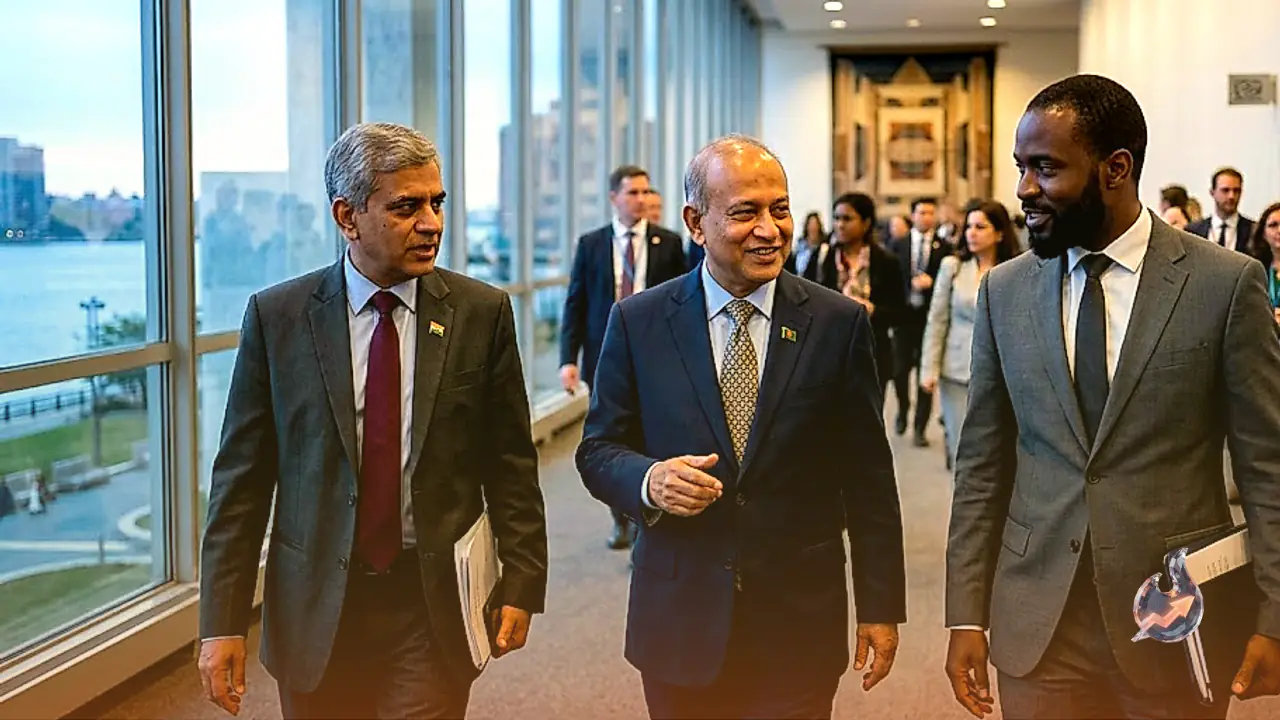
Khalilur Rahman, who assumed office as the President of the 81st session of the United Nations General Assembly on Tuesday, September 9, 2026, addressed these pressing matters during a media interaction. When asked how his tenure could help advance the long-stalled reforms within the UN Security Council, he underscored the critical necessity of structural evolution. He noted that the current global architecture suffers from a deficit of trust, which can only be mended if the organization undergoes genuine transformation to restore international confidence.
Advocating for Substantive Change
Rahman stressed that any reform efforts must go beyond mere nomenclature to deliver tangible results. He stated that if changes do not restore the world's faith in the United Nations, they will merely be dismissed as minor or token adjustments, adding that he takes the reform mandate with utmost seriousness. This viewpoint mirrors India's persistent argument that the existing global governance framework fails to reflect contemporary geopolitical realities and that the Security Council must be expanded and restructured to accommodate emerging powers.
Preparing for Future Challenges
Having previously served as the Foreign Minister of Bangladesh, Rahman confirmed his continued support for United Nations Secretary-General Antonio Guterres's UN80 initiative. This initiative aims to streamline the organization's machinery, making it simpler, more effective, and better equipped to handle operational demands. He acknowledged that a lack of trust remains a major hurdle facing the global body, requiring deep structural overhauls so that the organization is prepared not just for current dilemmas but for future eventualities.
Reflecting on the passage of time, he pointed out that the world is no longer operating under the 1945 paradigm or the conditions of the historic San Francisco Conference where the UN Charter was originally approved. Highlighting that the international community has firmly entered the 21st century and that the United Nations has existed for over 80 years, he asserted that the organization must evolve alongside a rapidly changing world. The global landscape has moved forward, and the multilateral body must adapt in tandem with these shifts.
Prioritizing Cooperation and Dialogue
The UNGA President emphasized that he will prioritize cooperation and constructive dialogue to address complex global challenges and capitalize on emerging opportunities. He recognized that achieving immediate consensus on every complex issue is not always feasible, noting that certain disputes may remain unresolved for extended periods and require patience to reach a settlement. Nevertheless, he urged member states to persist in building common ground wherever possible. Rahman was elected in June to lead the 81st session of the General Assembly, which commenced on September 8 at the United Nations headquarters, succeeding former German Foreign Minister Annalena Baerbock.