


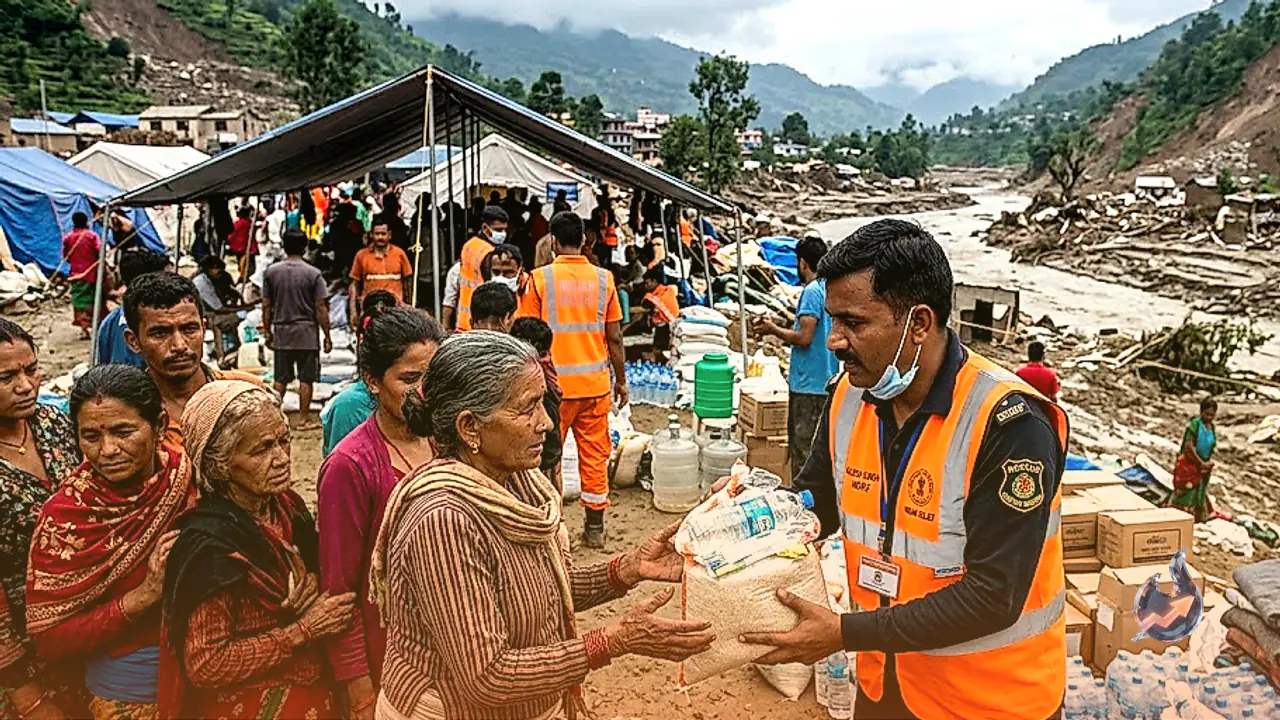






















An extraordinary meteorological occurrence across the Northwest Pacific Ocean and the South China Sea has brought intense weather turmoil to the Asia Pacific region. Atmospheric monitoring reveals that four separate marine typhoons have formed concurrently, creating a combined storm network that is threatening coastal infrastructure and daily life. Typhoon Narra has emerged as the most immediate threat, making landfall with destructive winds and rain, while forecasters warn that conditions will remain perilous over the next 72 hours.
Typhoon Narra Makes Landfall in Hainan Bringing Torrential Destruction
Hainan province, a prominent coastal resort destination in China, absorbed the initial direct impact of Typhoon Narra. Upon striking the coast, the system unleashed sustained wind speeds exceeding 100 kilometers per hour alongside torrential downpours. In response to the rapid deterioration of weather conditions, authorities immediately declared a red alert across the island.
High velocity wind gusts uprooted hundreds of trees across urban roadways, while continuous heavy rain caused widespread street flooding. Safety officials initiated rapid evacuations, transporting tens of thousands of residents from low-lying and coastal communities to emergency shelters. All public beach facilities, water sports operations, and major tourist venues were ordered closed, while commercial establishments suspended normal operations.
Landslide and Flood Warnings Issued Across Three Major Chinese Provinces
After impacting the coastline of Hainan, Typhoon Narra began progressing toward the inland terrain of southern China. The movement of the storm system threatens three major economic and residential provinces in the region. The National Meteorological Centre of China issued official advisories stating that these interior areas should prepare for potential record-breaking rainfall volumes in the coming days.
The projected deluge presents severe risks of landslides in elevated hill regions and rapid flash flooding within municipal areas. River systems across the three provinces are experiencing rapid water level increases, prompting engineering crews to maintain continuous monitoring of reservoir and dam levels to prevent overflows.
Rare Meteorological Phenomenon and the Rapid Advance of Typhoon Saudel
Meteorologists note that the simultaneous presence of four active tropical cyclones in the region is a highly unusual weather configuration, typically observed only once in a decade. Alongside Narra, Typhoon Saudel has developed into a formidable second system, advancing steadily toward the eastern coastline of China. Numerical models indicate that Saudel is on a trajectory to impact Zhejiang and Fujian provinces.
With two major typhoons threatening the nation's eastern and southern boundaries, regional defense networks have been placed on maximum emergency readiness. Military units, specialized search and rescue teams, and local government disaster managers are maintaining round the clock readiness to respond to storm damage and flooding incidents.
Flight Cancellations and Transport Standstill in Japan's Okinawa Province
The disturbance created by the multi-cyclone system extends well beyond mainland China, causing significant transport disruption in Japan. Extreme barometric pressure fluctuations over the ocean have generated severe flight hazard risks throughout Japanese airspace. In Okinawa province, these severe conditions forced the cancellation of 92 commercial flights on Wednesday.
The sudden cancellations left thousands of air travelers stranded at regional terminal facilities, prompting airline operators to advise passengers to verify flight status prior to airport transit. Additionally, maritime transport and ferry routes have been suspended as offshore wave heights reached dangerous levels of several meters.
Critical Outlook for the Next 72 to 96 Hours
Meteorological agencies in China have designated the upcoming 3 to 4 day window (72 to 96 hours) as a high risk period. As Typhoon Narra drives deeper into the interior landmass, heavy precipitation is expected to cause river basins to breach critical safety thresholds. Public safety advisories instruct residents in vulnerable areas to remain indoors, while specialized logistics teams have been deployed to secure essential food and medical supply networks.