














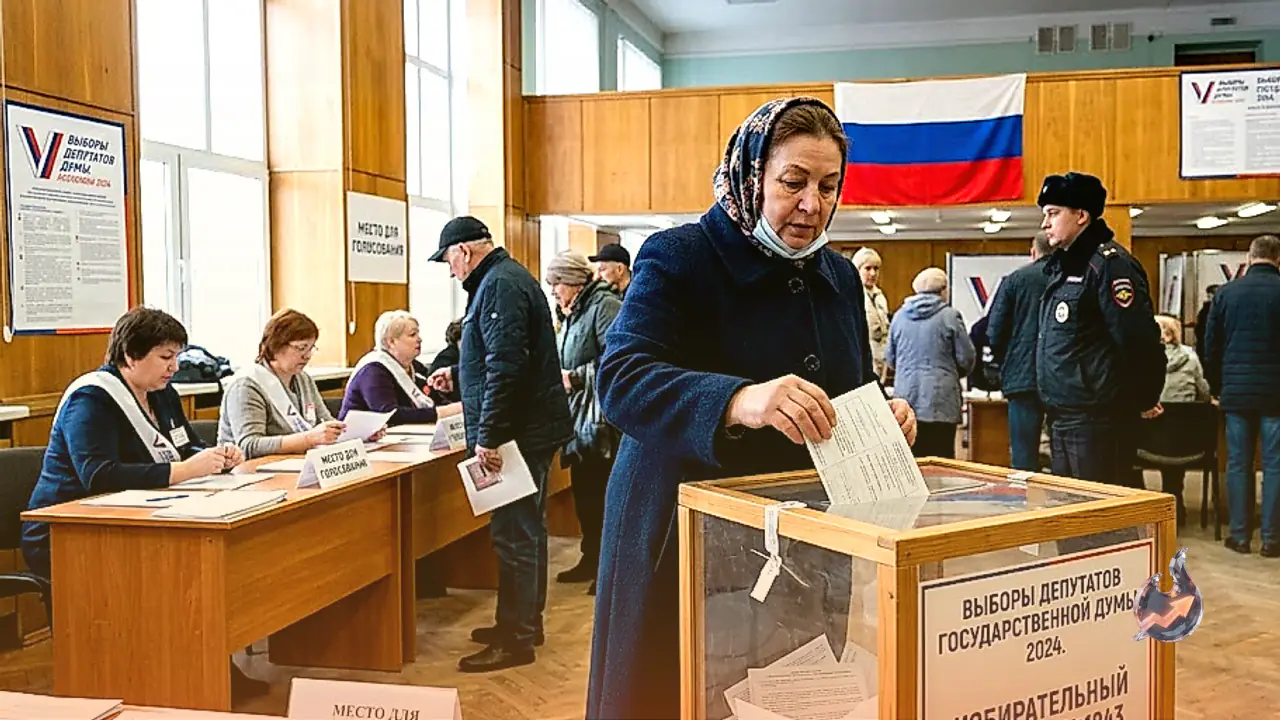

Voting is underway across Russia to determine the composition of the State Duma, marking the nation's first parliamentary election since launching its military offensive against Ukraine. The three-day electoral process, running from Friday through Sunday, arrives at a complicated juncture characterized by a slowing domestic economy and repeated Ukrainian drone strikes targeting oil refineries and depots well behind frontline borders. President Vladimir Putin appears guaranteed a favorable outcome, with the ruling United Russia party widely anticipated to retain its overwhelming dominance in the lower house of parliament. While state officials describe the vote as a direct exercise of democratic will, government critics contend that strict restrictions on viable opposition make the eventual outcome largely predetermined.
How Russia Elects Its Parliamentary Chamber
Members of the State Duma are selected through a split electoral format designed to allocate all 450 seats in the federal assembly. Half of the legislative body, amounting to 225 seats, is filled through proportional party-list voting across the entire federation, while the remaining 225 members are decided via direct individual races in single-member constituencies. Around 111 million citizens are registered and eligible to participate, with election authorities offering both standard paper ballots and electronic voting platforms.
The current voting window also incorporates dozens of regional and municipal ballots taking place simultaneously throughout the country. Gubernatorial races are being decided in 11 regions, alongside legislative elections in 39 regional assemblies. Distributing the vote across three full days was designed to maximize turnout and manage logistics during wartime conditions.
United Russia's Grip and Marquee Candidates
Formed in 2001 through a strategic merger of Kremlin-aligned factions, United Russia has functioned as the core legislative bedrock underpinning Vladimir Putin's domestic and foreign agenda. In the preceding 2021 parliamentary contest, the party secured a commanding supermajority exceeding two-thirds of all Duma seats. Electoral projections indicate that the dominant faction is well positioned to sustain its legislative fortress.
The party's official candidate slate features prominent political heavyweights, including Foreign Minister Sergey Lavrov and Moscow Mayor Sergey Sobyanin. Demonstrating the prominent role of the ongoing conflict in the campaign, the roster also includes war correspondent Yevgeny Poddubny, who sustained severe injuries in a Ukrainian drone strike. United Russia representatives have consistently centered their platforms on bolstering the war effort and reinforcing Putin's geopolitical objectives.
The Parliamentary System and Permitted Opposition
Apart from the ruling party, the ballot features several organizations classified as the systemic opposition, which hold seats in parliament but routinely vote alongside the Kremlin on critical national security and foreign policy measures. Within this landscape, the Yabloko party stood out as the sole registered political entity openly campaigning against the ongoing hostilities in Ukraine.
That platform faced severe legal curtailment in August, when the Supreme Court issued a ruling expelling Yabloko from the party-list ballot. Judicial authorities concluded that the party's anti-war messaging was legally equivalent to calling for the violation of Russia's territorial integrity. Consequently, the remaining Yabloko candidates are restricted to competing exclusively as individual contenders in select single-member districts.
Among the mainstream alternatives, the Communist Party has served as a fixture of the legislative chamber since the 1990s under the continuous guidance of Gennady Zyuganov. While the party frequently criticizes governmental welfare and economic management, it steadfastly avoids direct attacks on Vladimir Putin and offers explicit backing for the war in Ukraine. The Liberal Democratic Party of Russia (LDPR) also maintains an enduring presence, running on a staunchly nationalist platform.
Smaller Contenders on the National Ballot
The social-democratic A Just Russia party has operated within national politics for roughly two decades, maintaining an alignment that fully backs the ongoing military campaign in Ukraine. In contrast, the New People party was established shortly before the 2021 elections to appeal to younger demographics and tech-oriented professionals, capturing just over 5 percent of the national vote to establish a modest parliamentary presence.
Several other political organizations are actively competing to cross the electoral threshold and claim seats in the State Duma. These contenders primarily comprise Communists of Russia, Party of Pensioners, Green Party, Party of Direct Democracy, and the Motherland Party, all vying for limited proportional representation.
The Stakes for the Kremlin
Because these elections represent the first nationwide parliamentary vote since Russian troops entered Ukraine, the Kremlin views the contest as a critical referendum on its geopolitical trajectory. Analysts observe that Vladimir Putin has directly tethered the election's legitimacy to public endorsement of the conflict. Addressing United Russia's party gathering in August, Putin explicitly urged delegates to devote every resource toward securing victory on the battlefield.
Since Vladimir Putin initially assumed the presidency in 2000, United Russia has secured sweeping victories in every Duma election, typically by broad margins. However, past contests have occasionally generated severe domestic tension. The 2011 parliamentary election triggered substantial allegations of ballot rigging, culminating in massive street demonstrations that grew into the most significant public protests of Putin's tenure. This year's election process will determine how the federal legislature operates under the prolonged pressures of wartime governance.