





















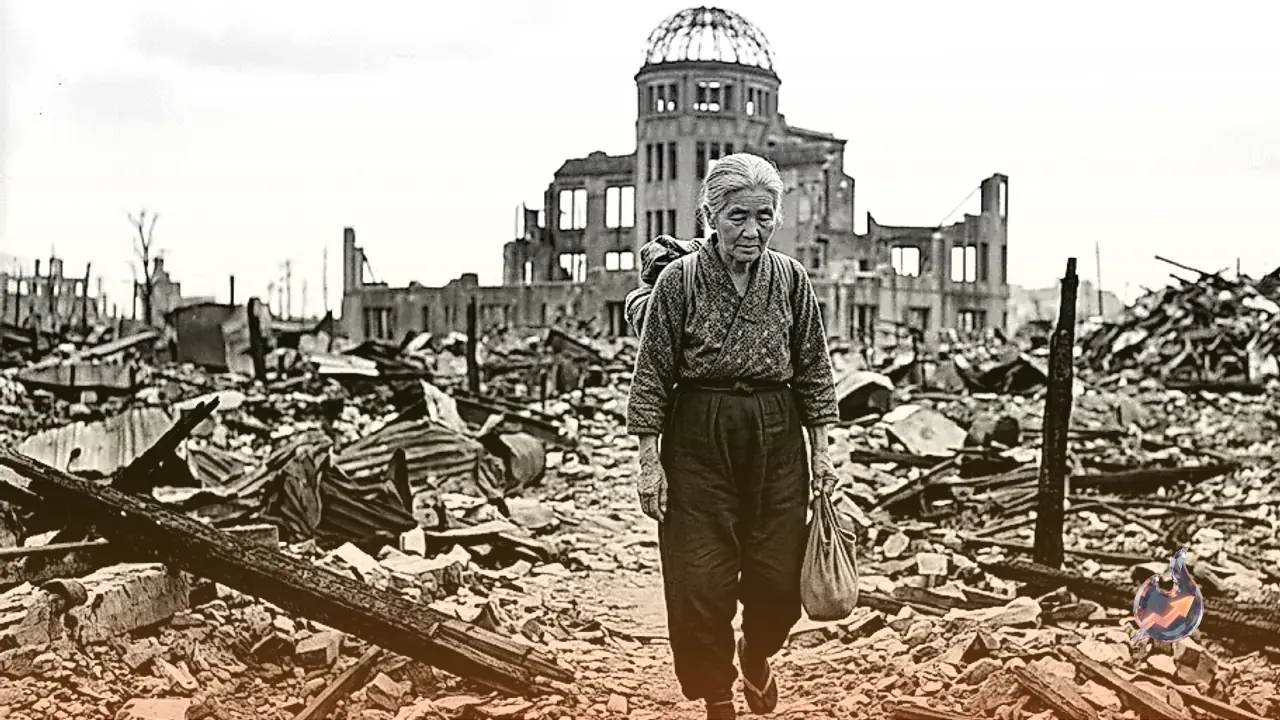

On the morning of August 6, 1945, life in the Japanese city of Hiroshima began like any other ordinary day. Residents were going about their daily routines, and the streets were filled with regular morning activity. However, shortly after an American military aircraft appeared in the clear sky, an unprecedented catastrophe unfolded. Within seconds, an extraordinary flash of light blinded everyone in the vicinity, followed almost instantaneously by an atomic explosion of unimaginable force. The blast engulfed the entire city in a sea of fire and debris, destroying Hiroshima in a single moment and permanently altering the course of human history.
The Manhattan Project and the Birth of Atomic Weapons
To understand the background of this nuclear strike, one must examine the state of global conflict in 1945. Germany had already surrendered on the European front, but Japan continued its stubborn resistance against the Allied forces in the Pacific theatre. American military planners strongly feared that undertaking a full-scale ground invasion of the Japanese mainland would result in the deaths of hundreds of thousands of Allied soldiers. To avert such massive casualties, the United States decided to deploy its ultra-secret nuclear capability.
This covert endeavour had its roots in 1939, when prominent scientists warned of the potential to construct immensely destructive weapons using nuclear energy. In response, the United States launched a collaborative secret mission with Great Britain and Canada, codenamed the Manhattan Project. Supported by a budget of approximately 2 billion dollars and the combined expertise of thousands of top scientists, the project operated under strict secrecy. After years of intensive research, the world's first successful nuclear test, known as the Trinity Test, was conducted in the desert of New Mexico in July 1945.
Why Hiroshima Was Selected as the Target
Following the decision to utilize the atomic bomb, American military officials evaluated several Japanese urban centers before finalizing Hiroshima as the primary target. Strategic factors heavily influenced this selection. Crucially, Hiroshima served as a major military headquarters for the Japanese armed forces. Furthermore, unlike many other industrial cities, Hiroshima had remained largely untouched by previous conventional bombing raids. The American administration sought a location where the true, unmitigated destructive capability of the atomic weapon could be demonstrated clearly to the world, making Hiroshima the focal target.
Flight of the Enola Gay and the 'Little Boy' Explosion
In the early hours of August 6, 1945, a United States Army Air Forces B-29 bomber named Enola Gay took off from an airfield on Tinian Island and headed toward Japan. The historic mission was commanded by pilot Colonel Paul Tibbets. Secured inside the aircraft bomb bay was a four-ton uranium-based atomic bomb bearing the code name Little Boy. The entire operation was kept strictly secret to prevent Japanese air defense systems from detecting the incoming threat.
At precisely 8:15 AM, Little Boy was released from the Enola Gay directly above central Hiroshima. After falling for approximately 43 seconds, the bomb detonated at an altitude of roughly 600 meters above the ground. The explosion released intense heat, ultraviolet radiation, and a violent shockwave that flattened the city in seconds. Thousands of buildings collapsed instantly, and widespread fires erupted across the ruins, leaving residents with virtually no opportunity to escape or seek shelter.
Immediate Devastation and the Deadly Toll of Radiation
The immediate impact of the nuclear blast resulted in the deaths of approximately 70,000 to 80,000 people. The extreme temperatures near the epicenter instantly vaporized countless victims, rendering formal identification impossible. Thousands more were crushed beneath heavy rubble as structures disintegrated. A scene of absolute devastation swept the city, while the destruction of almost all medical infrastructure made it nearly impossible to provide emergency care to the critically injured survivors.
For those who survived the initial blast, the tragedy was far from over. Nuclear fallout and ionizing radiation inflicted severe long-term harm on the population. In subsequent months and years, thousands developed fatal conditions such as cancer and leukemia. Additionally, high rates of congenital birth defects were documented among children born to survivors. The invisible poison of radiation lingered for decades, deeply affecting subsequent generations of victimized families.
Nagasaki Bombing and the Final End of World War II
Despite the unprecedented destruction wrought upon Hiroshima, Japan did not issue an immediate surrender. Consequently, three days later, on August 9, 1945, the United States dropped a second atomic bomb, a plutonium device named Fat Man, on the Japanese city of Nagasaki. This second nuclear strike claimed thousands more lives, completely crippling Japan's military capacity, political resolve, and ability to continue fighting.
Faced with total annihilation, Emperor Hirohito of Japan delivered a historic radio broadcast on August 15, 1945, announcing the unconditional surrender of Japanese forces to the Allies. On September 2, 1945, formal surrender documents were signed aboard a warship, officially bringing World War II to a close. Although the war ended, the atomic bombings of Hiroshima and Nagasaki remained among the most traumatic and sobering events in human history.
Today, Hiroshima has been completely rebuilt as a thriving, modern metropolis. Nevertheless, site landmarks such as the Peace Memorial, the iconic Atomic Bomb Dome, and the local peace museum continue to remind millions of international visitors of that harrowing morning of August 6, 1945, and the enduring lesson regarding the perils of nuclear warfare.