























A fresh wave of political turbulence has hit the German federal administration after exit projections pointed to sharp reversals for the ruling Christian Democratic Union in two crucial state contests. Despite indications of heavy ground-level losses for his centre-right formation, Chancellor Friedrich Merz came forward shortly after ballot boxes sealed to dismiss suggestions that he might step down. Instead, he made clear that his coalition will double down on sweeping domestic policies designed to revitalize the national economy and reshape public institutions.
Severe Setback in Mecklenburg-Vorpommern
In the north-eastern region of Mecklenburg-Vorpommern, initial projections broadcast by ZDF dealt a severe psychological blow to the governing establishment. The right-wing populist Alternative for Germany was on course to claim top honours with an estimated 38% share of the popular vote. Close behind, the centre-left Social Democratic Party held on to second position with approximately 36%. In stark contrast, Merz's CDU found itself locked in an agonizing struggle merely to cross the mandatory threshold required to secure seats in the state parliament.
Addressing the outcome without hesitation, Merz openly labeled the north-eastern showing a disaster for his political family. While the AfD celebrated securing the single largest voting bloc in the province, its path to forming a regional administration remains effectively blocked. Other mainstream parliamentary groupings continue to adhere strictly to a policy of non-cooperation, refusing to enter into any legislative pact or ministerial alliance alongside the insurgent party.
Capital Battle Goes to the Left
The political mood proved equally unforgiving in Berlin, where metropolitan voters delivered a decisive rebuff to the CDU. According to estimates released as voting stations ceased operations, the socialist Die Linke outpaced the Christian Democrats by claiming nearly 26% of the capital's vote. The incumbent CDU trailed significantly, managing only 20% in the municipal balloting.
Voting across both territories formally concluded at 18:00 local time, equivalent to 17:00 BST, triggering an evening of tense analysis as officials began tallying the final tallies. For the ruling federal authorities, the twin metropolitan and provincial results underscored a profound disconnect between the central government and wide segments of the electorate.
Insistence on Welfare and Economic Overhauls
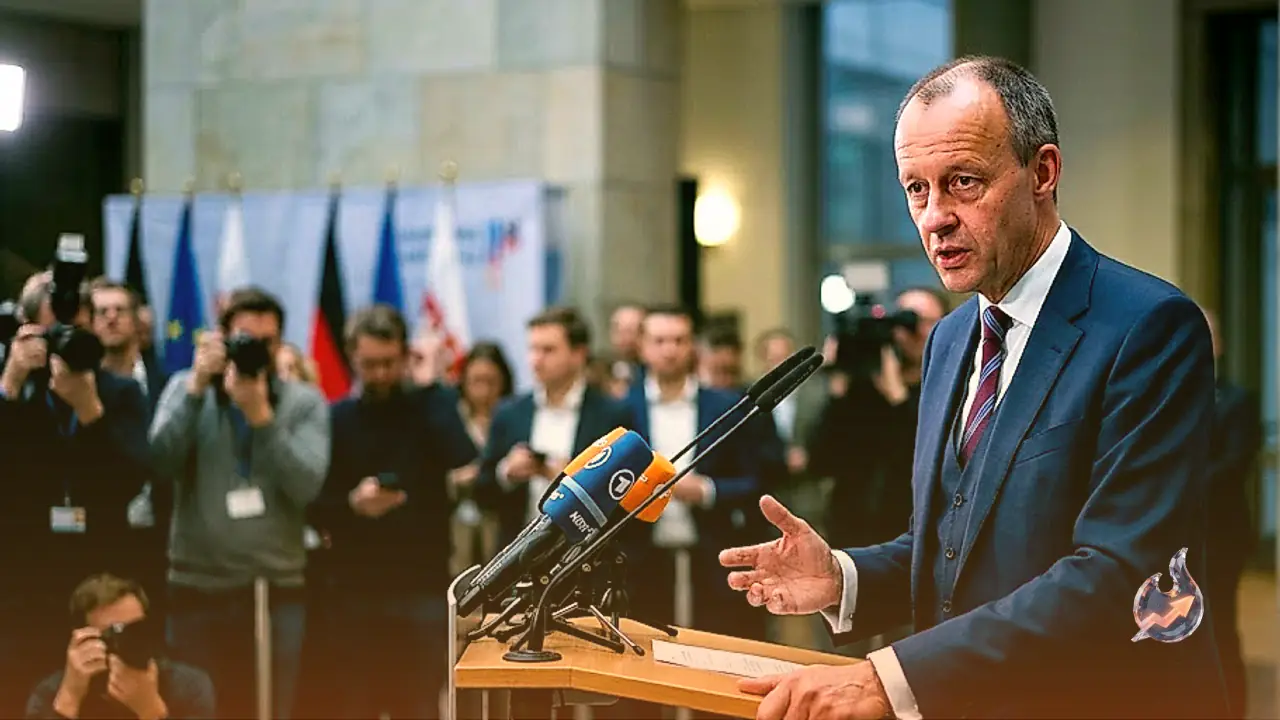
Appearing before the press on Sunday, Merz rejected calls to abandon his broader legislative vision in the wake of the electoral repudiation. He declared that his administration would press forward vigorously with an ambitious legislative portfolio targeting taxation restructuring, social welfare programs, and market regulations. Emphasizing personal commitment to the initiative, he insisted that the structural changes are indispensable and that he embraces full responsibility to propel the nation onward.
Framing the stakes in philosophical terms, the Chancellor argued that economic stagnation and institutional decay provide fertile ground for populist movements. He told reporters that his planned policy agenda serves as the true remedy against authoritarian tendencies increasingly creeping into the fabric of contemporary civic life. By delivering structural revitalization, Merz contended, the state can address the underlying insecurities driving voters away from traditional parties.
Speculation Over Coalition Stability and Leadership
The adverse electoral verdict arrives at a remarkably vulnerable juncture for Merz, who took charge of the chancellery only 16 months ago. Widespread public discontent and sliding personal ratings have fueled intense speculation in Berlin about whether his partners or intra-party rivals might pursue an early replacement through an unscheduled mid-term transition.
Prior to Sunday's balloting, eight state premier equivalents voiced explicit backing for Merz in an effort to present a unified front and suppress whispers of rebellion. While that joint declaration provided temporary political insulation, the reality of scraping by in the north-east while trailing by six points in the capital ensures that questions regarding his long-term tenure will persist. The coming days will test whether the coalition can maintain collective discipline or if calls for leadership renewal gain unstoppable momentum.