






















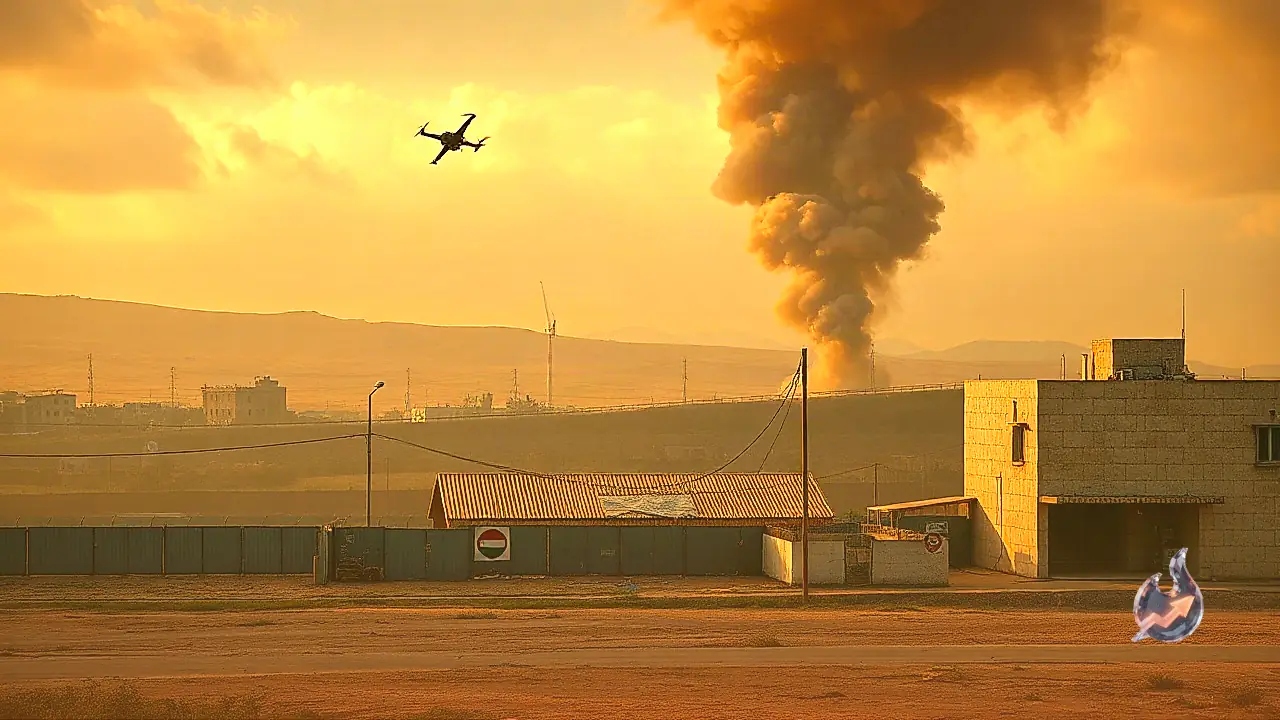

Tensions along the border have flared once again as Israel issued a stern warning to Hamas, threatening to escalate military strikes in response to a recent surge of kites, drones, and balloons launched from the Gaza territory. The recovery of several airborne devices in Israeli communities near the border over the weekend has prompted high-level security concerns and a vow of forceful countermeasures from the highest levels of the Israeli government.
Israeli Defence Minister Israel Katz declared on Monday that uncompromising actions will be implemented to permanently halt this phenomenon. Local media reports indicated that over the weekend, four kites were discovered in Kibbutz Nahal Oz, located approximately 800m or 2,620ft from the Gaza border. Several additional devices were retrieved from other locations across southern Israel throughout the previous week, stoking widespread anxiety among local residents.
Military sources cited in local reports suggested that authorities believe Hamas orchestrated the kite launches, potentially as a tactical maneuver to probe Israel's defensive readiness. Although the military confirmed that the recovered kites carried no suspicious materials and posed no immediate physical threat, the official stance remained uncompromising. Katz emphasized a policy of zero tolerance, stating that balloons and kites would be treated with the exact same severity as armed drones, regardless of whether they carried explosives.
Residents of Nahal Oz voiced profound apprehension, recalling the devastating period before the ongoing conflict when incendiary devices attached to balloons and kites routinely sparked massive fires, destroying local forests and agricultural farmlands. In a formal statement, the community residents asserted that they refuse to accept any containment policy when it comes to safeguarding their local security and daily lives.
In stark contrast, Hamas strongly refuted any direct involvement, dismissing the allegations as dangerous threats fabricated to justify ongoing military aggression. A spokesperson for the group maintained that the recovered items were simply children's toys found within displacement camps, belonging to youngsters trying to salvage their innocent childhood amidst widespread rubble. Furthermore, Hamas accused Israel of weaponizing the kite incidents as a pretext to sustain continuous airstrikes across Gaza, despite the formal ceasefire agreement established last October.
The ground reality on the humanitarian front continues to deteriorate amid these escalating warnings. On Sunday, Palestinian health officials confirmed that two individuals lost their lives and seven others sustained injuries following dual Israeli strikes targeting the Nuseirat refugee camp and the town of al-Zuwayda in central Gaza. Local media reported that a four-year-old boy named Mohammed Taha was among the casualties, killed when a residential building in al-Zuwayda, located just north of the Maghazi refugee camp, suffered a direct hit.
The Israeli military asserted that its operation successfully eliminated the commander of a Hamas weapons manufacturing site situated in the Maghazi area, identifying him as Ismail Abu Ful, and noted that prior evacuation warnings had been issued to local inhabitants. However, local civilians expressed despair over the relentless violence. Abu Ahmed, a displaced civilian sheltering near the impact zone, told Reuters that there effectively is no ceasefire, emphasizing that the local population simply desires viable solutions and a chance to live in peace.
Additional casualties were reported on Monday, with Palestinian media indicating that a man identified as Mohammed Abu Asad was killed during an overnight Israeli strike that hit a tent in the central town of Deir al-Balah. The Israeli military countered that Abu Asad was an active member of the elite Nukhba forces belonging to Hamas's military wing, accusing him of direct participation in the cross-border assault on southern Israel on 7 October 2023. That initial attack resulted in the deaths of approximately 1,200 people and the abduction of 251 hostages, triggering the large-scale military campaign that has persisted ever since.
According to figures provided by the Hamas-run health ministry in the territory, the total death toll resulting from Israeli military operations in Gaza has surpassed 74,420 people. This grim statistic includes 1,288 fatalities recorded since the ceasefire officially took effect, illustrating the extreme fragility of the current regional security landscape.