



















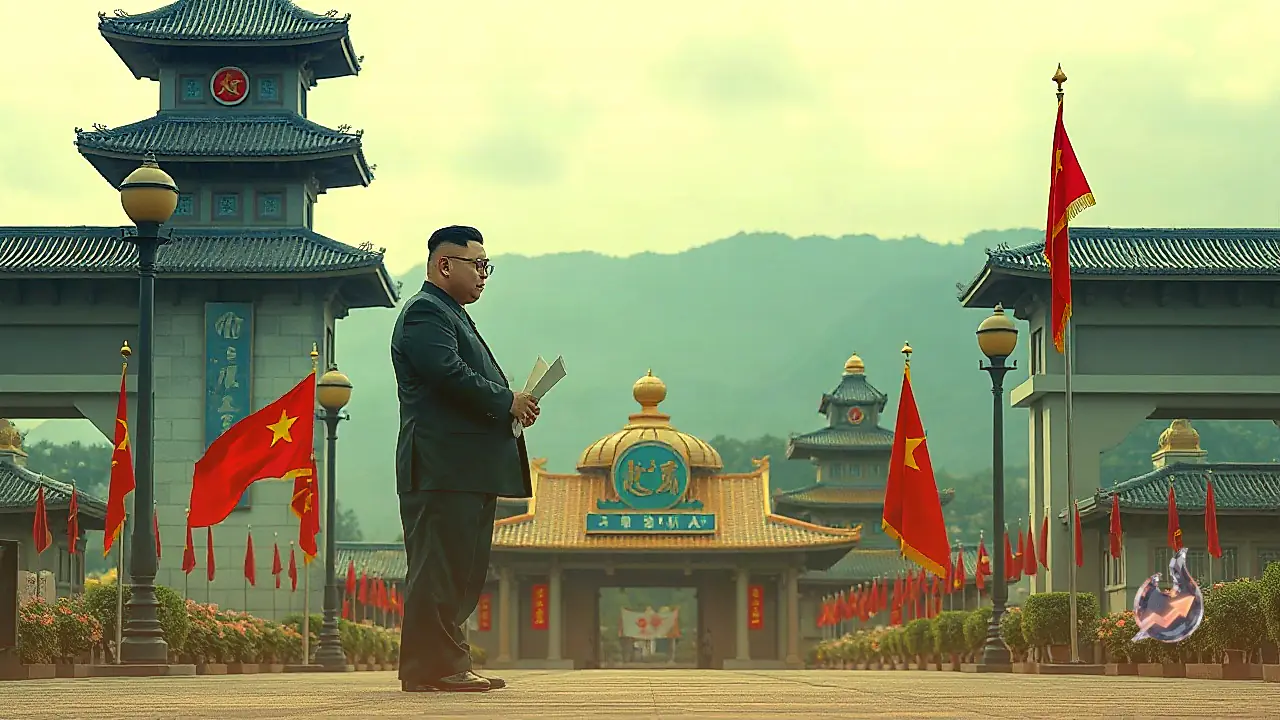

On the significant occasion of Vietnam's 81st National Day, diplomatic engagement between North Korea and Vietnam is demonstrating renewed momentum. North Korean Supreme Leader Kim Jong Un has dispatched a special letter to Vietnamese President To Lam, underscoring a shared intent to deepen long-standing bilateral relations. Through this official message, Kim Jong Un reiterated a firm commitment to advancing the traditional friendship, mutual trust, and strategic cooperation between both nations to unprecedented heights. The communication, highlighted by North Korea's official news agency KCNA, has drawn close attention from international diplomats monitoring evolving alliances across East and Southeast Asia.
Strengthening Ties Across Diplomatic and Strategic Fronts
In his formal message, Supreme Leader Kim Jong Un placed particular emphasis on advancing the comprehensive agreements established during the bilateral summit held in Pyongyang in October last year. The letter serves as a structured continuation of the shared vision agreed upon by President To Lam and Kim Jong Un during their high-level talks. Geopolitical analysts note that North Korea and Vietnam are now moving deliberately to revitalize their historical and ideological bonds, adapting them to address contemporary geopolitical realities.
The October 2025 Milestone and Subsequent High-Level Dialogue
October 2025 marked a pivotal milestone in the diplomatic trajectory of both countries, when Vietnamese President To Lam conducted an official state visit to Pyongyang. This visit carried immense diplomatic weight, representing the first trip by a top Vietnamese head of state to North Korea in 18 years. The historic meeting effectively reopened formal channels of communication that had remained quiet for nearly two decades, initiating a series of active diplomatic exchanges between Hanoi and Pyongyang.
Building on this momentum, Vietnam's Foreign Minister Le Hoai Trung traveled to Pyongyang in May this year for bilateral discussions with his North Korean counterpart, Choe Son Hui. The two foreign ministers engaged in extensive consultations covering mutual strategic interests, regional stability, and expanded bilateral cooperation. Following this engagement, senior security ministers from both nations convened in Pyongyang in June to discuss enhanced coordination in public safety, internal law enforcement, and national security mechanisms.
Overcoming Diplomatic Isolation Through Trusted Alliances
The relationship between North Korea and Vietnam is anchored in deep historical roots and shared communist ideology, forged during periods of mutual support amid major global conflicts. Although diplomatic contact experienced a period of relative dormancy due to shifting international dynamics and regional constraints, both governments now recognize the strategic value of rekindling their partnership. Facing global pressures and economic isolation, North Korea is prioritizing stronger ties with historical allies to bolster its standing on the world stage. The latest outreach by Kim Jong Un signals that political, economic, and security cooperation between Pyongyang and Hanoi is set to expand further.
The Historical Trajectory of Relations Between Vietnam and the United States
In contrast to its enduring ties with North Korea, Vietnam's historical relationship with the United States has traversed a complex and tumultuous trajectory. Following decades of French colonial rule, Vietnam proclaimed its independence in 1945 under the leadership of revolutionary leader Ho Chi Minh. However, the 1954 Geneva Accord temporarily partitioned the country into a communist North led by Ho Chi Minh and a non-communist South.
To curb the spread of communism in Asia, the United States extended military and financial support to South Vietnam. Meanwhile, North Vietnam and Viet Cong forces received substantial assistance from the Soviet Union and China. The 1964 Gulf of Tonkin incident triggered large-scale direct US military intervention, launching extensive bombing campaigns and intense warfare that resulted in immense loss of life on both sides. Growing anti-war sentiment among the American public ultimately led to widespread protests, culminating in the 1973 Paris Peace Accords and the withdrawal of US forces.
Following the war, formal diplomatic relations between Washington and Hanoi remained severed for over two decades. It was not until the 1990s, through diplomatic initiatives led by US President Bill Clinton, that relations were officially normalized. Today, former hostilities have given way to a robust partnership, with Vietnam and the United States maintaining strong economic and diplomatic ties.