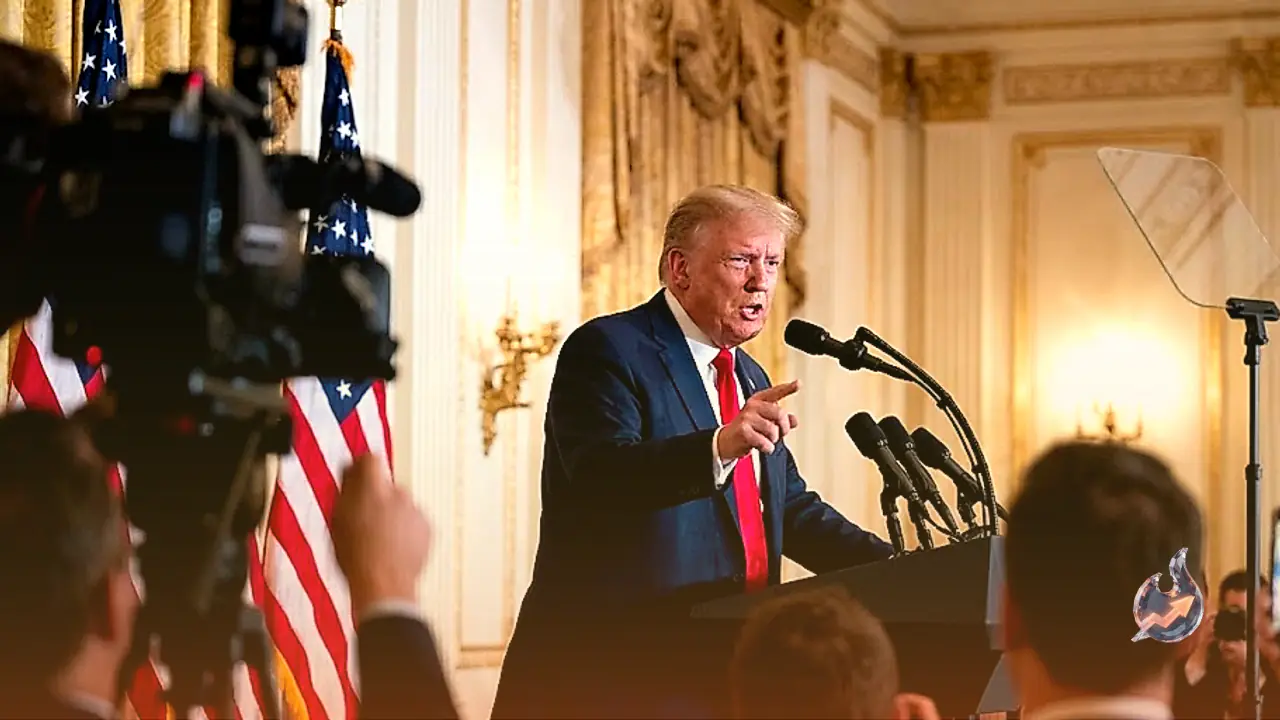



















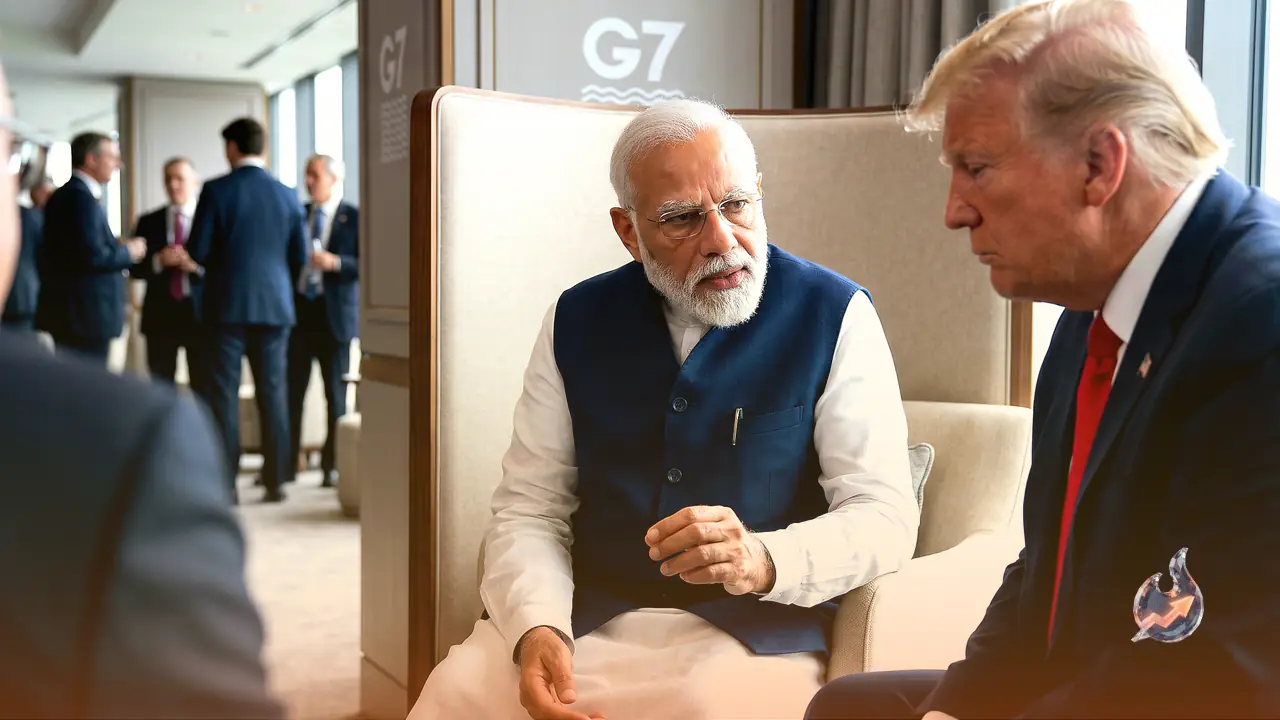

There is an old rule in diplomacy: if you want someone to truly understand you, speak to them in their own language. On the G7 Summit stage, Prime Minister Narendra Modi did exactly that. The very Ronald Reagan whom Donald Trump treats as his idol, and whose slogan Make America Great Again helped carry Trump to power, became the reference point Modi chose to signal that America's current conduct with the world is not acceptable. Alongside, by holding up India's own example, Modi explained how relationships between nations are meant to be nurtured.
An address that opened on a trust deficit
PM Modi began his remarks by flagging the issue of a shortfall in trust. He argued that today's world is deeply interconnected and that countries depend on one another, which only raises the value of genuine partnership. But such partnerships, he said, succeed only when trust sits at their core, the assurance that supply chains will never be turned into a weapon.
It was at this point that Modi reached for former US President Ronald Reagan. He noted that Reagan used to say Trust but Verify, and that the idea remains just as relevant today. Modi added that we owe it to future generations to build a trusted, rule based order suited to a new era. The remark was widely read as a direct message to Trump, who has shown little regard for any rule based system, has been turning supply chains into pressure tools, and has repeatedly imposed conditions on other countries, sometimes through tariffs and sometimes through threats.
Using India's example to define real friendship
PM Modi then offered India as a model of what true partnership looks like. He said India has always viewed the entire world as one family, and that every Indian effort has rested on the founding principle of Sarvjan Hitay, Sarvjan Sukhay, that is, welfare and happiness for all. Whenever a crisis struck, he said, India treated helping the world as its own responsibility.
As proof, Modi pointed to the COVID pandemic, when India sent medicines and vaccines to more than one hundred and fifty countries. He listed how, whether it was a cyclone in Sri Lanka, an earthquake in Afghanistan, floods in Mozambique, or a hurricane in Cuba and Jamaica, India acted on the principle of Humanity First. India sees its partners through that lens, he said, while war destroys precisely this kind of trust, which is why the greatest need of the hour is to preserve it. This too was a clear message aimed at Trump.
The deep bond between Trump and Reagan
It helps to understand why Modi specifically picked Reagan. Donald Trump openly calls Reagan a favourite. In his well known book The Art of the Deal (1987), Trump heaped praise on Reagan. He has even displayed a photograph of himself shaking hands with Reagan at the White House.
Back in 2012, Trump had officially registered Reagan's 1980 slogan Make America Great Again under his own name. Interestingly, Reagan was first a Democrat before becoming a Republican. Trump walked a similar path, switching his party and rising to become a major face of the Republican camp.
Carrying forward Reagan's principle of Peace through Strength, Trump pushed through a record increase in the US military budget. Embracing Reagan's supply-side economics, Trump also delivered sweeping cuts to corporate and personal taxes in 2017.
Reagan was stuck in Lebanon, Trump in Iran
History appears to be echoing itself. Just as Trump now looks entangled over Iran, Reagan was once caught in Lebanon. In 1982, the United States sent its troops to Lebanon as part of a multinational peacekeeping force. In October 1983, a suicide truck bomb struck the US Marine barracks in Beirut, killing 241 American soldiers.
After that attack, pressure mounted heavily on the Reagan administration, and in early 1984 the United States pulled most of its Marines out of Lebanon. Today the situation seems to be shaping up such that Trump too appears to be bending before Iran.