




















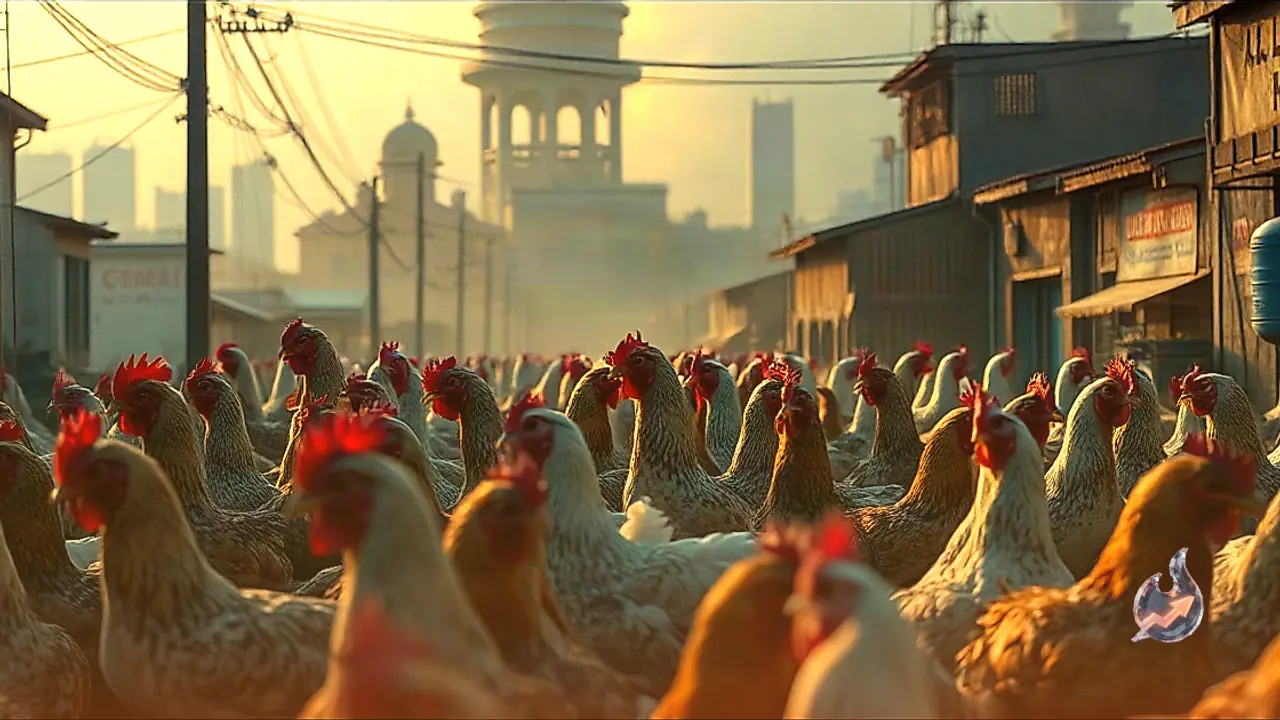

Malaysia, recognized globally as a significant hub for commercial egg and poultry production, is currently facing a formidable agricultural crisis that has disrupted supplies nationwide. Across regional poultry hubs, farms are registering a steep and sudden downturn in laying capacity alongside a disturbing uptick in flock mortality. This alarming operational breakdown has rattled poultry operators while placing agricultural regulators on high alert. Rather than a routine seasonal fluctuation, the downturn is being driven by an intense heatwave compounded by toxic, smoke-laden haze drifting from forest blazes in neighboring Indonesia. This punishing environmental combination has plunged the broader poultry sector into deep operational distress.
Field reports from across the industry reveal that laying hens subjected to simultaneous heat and atmospheric pollution are drastically cutting their daily feed intake. In poultry biology, reduced nutrition rapidly starves the avian body of the essential dietary energy, proteins, and minerals required to sustain egg synthesis. The repercussions are equally severe across broiler operations dedicated to meat production. Flocks raised for meat are struggling to convert feed efficiently, requiring an entire additional week beyond their typical growth cycle simply to reach their standard target slaughter weight. This delay clogs operational sheds and drives overhead expenses upward across the supply network.
Disproportionate Toll on Smallholdings
The environmental assault has exposed structural vulnerabilities across different farming models. Small-scale farmers operating traditional, open-sided housing sheds have taken the heaviest blow from the elements. These open structures rely entirely on natural air movement, leaving birds unprotected against scorching ambient temperatures and smoke-saturated outside air. Conversely, modern industrialized poultry complexes equipped with closed, climate-controlled environmental systems have managed the crisis far more effectively by filtering ambient air and regulating indoor temperatures mechanically. Because smallholders form the foundation of local poultry supply, this disruption has bottlenecked local delivery pipelines, triggering noticeable retail price hikes for fresh eggs across community markets.
Compounding Strains of Smog and Torrid Heat
Meteorological and environmental conditions highlight how prolonged regional heatwaves across Malaysia and Indonesia intersected with an ecological disaster. Starting in August, rampant forest fires across Indonesian tracts released dense plumes of smoke that drifted across international maritime boundaries into Malaysian airspace. The resulting atmospheric cocktail caused ambient concentrations of fine particulate matter, specifically PM 2.5, to spike while outdoor mercury readings remained blisteringly high, delivering an acute biological shock to commercial livestock herds.
Confirming the severity of the fallout on the ground, Zaiful Zakaria, head of the Malaysian Poultry Association, noted that smallholders and operators raising traditional poultry breeds have suffered substantial bird losses. Zaiful Zakaria explained that open-sided shed designs suffer from deficient airflow when external air turns stagnant and heavily polluted. Under these suffocating conditions, birds face extreme difficulty drawing clean breath and dissipating internal metabolic heat. Unlike mammals, chickens lack sweat glands and depend on panting and wing spreading to stay cool, mechanisms that fail entirely when surrounding air is hot, humid, and laden with fine soot.
Biological Impacts of Heat Stress and Academic Research
Veterinary and agricultural experts point out that when ambient temperatures breach physiological thresholds alongside high particulate smog, chickens instinctively curb their feed consumption to minimize internal heat generated by digestion. This nutritional deficit robs them of the minerals and proteins indispensable for shell formation and yolk production. Concurrently, physiological stress triggers an overproduction of corticosterone, a primary avian stress hormone. Surging corticosterone concentrations suppress the birds' immune defenses and disrupt the hormonal signaling essential for sustained oviposition.
These operational observations are reinforced by controlled scientific studies. Research conducted by investigators at Thailand's Chiang Mai Rajabhat University demonstrated that broiler chickens exposed to PM 2.5 particulate concentrations of 150 µg/m³ (micrograms per cubic meter) over a span of just 3 days suffered a 5.2 percent decline in average daily weight gain. The empirical data underscores that fine airborne soot actively undermines basic avian metabolic functions, directly linking deteriorating air quality to depressed meat yields and diminished egg output.
Underlying Drivers Behind the Productivity Collapse
The compounding downturn in egg yields and flock stamina stems from three interconnected biological and environmental factors
- Severe Heat Stress: Soaring ambient temperatures coupled with persistent smog layers induce intense physiological stress in laying hens. This condition suppresses appetite, depriving the hens' reproductive tracts of the vital nutrients needed to sustain daily egg formation cycles.
- Respiratory Impairment and Eggshell Fragility: Inhaling air dense with toxic haze particles inflicts severe irritation on the delicate avian respiratory system. As physical stamina wanes, hens not only lay fewer eggs, but the physical structural integrity of the eggshells deteriorates, increasing breakage rates during collection and transport.
- Escalating Bird Mortality: The joint burden of torrid heat and low oxygenation triggers fatal systemic failures in weaker birds, driving mortality rates sharply upward and diminishing total flock headcounts.
Escalating Operational Expenditures on Mitigation
To stave off catastrophic flock fatalities, poultry farmers are undertaking burdensome emergency cooling protocols. Operators are forced to run cooling pads, oversized exhaust fans, and pressurized misting lines around the clock to bring internal shed temperatures down. Because rural power grids are often vulnerable during heatwaves, farms are leaning heavily on diesel generators to prevent system blackouts, sending maintenance, fuel, and electricity expenditures soaring. On numerous traditional operations, farmhands are hauling massive blocks of ice during peak midday hours to place in water cisterns and shed walkways to tame indoor heat.
Commodity and market observers believe that if the haze and heat spell remains brief, an outright nationwide collapse of the table egg inventory is unlikely. Nevertheless, should the combined effects of transboundary smog and prolonged El Nino patterns keep regional temperatures elevated over an extended timeframe, supply logistics across Southeast Asia could face systemic fractures, heightening the likelihood of sustained price spikes on retail shelves.
Government Verification and Farm Upgrades
The Malaysian government has formally verified that its agriculture ministry has received documentation detailing elevated flock mortality rates and reduced egg yields directly linked to severe weather anomalies. With consumer demand holding steady against constrained farm outputs, wholesale and retail prices remain under noticeable upward pressure. Nevertheless, public authorities maintain that broad supply lines remain manageable under existing stabilization measures.
On farms, operators are actively retrofitting facilities to endure persistent atmospheric hazards. Farmers are installing high-velocity ventilation fans and altering shed designs to optimize structural air currents. Poultry health specialists continue to stress that producers must secure continuous reservoirs of cool, purified drinking water to assist birds with internal heat management. Even so, the mounting capital outlays needed for ventilation retrofits, water cooling, ice supplies, and fuel backups have dramatically inflated production costs for smallholders, testing the economic viability of traditional poultry farming.