


















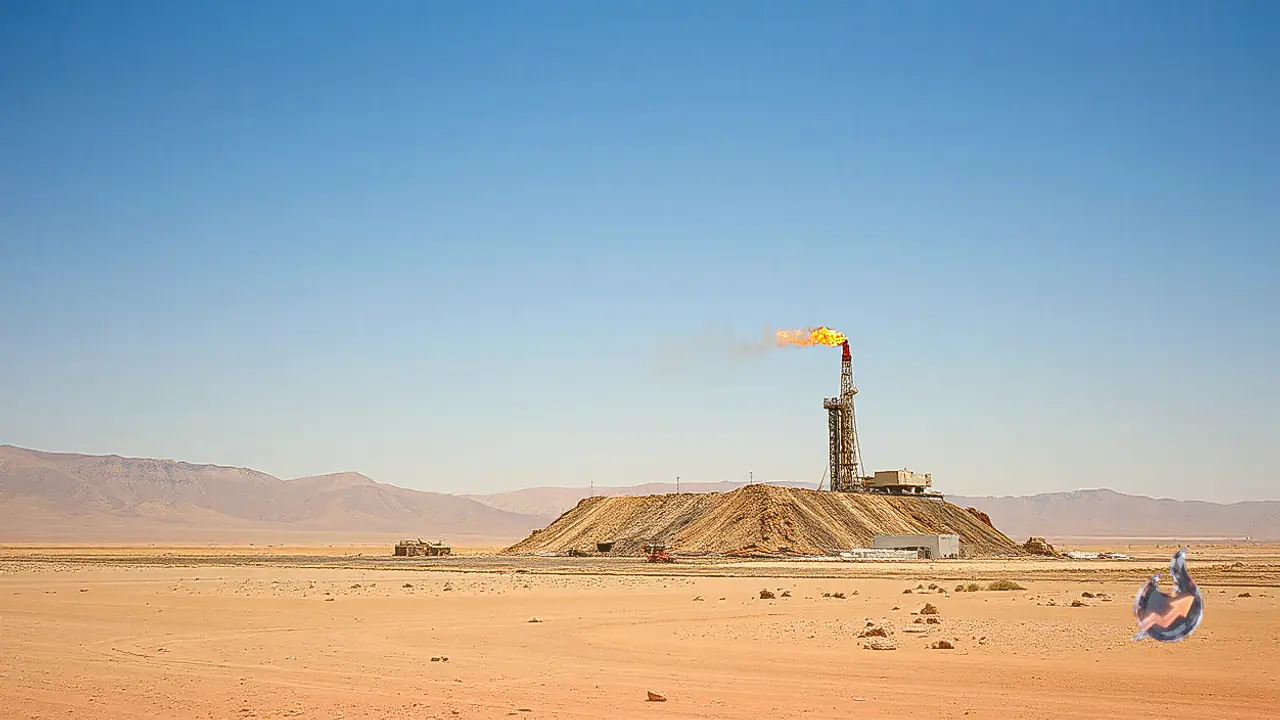

In the heart of the vast Karakum Desert of Turkmenistan lies a massive fiery abyss that has captured international attention for more than fifty years. Commonly referred to as the Door to Hell, the official geographical designation of this phenomenon is the Darvaza gas crater. Situated in the immediate vicinity of Darvaza village, the site is known locally by the name Shining of Karakum. Far from being a volcanic vent, the site is an enormous crater sustained entirely by natural gas escaping from underground reserves. Under nighttime desert skies, the intense orange glow rising from the pit creates an otherworldly visual spectacle visible across great distances.
The 1971 Soviet Expedition That Formed the Chasm
The origins of this persistent fire trace back directly to 1971. During that period, geologists from the Soviet Union were actively surveying the Karakum Desert in search of untapped natural gas fields. While drilling operations were underway, the ground situated above an expansive subterranean gas pocket gave way suddenly. The sudden structural failure caused the earth to collapse into a massive depression, catching the expedition personnel and regional observers completely unprepared.
The Containment Decision That Ignited a Multidecade Blaze
Following the ground collapse, vast quantities of raw natural gas started pouring out of the newly created crater into the surrounding atmosphere. The continuous release posed an immediate threat of toxic gas concentrations blanketing adjacent areas and endangering local wildlife and inhabitants. Faced with an imminent environmental hazard, the surveying scientists opted to set the escaping vapors alight, reasoning that controlled combustion would safely neutralize the gas before it could drift across the landscape. The team anticipated that the localized pocket of fuel would fully burn off within a few short weeks, bringing the fire to a natural end.
Calculations Failed as Reserves Kept the Furnace Alive
That initial scientific forecast quickly proved incorrect. Instead of dying out after several weeks, the flames continued to rage without interruption across consecutive decades. The subterranean geological formation held immense natural gas reserves that persistently fed fuel upward through fissures in the rock. The resulting fiery cauldron, with bright flames roaring within the pit, gave the visual impression of a subterranean ocean of fire churning beneath the desert sands.
Physical Dimensions and Magnetism for Global Travelers
The overall scale of the Darvaza gas crater is striking. Field measurements reveal a diameter ranging between 60 and 70 meters, alongside a vertical depth of approximately 30 meters, translating to roughly 98 feet into the ground. Set against the desolate and windswept dunes of the Karakum expanse, this burning crater provides an extraordinary contrast. Because of its singular nature, adventure travelers and sightseers from across the globe regularly journey across the arid terrain to view the spectacle firsthand.
Turkmengaz Notes a Reduction in Fire Intensity
In recent years, an important operational observation has emerged regarding the future of the geological site. Officials from Turkmenistan's national gas enterprise, Turkmengaz, indicated that the combustion vigor inside the crater is steadily weakening. Consequently, the fiery landmark renowned worldwide for maintaining an unbroken blaze for half a century is now displaying noticeably subdued flames.