















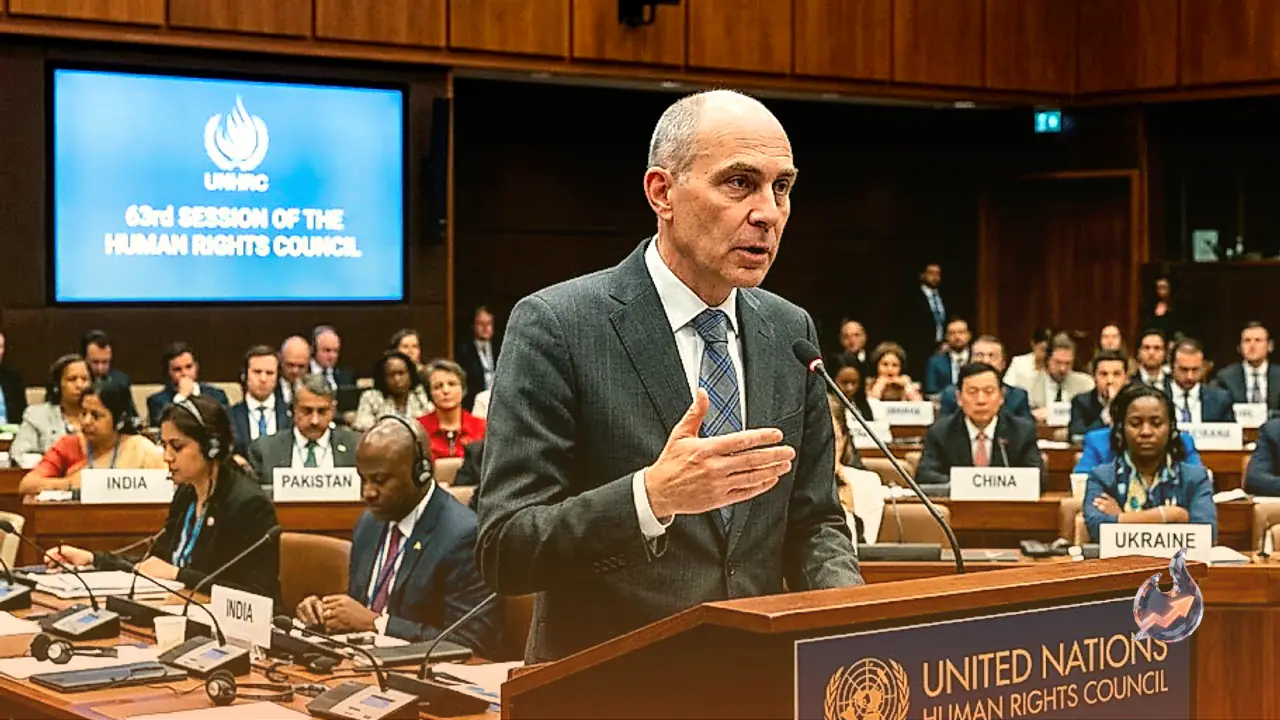

Global human rights and democratic governance took center stage at the 63rd session of the United Nations Human Rights Council (UNHRC) held in Geneva, Switzerland. Delivering a comprehensive assessment of civil liberties worldwide during the conference that opened on September 7, UN High Commissioner for Human Rights Volker Türk highlighted key developments in protest management. He specifically commended India's handling of public demonstrations, citing the peaceful resolution of youth gatherings as an effective governance model. Türk pointed out that engaging directly with young citizens yields far better results than heavy-handed police actions, which often escalate tensions unnecessarily.
India's Dialogue-First Approach at Delhi's Jantar Mantar
Managing public dissatisfaction presents a complex challenge for governments worldwide. During recent large-scale student demonstrations at Jantar Mantar in New Delhi, administrative authorities opted for constructive engagement rather than physical suppression. Officials invited student representatives to negotiation tables to listen to their demands and address their grievances. Highlighting this approach, the UN Human Rights Chief emphasized that direct communication builds trust between the public and state institutions while preserving civil harmony without resorting to excessive force.
Pakistan Cited for Violent Suppression and Arbitrary Arrests
In contrast to the positive evaluation of India's peaceful dispute resolution, the UN report expressed serious alarm over systemic rights abuses in Pakistan. Volker Türk noted that authorities in Pakistan frequently resort to lethal force and arbitrary detentions to crush civil dissent. Severe crackdowns on public protests in PoK and Balochistan were flagged as major violations of fundamental human rights. The UN stressed that suppressing public grievances through violence fails to resolve underlying socio-political issues.
Concerns over Detention Centers in Xinjiang and Restrictions in Tibet
China's domestic human rights record was also subjected to detailed scrutiny during the Geneva session. The UN High Commissioner voiced deep concern over conditions inside detention facilities in Xinjiang, where Uyghur Muslims and other ethnic minorities remain subjected to strict state control. The UN urged Beijing to review its national security and counter-terrorism legal framework, which has been utilized to restrict civil liberties. Furthermore, the report called for an impartial investigation into abuse allegations and urged China to dismantle restrictive policies targeting Tibet's cultural and religious identity.
Shrinking Civic Space in Iran and Broader Global Context
Beyond South and East Asia, the UN presentation addressed the broader global contraction of civic space. Volker Türk expressed grave concern over the sharp rise in executions in Iran, where national security statutes have been used to penalize anti-government protesters. Similar trends of suppressing dissent in Russia and other regions were cited as critical threats to international human rights standards, reinforcing the necessity for states to protect freedom of expression and peaceful assembly.