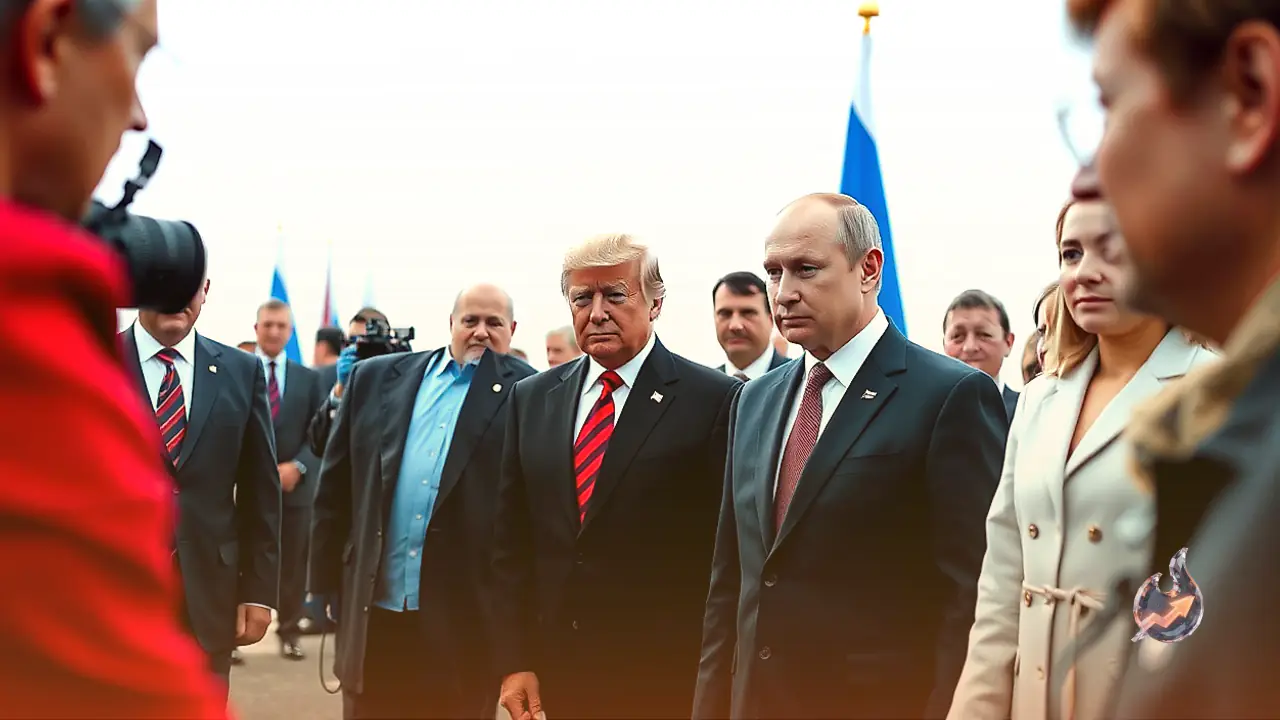
























Amid escalating geopolitical friction across the Middle East, high-level American political rhetoric suggests that the military standoff with Tehran could conclude in the near future. Addressing supporters during a rally in Kentucky, President Donald Trump expressed strong confidence that the ongoing hostilities would wrap up very shortly. Emphasizing the economic dividend of ending military actions, he pointed out that winding down the clash would help ease constraints on international energy channels, directly translating into cheaper fuel costs for American motorists.
Defense of Air Strikes Against Nuclear Infrastructure
During his address, the US President offered an unequivocal defense of recent military incursions directed at Iranian nuclear facilities. He asserted that these precision strikes dealt a severe blow to Tehran's strategic atomic ambitions, setting back their developmental timeline considerably. Underscoring the core pillars of American defense policy, he argued that permitting the Iranian state to build an arsenal of nuclear warheads poses an unacceptable danger. He reiterated that preventing such weapons from being deployed or weaponized is essential for global stability, framing the aggressive strikes as a necessary measure to neutralize long-term existential threats.
Tehran Demands Comprehensive Ceasefire Across All Theaters
Responding from the other side, Iranian diplomats rejected any selective or localized de-escalation, maintaining that lasting peace necessitates a total cessation of military actions across all active fronts. Iranian Deputy Foreign Minister Saeed Khatibzadeh sounded a cautionary note, asserting that leaving even a single battlefield active would inevitably prolong wider hostilities and unravel broader diplomacy. According to him, piecemeal truces cannot deliver sustainable security to the region.
The Iranian official focused heavily on southern Lebanon, demanding an immediate end to Israeli military operations in that country. He pointed out that resolving the crisis in Lebanon has served as a central talking point in indirect diplomatic exchanges between Tehran and Washington. Khatibzadeh's remarks followed a high-profile visit to Beirut, where he held intensive consultations with prominent Lebanese political leaders. During his stay in the Lebanese capital, he held meetings with Parliament Speaker Nabih Berri, Prime Minister Nawaf Salam, and key representatives of the foreign ministry, describing the deliberations as constructive. He stressed that developments across Lebanon and the wider Levant are deeply intertwined, making a comprehensive settlement indispensable.
Accusations of Accord Breaches and Retaliatory Capacity
The Iranian diplomat went on to level sharp allegations against Washington and Tel Aviv, accusing both nations of breaching the Islamabad Memorandum of Understanding by executing military strikes inside Iranian territory and across Lebanon. He argued that diplomatic mechanisms led by the United States have consistently failed to secure a reliable ceasefire or rein in regional violence. Khatibzadeh remarked that Israel routinely ignores international understandings, asserting that Washington holds the ultimate obligation to keep its ally in check.
Denouncing the American offensive as contrary to international norms, the deputy foreign minister insisted that foreign aerial barrages failed to knock out Iran's integrated air defense shield or cripple its retaliatory weaponry. Characterizing the current confrontation as an existential struggle, he declared that Tehran remains fully committed to defending its territorial integrity and national sovereignty. Addressing scrutiny surrounding the country's nuclear facilities, he expressed openness to addressing technical inquiries from Western capitals and the International Atomic Energy Agency, noting that more than 15 historical agency reports had already validated Iran's peaceful compliance.
Strait of Hormuz Reopening Offer and Global Fuel Impact
In a notable diplomatic maneuver affecting global commerce, Iranian authorities signaled a willingness to reopen the vital Strait of Hormuz within a seven-day window, provided regional conditions stabilize. Tehran affirmed that while it harbors no desire for prolonged conflict, it will vigorously resist any aggression forced upon its borders. The Strait of Hormuz represents one of the most critical maritime chokepoints on the planet, handling massive volumes of seaborne crude daily. Any easing of military friction along this narrow waterway carries immediate repercussions for international benchmark crude contracts, giving substantial weight to forecasts regarding a downturn in retail gasoline prices.