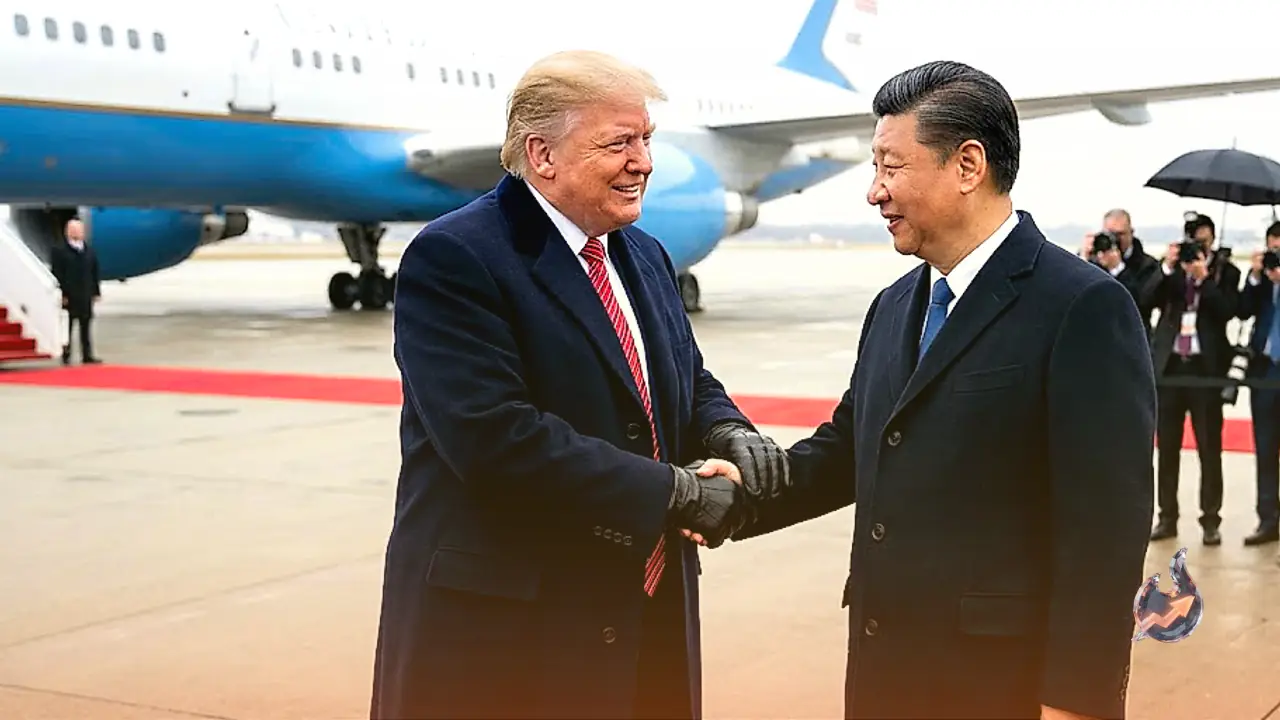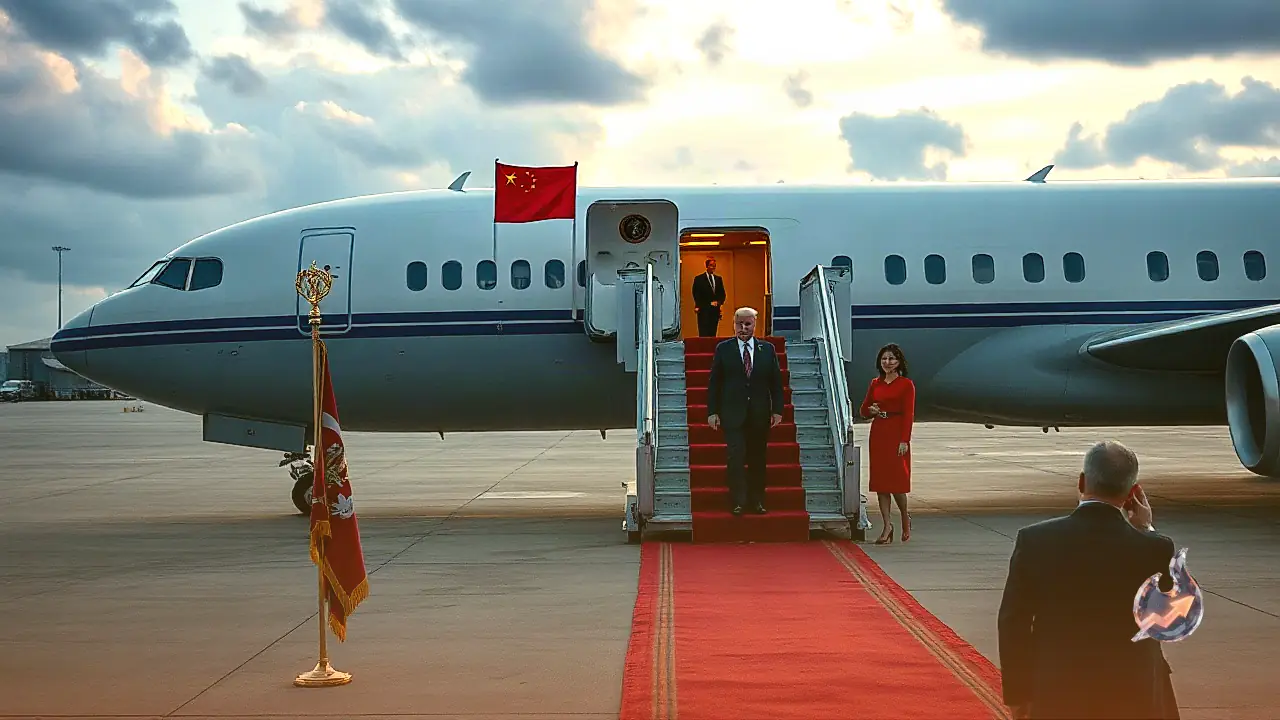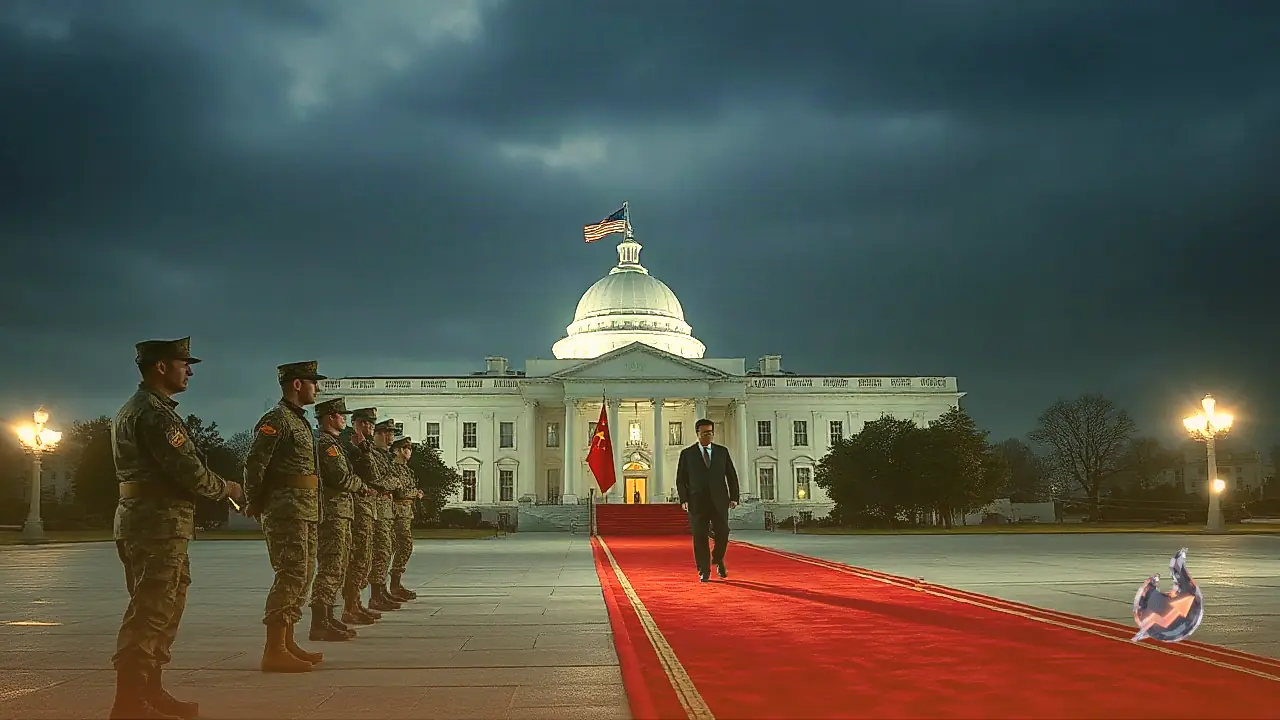






















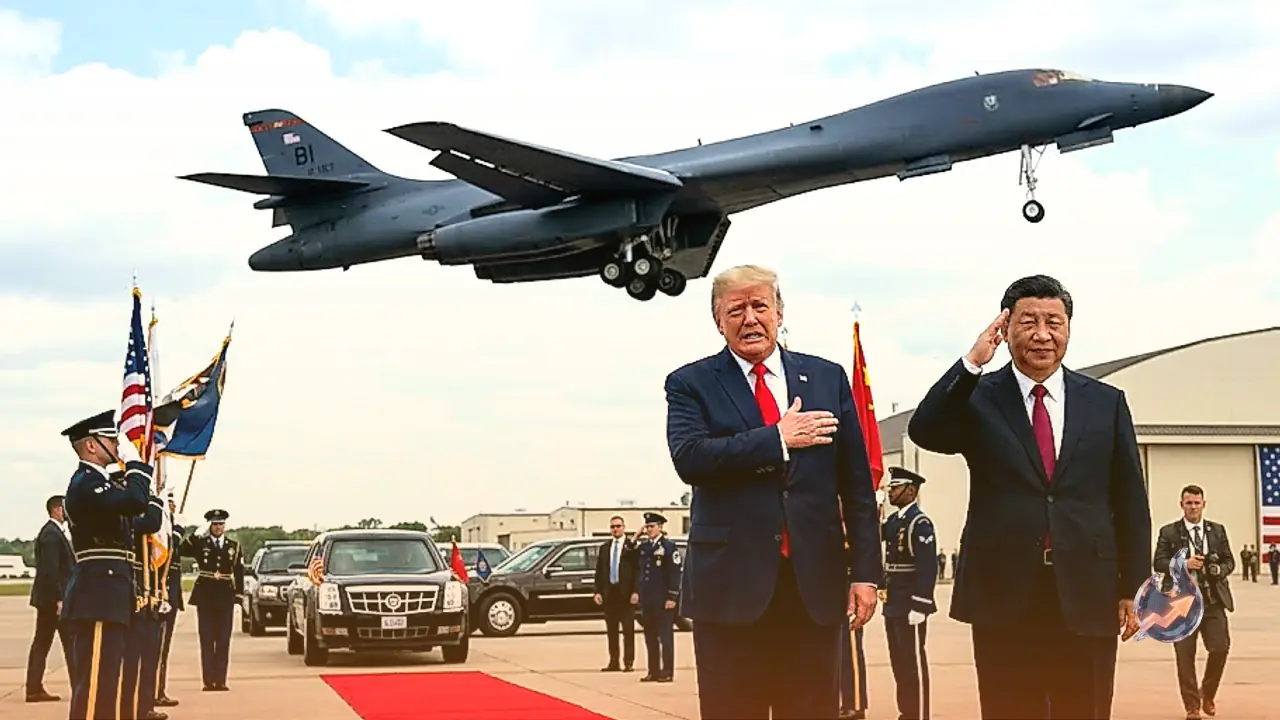

A high-profile military welcome ceremony at Joint Base Andrews took an unexpected visual turn when United States President Donald Trump appeared momentarily unsettled by the deafening sound of an American supersonic bomber flying overhead. Arranged to receive Chinese President Xi Jinping with full diplomatic honors, the ceremony featured a 100-foot red carpet and extensive military pageantry, yet the intense roar of the aircraft momentarily disrupted the formal posture on the dais.
Low-Altitude Flypast During the National Anthem
The incident unfolded on Thursday as both leaders stood side by side while the American national anthem played and a 21-gun salute was underway. Donald Trump was holding a formal hand salute while Xi Jinping stood firmly at attention. Without warning, two United States Air Force B-1 Lancer bombers swept across the sky directly over the flight line at low altitude.
The acoustic force generated by the long-range supersonic bombers caused Donald Trump to visibly grimace, squinting his eyes and clenching his teeth as he looked up toward the source of the noise. For a brief second, his saluting hand dropped down from his brow. Recovering his composure, he turned toward Xi Jinping with a brief remark and a smile before resuming his rigid salute. Throughout the entire sequence, Xi Jinping displayed no visible physical reaction and remained completely steady.
Online Debate Over Contrasting Body Language
Video footage capturing the exact moment quickly circulated across digital platforms, drawing widespread commentary regarding the stark contrast in deportment between the two leaders. A clip documenting the scene was shared showing the president saluting during the Star-Spangled Banner as the aircraft flew overhead, as shared on X.
Social media observers swiftly focused on the dynamic of the moment, noting that a military display designed to project overwhelming capability appeared to startle the host leader rather than the visiting dignitary. Numerous commentators remarked on Xi Jinping's unflinching stance, arguing that the attempt at aerodynamic intimidation ended up putting Trump's spontaneous physical reaction under intense scrutiny.
The Strategic Symbolism of the B-1 Lancer
The deployment of the B-1 Lancer was an intentional element of the grand ceremonial protocol prepared for the Chinese delegation. As a premier long-range supersonic bomber in the American inventory, the aircraft is known for its immense acoustic signature and significant payload capability, making its low-altitude passage a deliberate demonstration of strategic military might.
Combined with the formal band, the precise artillery salutes, and the 100-foot red carpet, the flyover was meant to frame the bilateral summit within the context of absolute national strength. However, the physical reality of low-altitude jet propulsion produced a sudden sonic impact that shifted public attention from geopolitical deterrence to spontaneous facial expressions.
A Pattern Seen in Previous High-Stakes Summits
Staging elaborate aerial flyovers during meetings with major strategic competitors has become an established diplomatic tool for the administration. In August 2025, during a bilateral summit between Donald Trump and Russian President Vladimir Putin in Alaska, a comparable demonstration of American aerial supremacy was executed. On that occasion, the flypast included a B-2 Spirit stealth bomber escorted by four F-35 stealth fighters, while advanced F-22 combat jets were positioned on the tarmac. These arrangements illustrate a continuous strategy of using premier aerospace assets as silent negotiating backdrops during critical statecraft.