

















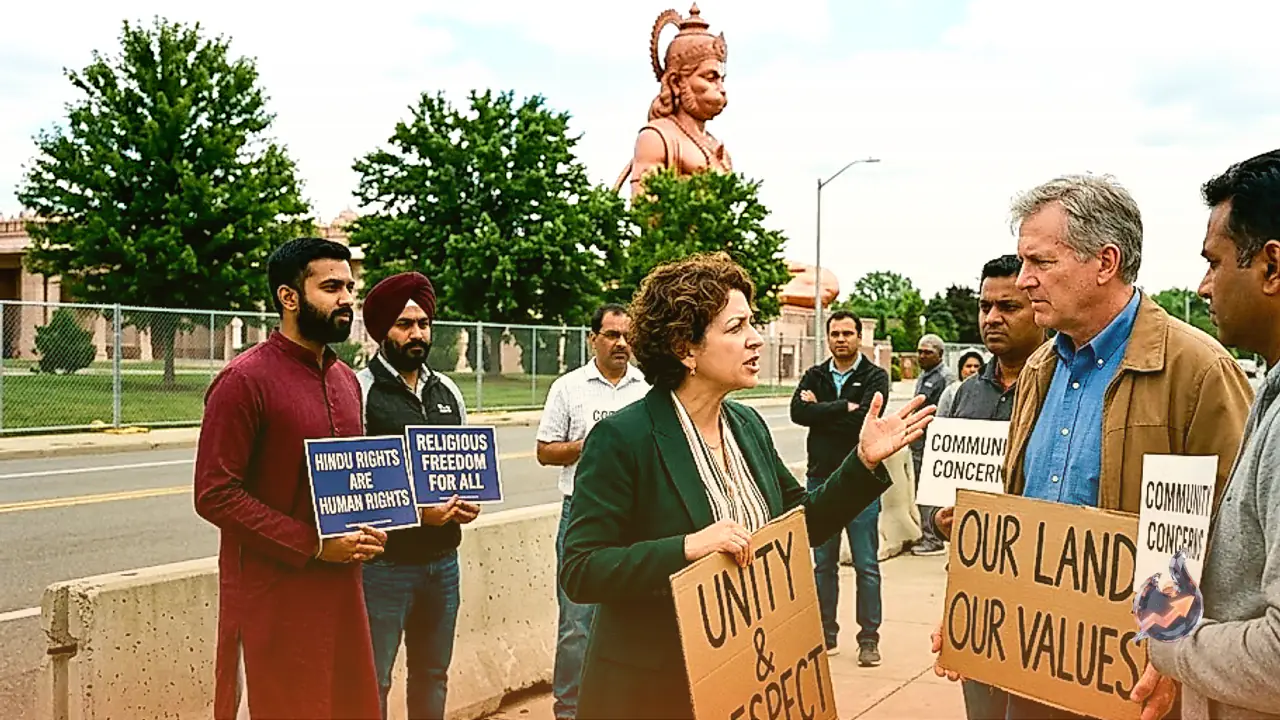

A colossal 90-foot statue of Lord Hanuman standing in the southern state of Texas has transcended its role as a sacred monument, emerging as the epicenter of a broader debate on immigrant identity, religious pluralism, and contemporary American politics. Located on the grounds of Sri Ashtalakshmi Temple in Sugar Land, an area near Houston, the towering figure has drawn sharply contrasting reactions from local worshipers and outside critics. Designated as the 'Statue of Union' on the temple's official portal, the monumental installation was conceived to embody strength, selfless devotion, and unity, yet its physical prominence has triggered noticeable friction with local conservative and religious factions.
The August 2024 Consecration and Local Pushback
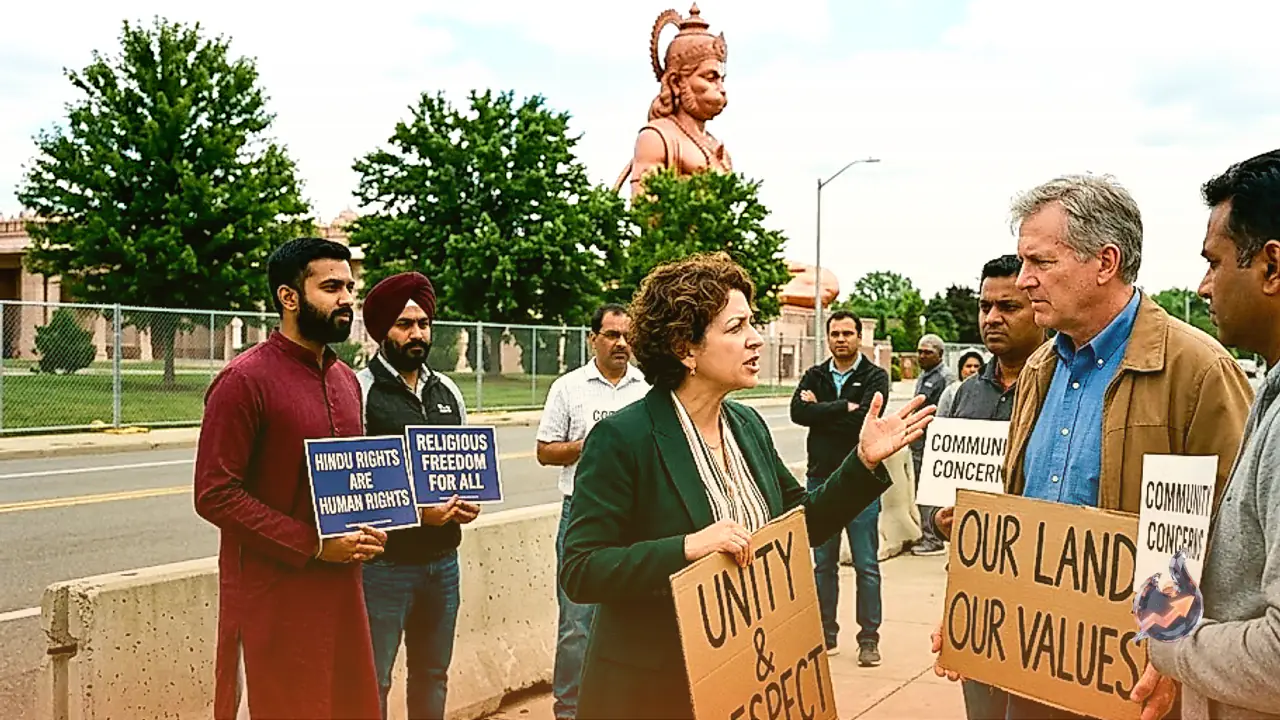
The landmark was formally unveiled and sanctified during its consecration ceremony in August 2024. For the resident Indian-American Hindu population, the monument signifies far more than impressive architectural engineering; it stands as an enduring emblem of their cultural heritage and religious presence within the United States. Nevertheless, the installation quickly encountered vocal resistance. Conservative circles and members of local church organizations voiced strong theological and cultural objections. Approximately 25 individuals affiliated with a neighborhood church staged a demonstration near the sanctuary grounds, openly challenging the placement of such an expansive non-Christian icon.
The Tallest Hanuman Monument Across North America
Rising approximately 90 feet above ground level at Sri Ashtalakshmi Temple, the structure ranks as the tallest statue of Lord Hanuman anywhere in North America, according to the institution's official documentation. Temple administrators chose the name 'Statue of Union' to commemorate Lord Hanuman's pivotal role in the Ramayana, where his loyalty and dedication reunited Lord Rama with Goddess Sita. The temple describes the landmark as a lasting beacon of hope, endurance, and communal harmony designed to inspire future generations rather than sow discord.
Digital Discourse and the Spillover into Politics
What began as a localized neighborhood disagreement expanded into broader online discourse and political commentary. In February 2026, Carlos Turcios, a Texas-based conservative activist, posted video footage of the monument online, framing its presence around the expanding influence of Indian immigrants across the region. His social media remarks quickly ignited a fiery dispute surrounding religious freedom, demographic shifts, and cultural integration in modern America, drawing thousands into the discussion.
Hindu-Americans Defend Constitutional Freedoms
Members and advocates of the Hindu-American community pushed back decisively against the criticism, arguing that the public manifestation of a minority religion is entirely consistent with American founding ideals. Representatives and congregants maintained that erecting the 90-foot sculpture was never intended to overwrite the identity of Texas or replace local traditions. Instead, it offers an authentic expression of the faith and community values held by law-abiding Hindu residents who contribute to the state. Backers reiterated that the American legal framework protects freedom of worship for all denominations, adding that Hanuman's iconography represents selflessness, mutual service, and harmony.
A Longstanding Tradition of Hanuman Devotion in the US
The controversy in Sugar Land overlooks a much deeper history of Hanuman veneration across the country. Reverence for Hanuman is well established beyond Texas, tracing back decades through the Sankat Mochan Hanuman Temple at California's Mount Madonna Center, an establishment deeply tied to Western disciples of spiritual teacher Neem Karoli Baba. Likewise, an ashram dedicated to Neem Karoli Baba in New Mexico has served as a center of Hanuman worship for generations. Even within Texas itself, the Karya Siddhi Hanuman Temple in Frisco predates the Sugar Land project, demonstrating that Hanuman worship is neither an overnight phenomenon nor an unprecedented sight in the American landscape.