





















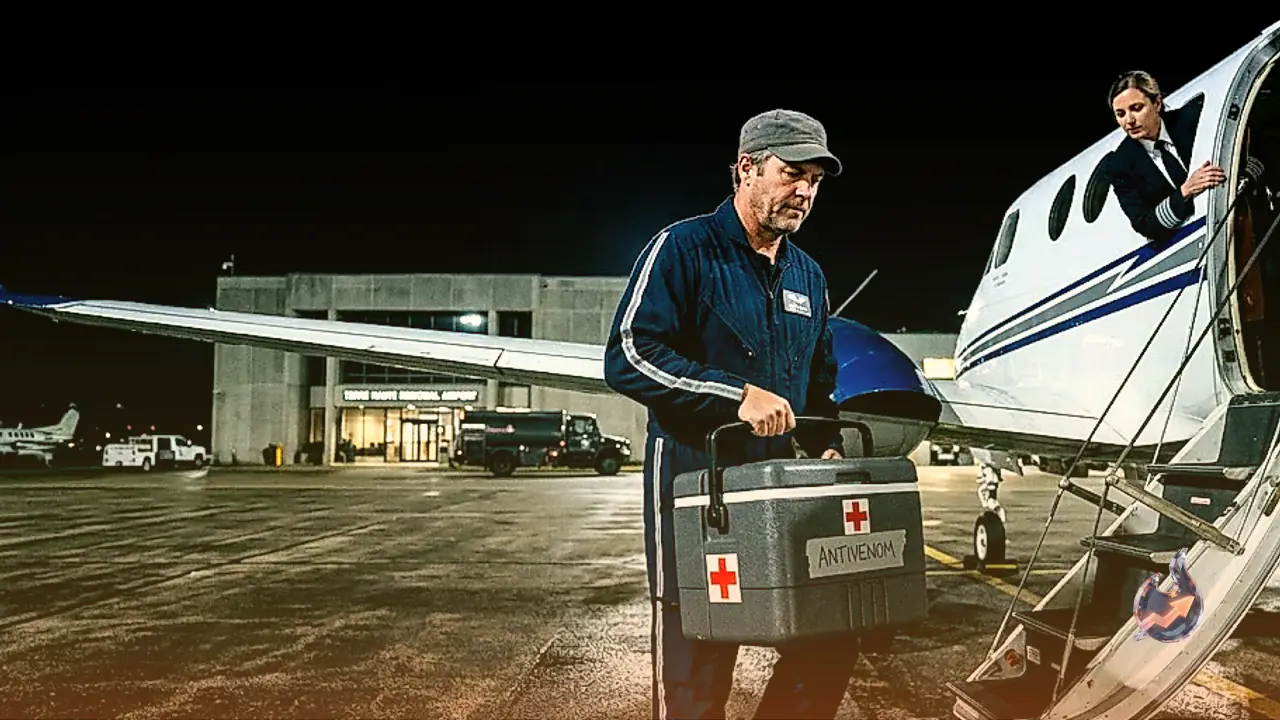

The tragic events of September 11, 2001, reshaped the world and plunged the United States into an unprecedented state of emergency. Following the devastating attacks on the World Trade Center in New York, the federal government issued a nationwide high alert and completely grounded all domestic air traffic. Amid the widespread panic and security lockdown, a critical medical crisis unfolded that required rushing a life-saving medication across thousands of miles.
This extraordinary ordeal centered on 62-year-old Lawrence van Sertima, who was bitten by an inland taipan, widely recognized as one of the most venomous snakes on the planet. On that fateful day, Lawrence van Sertima was handling reptiles when the highly toxic snake sank its fangs into his thumb. Fully aware of the immense danger posed by the creature, his wife rushed him to a hospital immediately. Although medical professionals began treatment without delay, his condition deteriorated rapidly as the venom attacked his nervous system.
The toxins quickly began taking a severe toll, causing bleeding from his eyes, ears, and mouth. The overwhelming poison rendered him unconscious and severely compromised his neurological functions. For the attending physicians and emergency teams, the primary hurdle was that the specific antivenom required to neutralize the venom was not available anywhere in Florida. Upon investigating alternative sources, medical staff discovered that the necessary medication was exclusively stocked at the Bronx Zoo in New York and the San Diego Zoo in California.
Acquiring the medicine seemed nearly impossible given the crippled state of the nation's transportation network. In the wake of the attacks, the Federal Aviation Administration shut down all civilian airspace, ordering every airborne aircraft to land immediately at the nearest available airport. Transporting antivenom from San Diego to Miami under such restrictive conditions felt entirely out of reach. Meanwhile, Lawrence van Sertima’s physical condition grew increasingly critical, prompting hospital officials and emergency personnel to explore every possible communication channel to secure the medication.
Amid this desperate search, Johnny Delgado of the Baptist Health South Florida air ambulance service reached out to a senior official at the Federal Aviation Administration. The central dilemma facing the authorities was whether an exception could be made to permit a takeoff strictly for a medical emergency. This was not a routine commercial flight meant to transport passengers, but rather a vital mission dedicated solely to moving the life-saving antivenom from San Diego to Miami.
Johnny Delgado briefed the officials thoroughly on the patient's perilous state, emphasizing that delaying the medication any further would prove fatal. Acknowledging the extreme gravity of the situation, the Federal Aviation Administration eventually granted clearance for the special medical mission. However, this permission came with a strict stipulation that the aircraft could only fly during daylight hours. Consequently, at a time when the entire American airspace remained locked down due to national security protocols, a single plane was cleared to take off to deliver the antivenom.
The rare antivenom successfully completed its journey from San Diego to Miami. The venom of the inland taipan contains potent toxins that prevent blood clotting while actively destroying the nervous system and muscle tissue, making the prompt administration of the correct antivenom a matter of life and death. Once the medication arrived at the facility, it was administered to Lawrence van Sertima. While the nation was entirely consumed by the monumental task of securing its borders in the aftermath of the attacks, medical professionals and aviation authorities united to ensure a single individual survived.