



















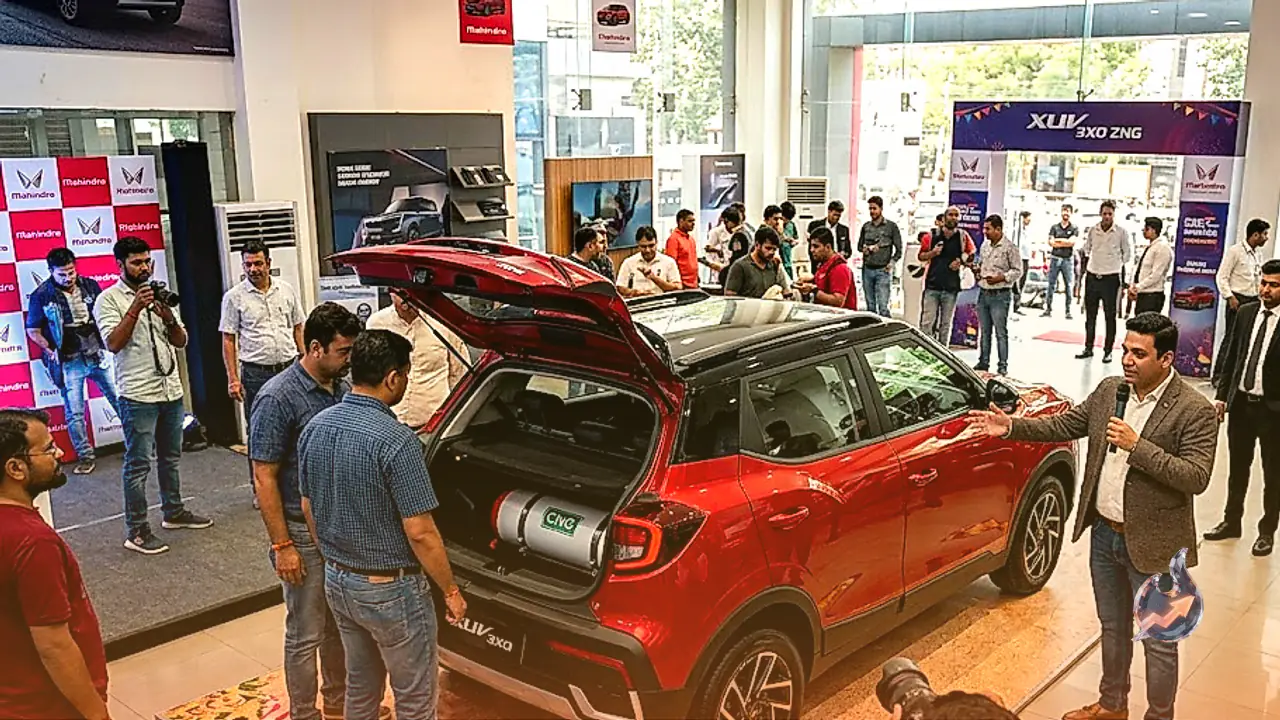

Automaker Mahindra has expanded its popular compact SUV portfolio in India with the official rollout of a factory-fitted dual-fuel option named the XUV 3XO ZNG. Arriving with a base ex-showroom sticker price of Rs 9.99 lakh, this launch marks the carmaker's very first factory-fitted CNG passenger vehicle in its current market lineup. The XUV 3XO has already achieved a sales milestone of 2.5 lakh units, and this new introduction serves as its fourth powertrain iteration alongside the existing petrol, diesel, and all-electric configurations. The new model steps in to compete directly against key segment competitors including the Tata Nexon CNG and the Maruti Suzuki Brezza CNG.
Variant Breakdown and Price Spectrum
The compact CNG model is being offered across four distinct variants designed to suit various customer budgets and feature preferences. The entry-level MX Edge trim is priced at Rs 9.99 lakh ex-showroom. Moving up the trim ladder, the RevX Edge (O) variant carries a price tag of Rs 10.79 lakh, while the mid-tier AX5 variant is pegged at Rs 11.19 lakh. The top-of-the-line RevX A grade caps the lineup at Rs 12.27 lakh, with all listed figures reflecting introductory ex-showroom rates.
Powertrain, Driving Dynamics, and Fuel Efficiency
Under the hood, the SUV draws power from a 1.2-litre TCMPFi turbocharged petrol motor calibrated to operate seamlessly on both petrol and compressed natural gas. The engine produces between 110 and 111 bhp of peak power alongside 200 Nm of maximum torque. Thanks to the deployment of high-pressure injection systems, performance levels remain consistent without noticeable drops while operating in gas mode. Acceleration from 0 to 100 km/h is achieved in 11.8 seconds. On the efficiency front, the setup delivers a certified fuel economy rating of 24.70 km/kg. To compensate for the added bulk of the twin-tank assembly and mounting hardware, engineers have recalibrated the suspension setup and steering feedback.
Twin-Cylinder Layout and Cargo Management
Addressing the traditional limitation of lost trunk volume in gas-powered vehicles, the vehicle employs a dual-tank layout where two compact cylinders are tucked beneath the cargo floor. This arrangement keeps the boot floor flat and preserves usable luggage carrying capacity. The spare wheel is relocated to an underbody mount beneath the chassis. Inside the cabin, a dedicated toggle switch positioned above the engine start-stop button allows the driver to alternate between petrol and natural gas supplies on the fly. The digital driver's display includes distinct gauges showing real-time fuel levels for both tanks simultaneously.
Cabin Tech, Comfort, and Exterior Cues
The exterior visual styling largely mirrors the standard petrol model, distinguished solely by a bespoke ZNG emblem positioned on the rear tailgate. The interior comes equipped with a 10.25-inch central touchscreen interface paired with an equally sized 10.25-inch digital instrument cluster. Drivers can toggle between three selectable steering weights consisting of Normal, Comfort, and Sports modes. Additional creature comforts and tech highlights encompass leatherette upholstery, a panoramic sunroof, Dolby Atmos audio tuning, a 360-degree parking camera, connected LED tail-lamps, a tyre pressure monitoring system, a rear window wiper, push-button start-stop, and dedicated front and rear centre armrests.
Standard Protective Gear and Safety Systems
Passenger safety has been addressed through a comprehensive list of active and passive features. The vehicle comes equipped with six airbags alongside all-wheel disc brakes as part of its foundational braking setup. The safety suite further includes anti-lock brakes paired with electronic brake-force distribution, rear parking sensors, three-point seat belts across seating positions, seat belt warnings, and an audible vehicle speed alert system.