






















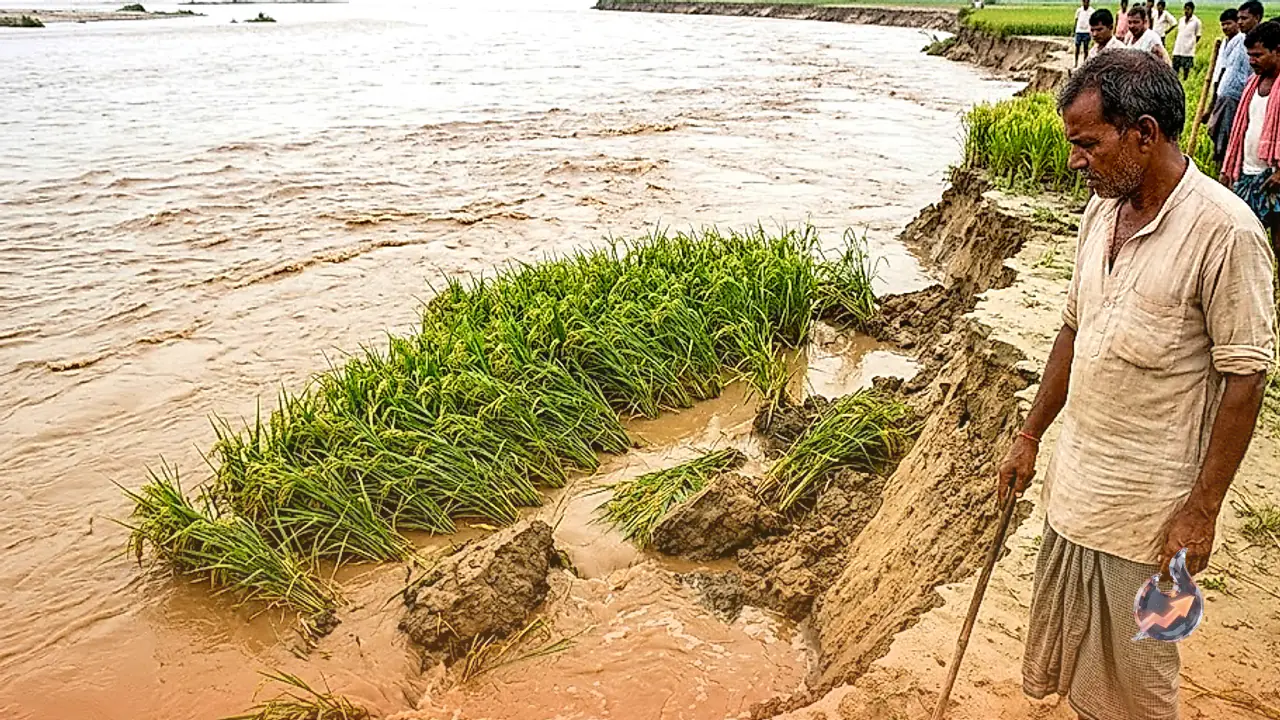

In Uttar Pradesh's Lakhimpur Kheri district, continuous intermittent heavy rainfall across both hilly and plain areas has led to a rapid surge in river water levels, triggering severe bank erosion along the Sharda River. As the river swells, the accelerated pace of soil erosion has emerged as a grave threat to local farmers, swallowing large tracts of fertile agricultural land daily. The relentless destruction of standing crops is pushing farming families into a deepening financial crisis as years of hard physical labor are wiped out within moments.
Widespread Erosion Spreads Across Gola and Nighasan Tehsils
The destructive force of the Sharda River is not isolated to a single patch of land but extends across a vast agricultural belt stretching from Gola tehsil all the way to Nighasan tehsil. Rushing river currents are rapidly carving into cultivated fields, with substantial plots of land collapsing into the water right before the eyes of helpless farmers. Local residents express serious concern that if the bank erosion continues unabated at this alarming rate, the overall agricultural and economic condition of the region will worsen significantly in the coming days.
Massive Financial Investments and Debts At Risk in Kharif Season
Farmers in the affected areas had invested immense effort and financial resources into the current Kharif cropping season, cultivating paddy alongside other essential crops. Significant capital was spent on preparing the fields, purchasing quality seeds, applying fertilizers, securing irrigation, and paying daily labor wages. Many farmers had even taken formal and informal loans to fund these agricultural activities, holding onto the hope that a bountiful harvest would cover household expenses, finance their children's education, and help clear longstanding debts. However, the unexpected destruction unleashed by the Sharda River has shattered these financial expectations.
Three Acres of Paddy Lost Just One Month Before Harvest
Highlighting the severity of the crisis, Kailash Kumar, an affected farmer, shared his harrowing experience of losing three acres of standing paddy crop to the river's relentless current. He explained that when the paddy saplings were initially transplanted, the river flow was located at a safe distance from his farmland. Over time, as the water levels fluctuated, the river changed course and accelerated bank cutting toward his fields. The standing crop, which was due for harvest in just one month, was completely engulfed by the rushing waters. Fields that were thriving with vibrant green crops until recently have now been replaced by the turbulent, roaring stream of the Sharda River.