






















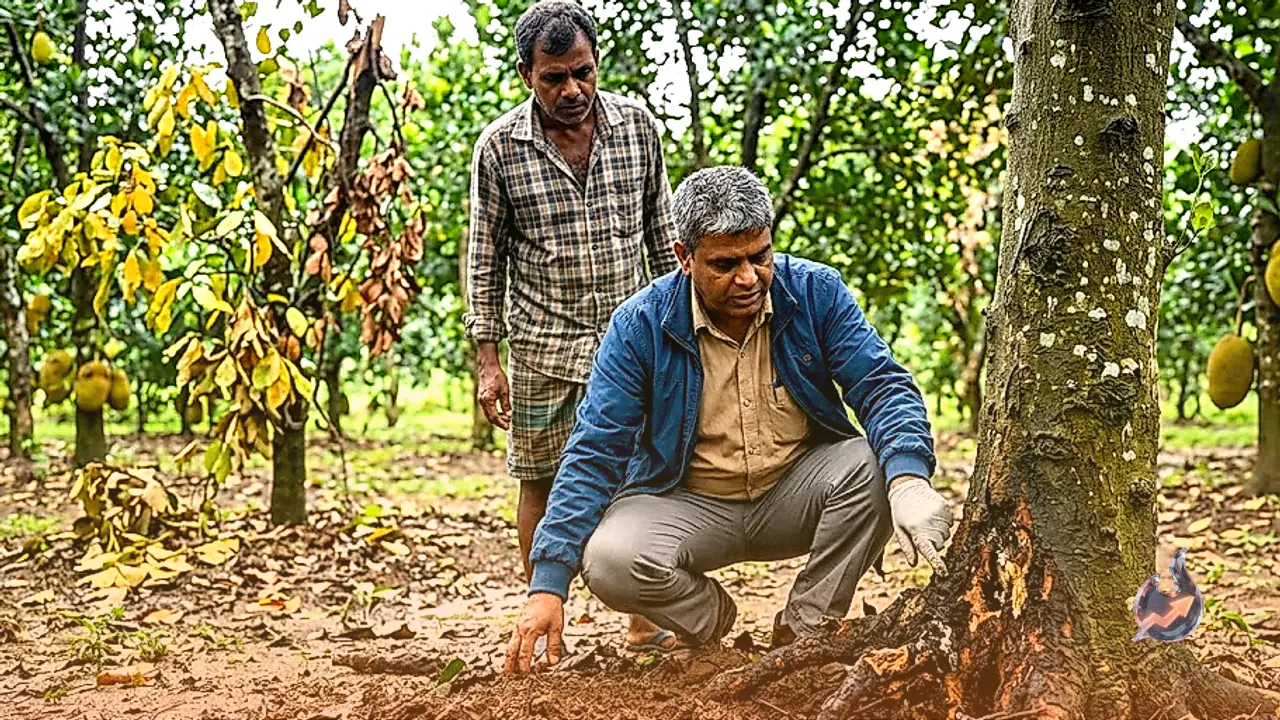

Fruit disease specialist Prof. Dr. S.K. Singh from Darbhanga has issued crucial management guidelines regarding the outbreak of root rot and wilt disease affecting jackfruit trees. Jackfruit orchards across several states, including Bihar, Jharkhand, West Bengal, and Kerala, are facing severe damage. The combination of erratic weather, prolonged dry spells followed by sudden heavy rainfall, and severe waterlogging has caused full-grown trees to wither rapidly. Often hailed as the 'tree of nutritional security,' jackfruit has seen widespread cultivation in recent years, making this fungal outbreak a major concern for growers.
Key Causes and Early Symptoms of Root Rot
According to Dr. Singh, the sudden yellowing and drying of jackfruit trees stems from aggressive fungal infections in the root system. Fungi belonging to the Phytophthora, Fusarium, and Pythium genera are primarily responsible for attacking the roots and cutting off vital nutrients. In the initial stage, leaves turn pale yellow and dry up starting from the margins before shedding prematurely. Overall plant growth grinds to a halt, and developing fruits remain abnormally small. Upon inspecting the root zone, affected roots appear dark brown or black, show clear signs of decay, and emit a foul odor. Additionally, the bark near the base of the trunk loosens and peels off easily.
Four Scientific Steps to Protect Jackfruit Orchards
To protect jackfruit orchards from this devastating disease, Dr. Singh recommends four key scientific measures
- Proper Drainage Infrastructure: Jackfruit trees should always be planted on raised beds or elevated mounds. During the monsoon season, excess field water must be drained immediately. Farmers should adopt drip irrigation and keep water away from direct contact with tree trunks, as jackfruit plants cannot tolerate standing water.
- Application of Bio-fungicides: Mix beneficial bio-fungicides such as Trichoderma and Bacillus into well-decomposed cow dung manure and apply it directly around the root zone. These bio-agents suppress harmful fungal pathogens and strengthen root vitality.
- Regular Organic Manuring: Incorporating organic manure and compost into the soil annually fosters beneficial soil microorganisms and enhances the plant's natural resistance to infections.
- Targeted Chemical Drenching: If the disease has progressed significantly, drench the root zone with fungicide solutions such as Metalaxyl + Mancozeb or Fosetyl-Al. Dr. Singh emphasized that chemical treatments should strictly serve as a last resort.