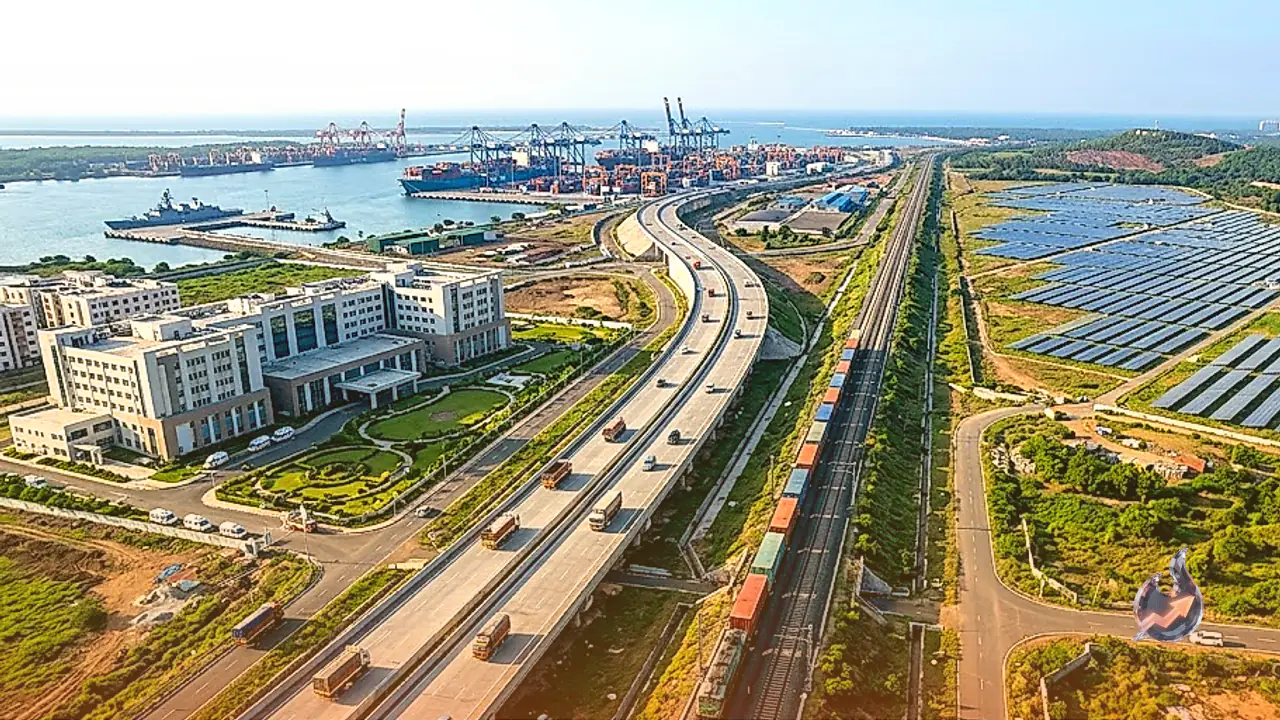






















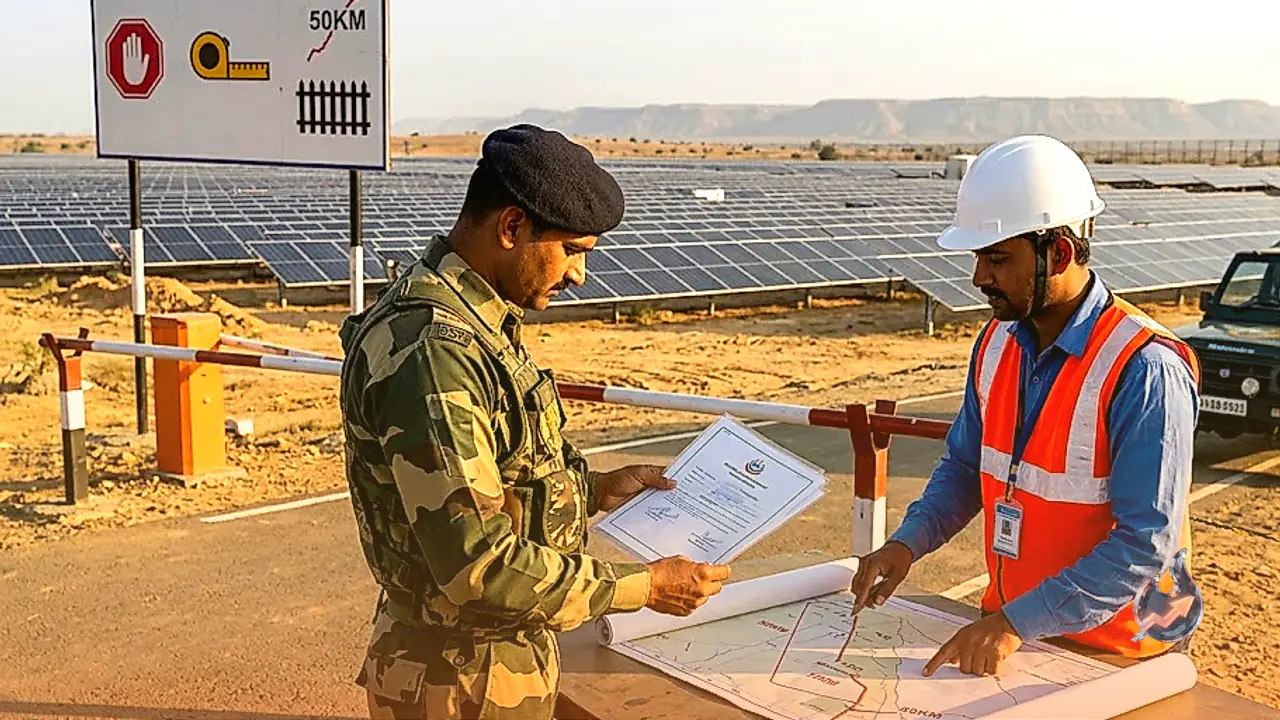

In a major strategic step aimed at bolstering national security across border regions, the Ministry of Home Affairs (MHA) has released a rigorous set of security guidelines for renewable energy infrastructure. Issued by the Internal Security Division of the MHA, these new mandates apply to all proposed solar, wind, and hybrid clean energy projects located along India's Line of Control (LoC), Line of Actual Control (LAC), and International Border (IB). Under the revised framework, green energy developers operating in border belts must comply with strict physical infrastructure, personnel screening, and defense approval protocols.
Tiered Distance Zones and Mandatory Dual Clearance Rules
The updated guidelines establish distinct buffer zones relative to the border to mitigate potential security vulnerabilities posed by large-scale energy infrastructure. A complete ban has been imposed on any new solar, wind, or hybrid project within 1 km of the LoC, LAC, or IB. No construction, survey, or related site activities will be permitted within this prohibited zone.
The area stretching from 1 km to 50 km from the border has been officially classified as a sensitive zone. Any company intending to set up a renewable project within this 50 km perimeter must secure prior security clearance from the Ministry of Home Affairs before initiating ground operations.
Furthermore, projects situated within 1 km to 20 km of the International Border require a separate No Objection Certificate (NOC) from the Ministry of Defence (MoD). Both the MHA and the MoD will evaluate project applications on a case-by-case basis before issuing clearance certificates.
Vetting Foreign Workers and Strict FDI Compliance Protocols
National security parameters have been tightened around the workforce employed at border energy sites. Developers are strictly prohibited from hiring engineers, technicians, managerial staff, or manual laborers from countries sharing a land border with India, particularly China, Pakistan, and Bangladesh, without explicit approval from the central government.
All personnel working at these installations must undergo thorough background verification before being granted access to project sites. Workers will remain subject to security regulations and operational instructions issued by local police authorities and the Border Security Force (BSF). Additionally, the movements of foreign nationals visiting or associated with the project area will be continuously monitored by intelligence agencies.
The guidelines also govern land ownership rights and foreign financial investment. Project developers cannot transfer, sell, or lease project land to any foreign entity without prior central government permission and MHA security approval. Projects backed by foreign direct investment (FDI) must submit a separate application to the Department for Promotion of Industry and Internal Trade (DPIIT) in accordance with India's national FDI policy.
Anti-Drone Deployments, Dedicated Police Outposts, and Tactical Access
Physical site security mandates for renewable energy facilities near the borders have been expanded significantly. Developers are required to install anti-drone defense systems within project premises at their own expense. These anti-drone systems will be manned and operated by personnel from the Central Industrial Security Force (CISF) or state police forces.
A dedicated police outpost must be established directly within the project premises to oversee security, verify worker credentials, and monitor construction and operational phases. Infrastructural design must also account for military operational needs; internal and approach roads within project sites must be constructed wide enough to accommodate heavy tactical vehicles from the BSF or Indian Armed Forces during emergencies.
Structural Height Restrictions and Buffer Distances for Housing
To ensure clear lines of sight and radar coverage for defense installations, the government has capped the height of support structures across sensitive belts. Permanent staff quarters, residential colonies, and commercial hotels are barred from the immediate vicinity of border plants to prevent large population clusters near high-security zones.
All project-related residential facilities and hotels must be constructed at a distance of at least 5 km from the border. However, basic cafeterias located directly inside the plant compound are allowed to accommodate on-duty staff.
Height limits for operational and maintenance (O&M) buildings are strictly pegged to border distance. Between 1 km and 8 km from the border, structure height cannot exceed 3 meters. In the 8 km to 20 km zone, the maximum height limit is capped at 5 meters, while structures located between 20 km and 50 km can extend up to 15 meters. All prospective developers must submit their project clearance applications through the single-window system managed by the Ministry of New and Renewable Energy (MNRE).