





















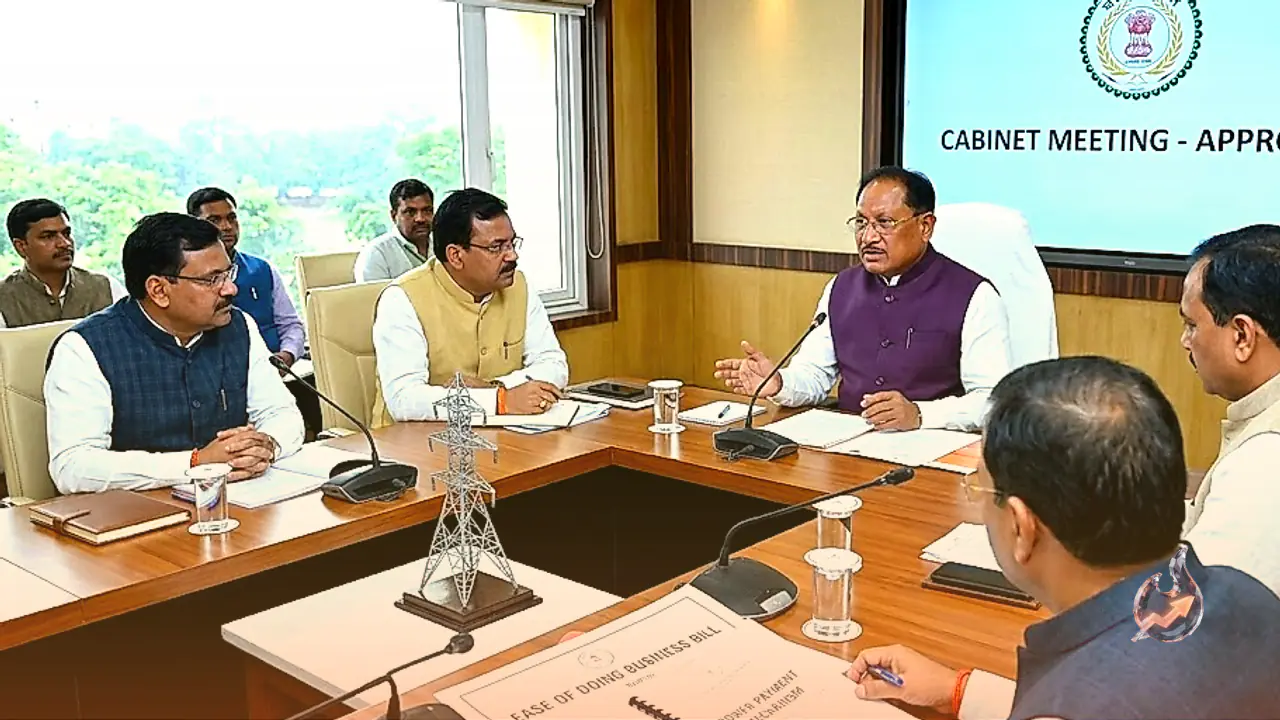

In a significant cabinet meeting held in Raipur, Chhattisgarh, under the leadership of Chief Minister Vishnu Deo Sai, several key decisions were finalized to accelerate the state's industrial growth and improve governance. The session focused on simplifying administrative processes to attract investments, generating employment, and streamlining essential public services. These policy shifts are expected to have a lasting impact on the state's economic and educational landscape.
Streamlining the Business Environment
The cabinet officially approved the draft of the 'Chhattisgarh Ease of Doing Business Bill 2026'. This legislation is designed to transform the business ecosystem in the state by removing bureaucratic hurdles. Key provisions of the bill include deemed permissions, self-certification processes, third-party verification, and risk-based inspections. By eliminating redundant dual licensing requirements, the government aims to create a investor-friendly climate. Officials noted that Chhattisgarh would likely be the first state in the country to introduce such a comprehensive piece of legislation to boost trade and job creation.
Direct Debit Mandate for Electricity
Addressing energy security, the cabinet cleared a proposal for the 'Chhattisgarh State Power Distribution Company' to adopt a 'Direct Debit Mandate' system for payments made to central public sector power undertakings. This mechanism aligns with Reserve Bank of India guidelines, replacing the existing tripartite agreement structure. This shift is intended to guarantee a consistent supply of electricity from major entities like NTPC. Crucially, the government stated that this transition will not impose any additional financial burden on the state exchequer.
Education, Recruitment, and Tax Reforms
The cabinet also addressed human resources and academic regulations. Amendments were approved regarding the recruitment and service conditions for the Bastar Fighters. In the education sector, the law governing private universities was updated to replace the 'Vinyas Nidhi' provision with 'Rakshit Nidhi', a move aimed at better protecting the interests of students. Furthermore, the state is moving to dissolve the Chhattisgarh Commercial Tax Tribunal, following the approval of the 'Chhattisgarh Value Added Tax (VAT) Bill 2026'. Since the implementation of GST has led to a significant decline in secondary VAT-related appeals, and a dedicated GST Appellate Tribunal is already operational, this dissolution is considered timely. Additionally, the cabinet sanctioned land allocation in Rajnandgaon for the construction of a modern auditorium with a 2,000-seat capacity.