




















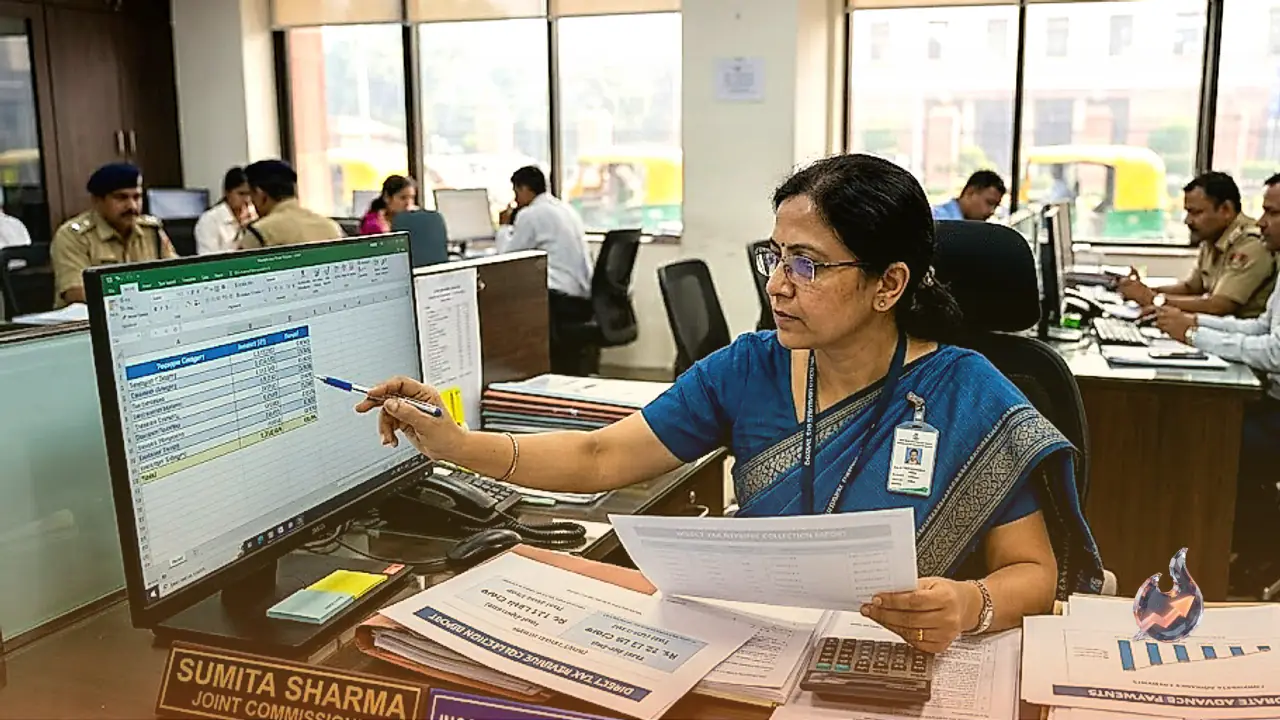

Even before the completion of the first six months of the financial year 2026-27, the Indian government's tax revenue has witnessed a substantial surge. According to the data released by the Central Board of Direct Taxes (CBDT), India's net direct tax collection between April 1 and September 17 grew by 13 percent to cross the Rs 12.12 lakh crore threshold. A key driver of this impressive trajectory has been the corporate sector, which has paid substantial amounts in advance taxes. The total advance tax collection for the ongoing financial year rose by 16.18 percent, reaching approximately Rs 5.22 lakh crore.
Corporate Sector Dominates Advance Tax Inflows
The statistical breakdown highlights that the corporate sector has played a pivotal role in boosting advance tax payments. Corporate advance tax collection escalated by 18 percent, touching Rs 4.16 lakh crore during this period. In contrast, the non-corporate sector, which comprises individual taxpayers and Hindu Undivided Families (HUF), recorded an advance tax collection growth of 9.24 percent, exceeding Rs 1 lakh crore. Alongside the rise in tax collections, the government has also accelerated the issuance of refunds. Total tax refunds issued up to September 17 jumped by 29.19 percent to surpass Rs 2.20 lakh crore.
A Detailed Look at Gross and Net Direct Tax Metrics
The gross direct tax collection recorded a 15 percent growth, reaching a total of over Rs 14.32 lakh crore. After adjusting for the refunds distributed to taxpayers, the net collection of direct taxes, which includes corporate, non-corporate, and Securities Transaction Tax (STT), rose by 12.96 percent to stand at over Rs 12.12 lakh crore. Within this, the net corporate tax collection experienced a 19.48 percent expansion, reaching about Rs 5.56 lakh crore. On the other hand, net non-corporate tax collection grew by 6 percent to exceed Rs 6.16 lakh crore. Reflecting high retail participation in capital markets, the STT collection soared by 53 percent to reach Rs 40,214 crore during the same period.
Expert Insights and Ambitious Fiscal Targets
Analyzing the structure of these tax inflows, professional services firm EY India noted that the non-corporate tax segment currently accounts for 48.7 percent of the total collections, closely followed by the corporate tax segment at 48.5 percent. Richa Sawhney, Tax Partner at Grant Thornton Bharat, observed that the robust direct tax collections point towards strong economic fundamentals. She explained that the steady upward trend in advance tax payments is a clear reflection of taxpayer confidence, solid business operations, and optimistic expectations for earnings growth in the future. For the fiscal year 2026-27, the central government has set a direct tax collection target of Rs 26.97 lakh crore, which represents a 15 percent increase over the Rs 23.40 lakh crore collected in the previous fiscal year 2025-26.