






















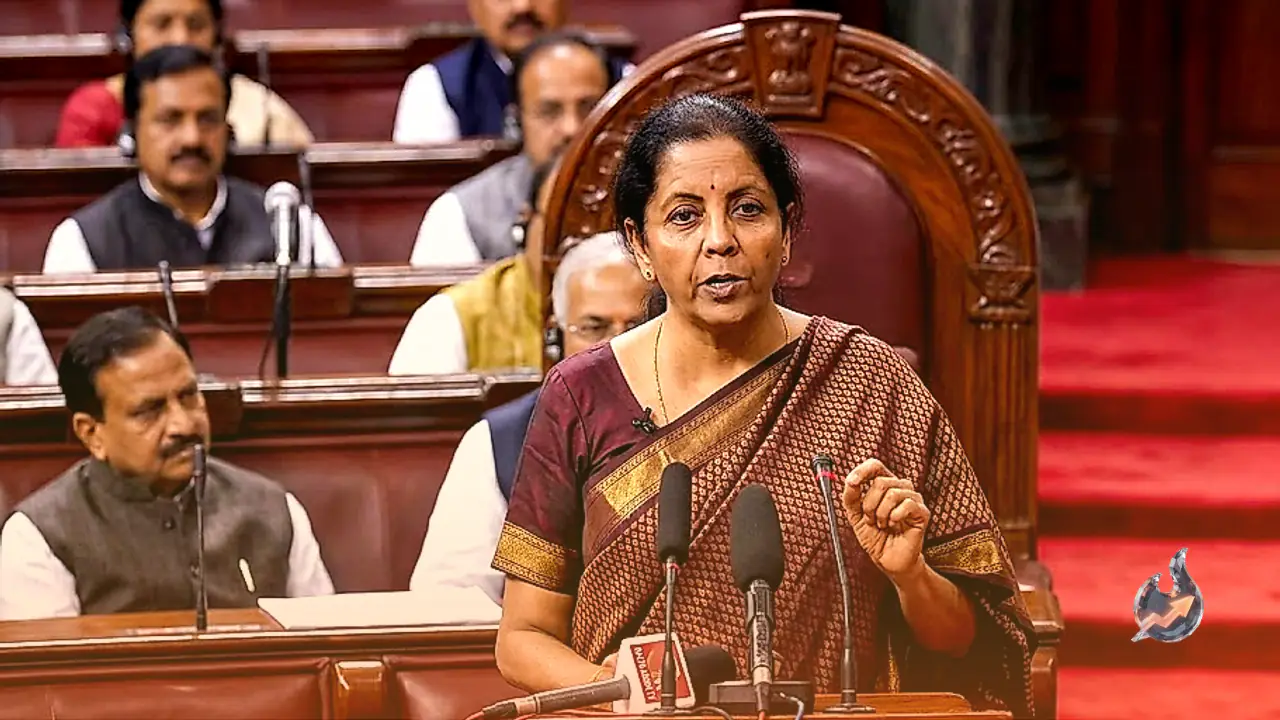

Amid mounting global economic uncertainties and trade disruptions, a major positive update has emerged regarding India's economic growth trajectory. Rising trade tariffs driven by Donald Trump's policy decisions alongside heightened geopolitical friction between the United States and Iran had recently raised concerns about the timeline for India reaching a $5 trillion economy. Addressing these apprehensions in Parliament, Finance Minister Nirmala Sitharaman delivered a reassuring progress report on the nation's economic momentum. Speaking in the Rajya Sabha, the minister outlined clear projections indicating that the Indian economy remains firmly on course to achieve and surpass this milestone within the stipulated timeframe.
IMF Projections and the $5.1 Trillion Milestone
Finance Minister Nirmala Sitharaman informed the Upper House that projections compiled by the International Monetary Fund (IMF) confirm India's path toward crossing the $5 trillion threshold. Citing the specialized report released by the IMF in April, she highlighted that the total size of the Indian economy is expected to reach $5.1 trillion by the fiscal year 2028-29. This trajectory guarantees that India will comfortably surpass the $5 trillion mark by FY 2029. At present, the Indian economy stands at approximately $4.2 trillion, providing a robust baseline for sustained expansion over the coming years.
Comprehensive Growth Strategy Across Key Sectors
To maintain high growth rates, the government has executed an expansive developmental strategy across vital economic sectors. The minister detailed that this comprehensive framework prioritizes increasing agricultural productivity, boosting domestic manufacturing output, and providing targeted backing to the Micro, Small, and Medium Enterprises (MSME) sector. Concurrently, the government is driving large-scale infrastructure expansion throughout the country. Modernizing logistics networks and significantly enhancing the Ease of Doing Business remain central to these efforts. Structural tax reforms across Income Tax and the Goods and Services Tax (GST) have been implemented to build a more efficient, transparent tax environment. Furthermore, strong emphasis is being placed on accelerating technological innovation, expanding digitalization, and fortifying the national energy infrastructure.
Public Capex, Foreign Direct Investment, and Global Trade Networks
Public capital expenditure (Capex) has served as a cornerstone of the national growth strategy. Capital allocation by the government toward major infrastructure projects has not only stimulated domestic production but has also enhanced foreign investor confidence. Policy guidelines governing Foreign Direct Investment (FDI) have been simplified to encourage greater capital inflows into the country. The government's strategic focus also encompasses solidifying macroeconomic stability while aggressively boosting export performance. By executing Free Trade Agreements (FTAs) and expanding bilateral trade networks with global partners, India is positioning itself to gain substantial dual advantages in both domestic production and international trade.
Flagship Initiatives Powering Manufacturing Output
Elaborating on industrial development, Nirmala Sitharaman listed key initiatives designed to transform India into a premier manufacturing power. To enhance domestic industrial capabilities and boost competitiveness in international markets, several targeted programs are currently operational. These include the Production Linked Incentive (PLI) scheme, the Make in India initiative, the National Logistics Policy, the PM Gati Shakti master plan, and the National Single Window System. Collectively, these programs aim to scale domestic manufacturing, attract substantial investment, create widespread employment opportunities, and integrate Indian production into global supply chains. As domestic production and market demand expand simultaneously, overall GDP growth will naturally accelerate.
Empowering MSMEs to Secure Economic Targets
Recognizing Micro, Small, and Medium Enterprises as vital growth engines, the government has introduced tailored support mechanisms for the MSME ecosystem. The Finance Minister noted that improvements to credit guarantee systems and the Emergency Credit Guarantee Scheme have simplified credit access for smaller businesses. Furthermore, updated classification criteria for MSMEs have facilitated smoother scaling of enterprises. Export rebates and remissions have been extended to small exporters, while digital registration via the Udyam platform has streamlined business compliance. Additionally, the Government e-Marketplace (GeM) has opened transparent procurement channels for small businesses. Supported by these comprehensive policy interventions, the government remains confident that the Indian economy will decisively cross the $5 trillion mark by FY 2029.