




















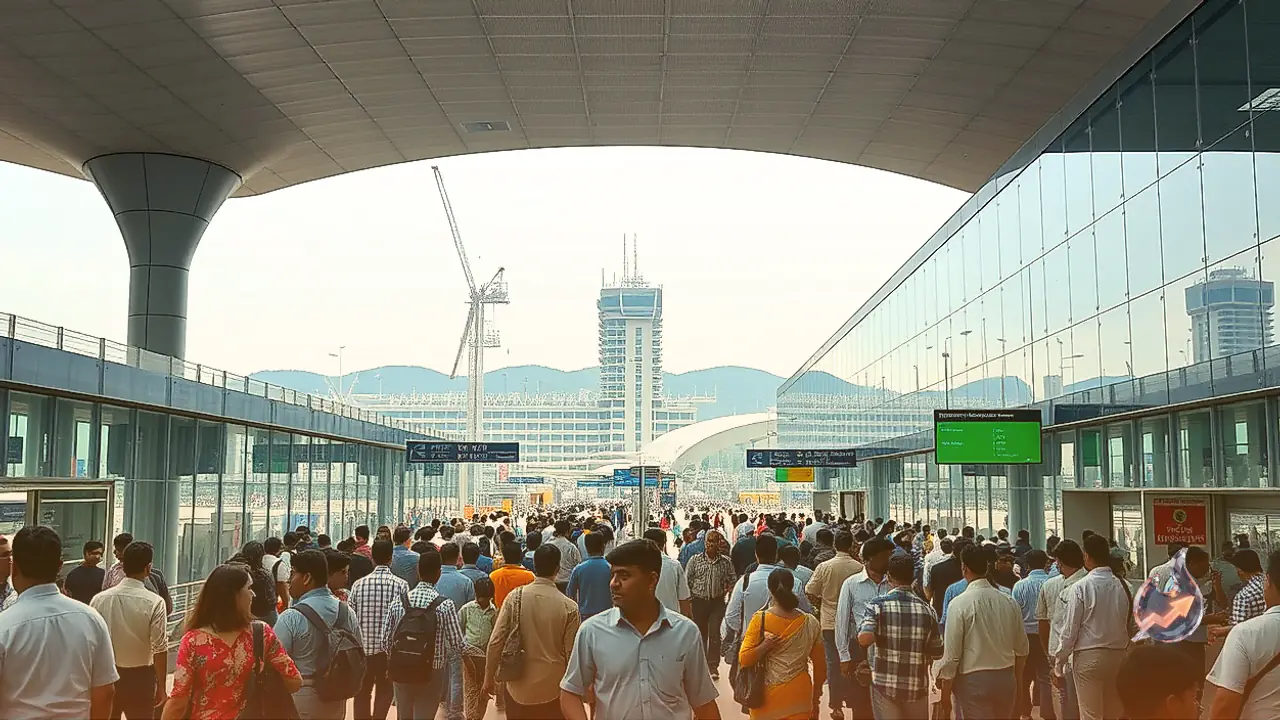

A comprehensive infrastructure overhaul is scheduled to begin at the domestic operations hub of Chhatrapati Shivaji Maharaj International Airport in Mumbai. Facility operator Adani Airport Holdings Limited (AAHL) has unveiled plans to redevelop the northern section of Terminal 1B at Mumbai International Airport Limited (MIAL). The decision to execute the overhaul in structured phases stems from mounting safety concerns surrounding the six-decade-old building.
Minimal Passenger Disruption with Flexible Shifting
Mumbai Airport (BOM) currently manages an annual traffic volume of approximately 55 million passengers per annum (mppa). The forthcoming redevelopment activities will temporarily touch only about 5 mppa, representing roughly 9% of the overall passenger footfall. To maintain operational continuity and prevent passenger inconvenience, AAHL has provided airlines with the flexibility to voluntarily shift their operations on an interim basis to the newly operational Navi Mumbai International Airport (NMI). Full administrative and logistical support will be provided by AAHL to ensure a smooth transition of services without disruption.
Demolition of Terminal 1B Northern Portion in Initial Stage
The first phase of the modernization program focuses strictly on a targeted area of the terminal. Arun Bansal, Chief Executive Officer of Adani Airport Holdings Limited, pointed out that 91% of Mumbai Airport's passenger volume will remain entirely unaffected by the redevelopment work. He emphasized that the relocation to Navi Mumbai is strictly an interim arrangement rather than any permanent diversion of passenger traffic away from Mumbai Airport. Initial demolition work will be confined solely to the northern portion of Terminal 1B, which accounts for approximately one-third of Terminal 1's handling capacity.
Safety Imperatives and the Strategic Role of Navi Mumbai
Terminal 1 has long been viewed as an infrastructure segment requiring urgent modernization. However, because airlines and passengers lacked an viable local alternative, authorities had been forced to rely on temporary stopgap measures for decades. Concerns escalated significantly following a fire incident in the Terminal 1 seating area in April, making continuous operations inside the aging structure increasingly hazardous. With Navi Mumbai International Airport now active and capable of serving as an operational relief valve, further postponement of the terminal's phased overhaul was no longer feasible.
January 2027 Start Date to Deliver 33% Capacity Expansion
Major reconstruction work at Terminal 1 is scheduled to commence in January 2027. Once completed, the expansion project will elevate the terminal's operational passenger capacity by 33%, taking it from the current threshold of 15 mppa up to 20 mppa. Consultations regarding Terminal 1's overhaul have been actively conducted with airline operators since 2020. The proposal was also submitted to the Airports Economic Regulatory Authority (AERA) and formally incorporated into the approved tariff structure. The operator maintained that passenger safety must take absolute priority over airline hesitation, as any further delay could compromise passenger safety and operational reliability.
Incentives for Airlines and International Travelers
To encourage operations at Navi Mumbai International Airport, commercial incentives have been rolled out. The new airport is offering a 100% waiver on landing charges for fresh international flight services. Furthermore, operator plans include issuing cash vouchers to international passengers to offset the variance in User Development Fee (UDF) charged between the Mumbai and Navi Mumbai airport facilities.
State-of-the-Art Infrastructure Cushioning Disruption
Navi Mumbai International Airport provides modern, world-class amenities designed to accommodate heavy air traffic and high passenger volumes. Its operational readiness provides the cushion needed to execute the revamp of Mumbai's Terminal 1 in distinct phases, avoiding an outright closure of the domestic terminal that would otherwise cause severe bottlenecks across the regional aviation network.