























Choosing the right cultivation methods plays a pivotal role in determining both the volume and quality of a ridge gourd crop. By paying close attention to every phase of farming, starting from initial soil preparation to timely pest protection, farmers can easily double their overall harvest. Efficient water drainage and balanced nutrient management remain essential, as vine crops feature root systems that are particularly sensitive to excessive field moisture.
Selecting Loamy Soil and Applying Organic Manure
Loamy soil with superior drainage properties provides the optimal foundation for successful ridge gourd cultivation. Fields prone to standing water can harm developing plants and trigger root rot. Therefore, thorough plowing prior to sowing is necessary to establish reliable water drainage channels. Rich organic matter in the soil fuels robust plant growth while delivering steady nutrient absorption.
To maximize yields, soil enrichment through organic fertilizers must be prioritized during field preparation. Incorporating approximately 8 to 10 tons of well-rotted farmyard manure or vermicompost per acre yields excellent outcomes. Organic manure enhances overall soil structure and supplies essential nutrients over an extended duration. Mixing the manure thoroughly into the soil before planting sets up ideal early-stage growth conditions.
Utilizing Trellis Systems for Crop Safety and Quality
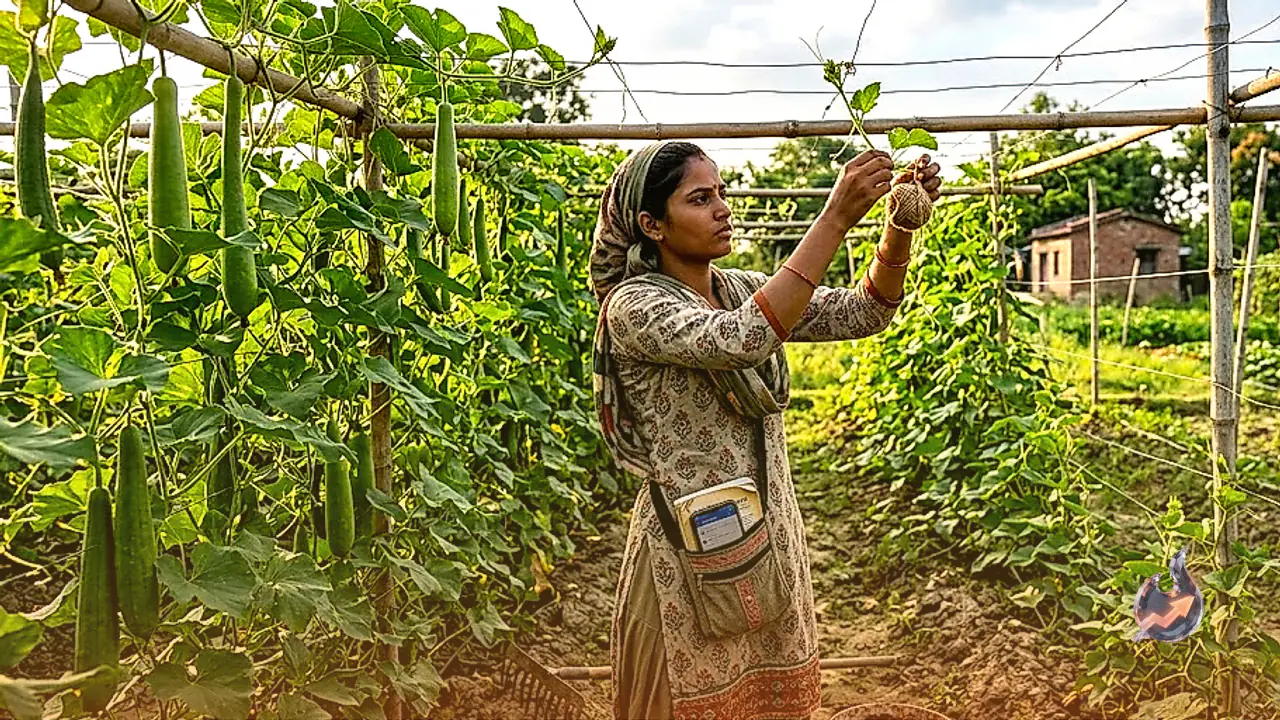
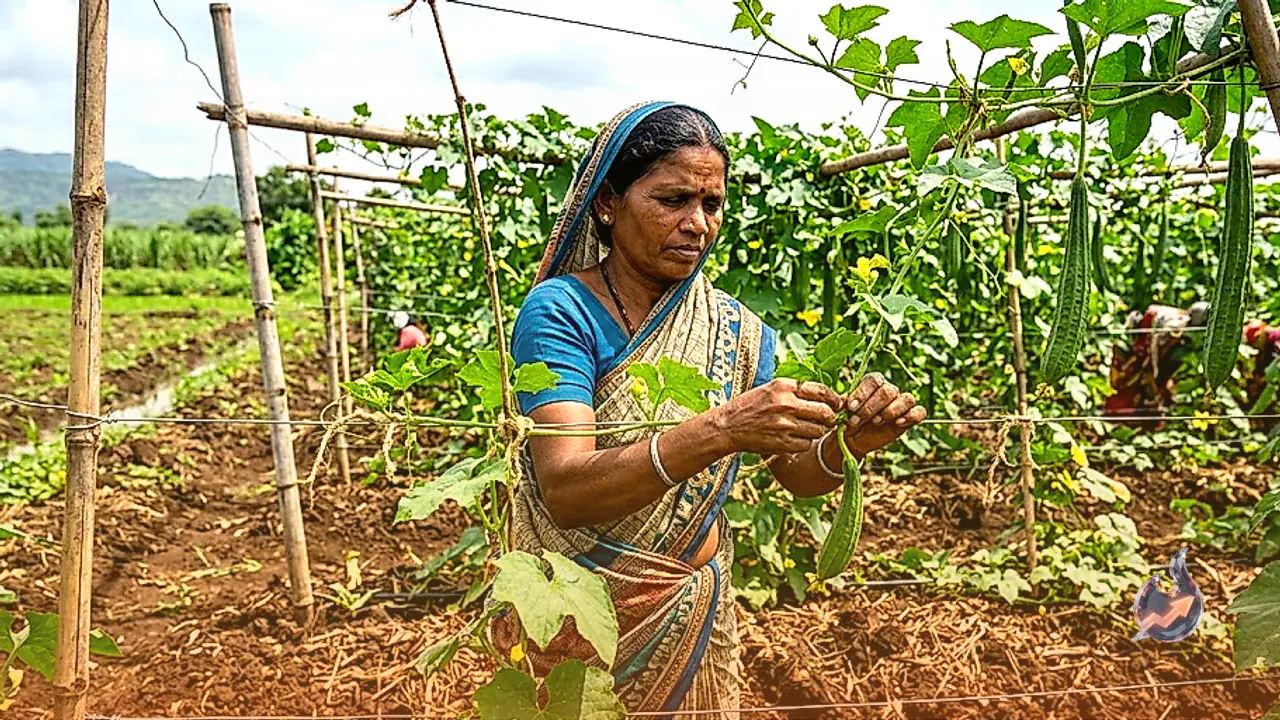
Allowing ridge gourd vines to climb structures like trellises or wooden frames, rather than spreading across the bare ground, serves as a highly effective production technique. Vines can be supported using bamboo poles, galvanized wires, or heavy-duty ropes. Elevating the crop ensures that the foliage receives adequate sunlight and airflow, boosting photosynthesis and maintaining crop health.
The central advantage of trellising lies in preventing the developing gourds from coming into contact with wet soil. Eliminating ground contact drastically reduces fruit bending and fungal rotting. Moreover, elevated gourds achieve uniform color, shape, and texture, which significantly improves their market value and selling price.
Regulating Flower Ratios and Growth Promoters
Agricultural expert Prof. Ashok Kumar Singh based in Ballia points out that ridge gourd plants sometimes display an excessive number of male flowers alongside a shortage of female blossoms. This biological imbalance directly curtails fruit production, as only female flowers produce gourds. When such a trend is observed, farmers should seek guidance from qualified agricultural advisors regarding plant growth regulators.
Growth regulators like Alpha Naphthalene Acetic Acid ought to be applied strictly according to recommended dosages and crop development stages. Unsupervised chemical spraying must be strictly avoided to prevent crop damage. Applied correctly, these growth regulators promote healthy female flowering and raise yield potential.
Preventing Flower Drop and Managing Irrigation
Uncontrolled shedding of flowers poses a major hurdle for growers, leading to diminished harvests. To counter flower drop, farmers can apply a 3% Panchagavya solution or a suitable bloom booster based on professional advice. Panchagavya offers an organic method to strengthen flower retention and encourage productive setting.
Alongside flower care, balanced irrigation practices must be maintained continuously. Soil should neither dry out completely nor become waterlogged. Consistent moisture levels, combined with adequate nutrition, support smooth flowering and steady fruit expansion.
Harvesting Schedules and Disease Prevention
Timely harvesting remains vital for preserving crop value. Leaving mature gourds on the vine for too long degrades their texture and market appeal. Fields should be inspected every 2 to 3 days to pick gourds at their ideal size. Regular picking stimulates the vine to generate new flowers and fruits continuous, driving total production upward.
Growers must also protect crops from damaging pests like thrips and fruit flies through constant monitoring. Natural remedies like neem kernel extract serve well during early infestations. If chemical intervention becomes necessary, products like Malathion 50% EC should only be applied under expert instruction. Similarly, fungal diseases like powdery mildew, characterized by white powdery patches on leaves, can be controlled using Hexaconazole 5% fungicide at recommended rates. Implementing these integrated practices enables farmers to secure bumper harvests.