




















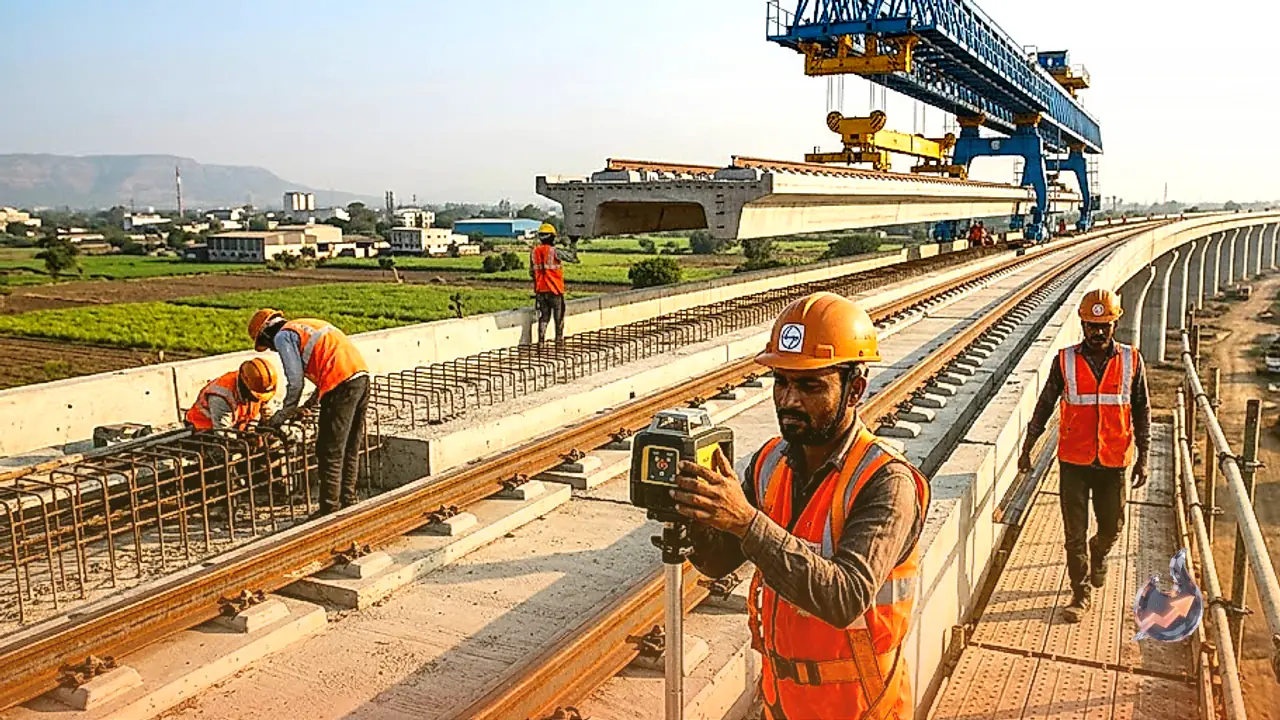

A firm operational roadmap has emerged for the initial segment of India's inaugural high-speed rail corridor. Civil construction across the critical section connecting Surat and Vapi is scheduled to wrap up by December this year. Following the completion of this infrastructure, on-track operational trials featuring locally manufactured high-speed trainsets are slated to begin between April and May next year. If all systems clear evaluations as scheduled, passenger operations along the Surat-Vapi stretch are expected to be formally inaugurated by the middle of next year.
Vehicle Integrity Evaluations and Engineering Progress
High-speed train sets currently being assembled within the country are undergoing rigorous squeeze testing. This specialized testing protocol evaluates the physical durability, structural tolerance, and stress endurance of the entire carriage shell under intense pressure. Core mechanical and digital systems have already achieved readiness, including finalized designs for the bogies, passenger coaches, propulsion units, advanced vehicle electronics, and specialized wheels. In addition, the overhead electrical pantograph mechanism has been finalized and integrated alongside modern station operational infrastructure.
Undersea Tunnel Construction Advances Between BKC and Thane
Substantial excavation momentum has simultaneously been achieved on the 21-kilometer tunnel section running between BKC in Mumbai and Thane, which includes an undersea passage. The complex engineering sequence commenced with the sinking of a massive vertical shaft akin to an elevator pit, which allowed heavy tunnel boring machines to be lowered deep underground. Initial alignment and orientation of these massive boring shields represented the project's steepest mechanical hurdle. With both tunnel boring machines now calibrated and locked into their precise directional paths, underground cutting operations are progressing rapidly.
Overcoming Pandemic Delays Toward Upcoming Commissioning
Physical execution of the high-speed rail corridor commenced in 2021, navigating multiple structural delays. The timeline initially encountered headwinds stemming from the pandemic as well as demanding technical complexities across the alignment. Engineering teams have since accelerated progress across bridge structures, viaducts, and elevated passenger terminals along the route. With critical civil and mechanical milestones falling into alignment, the operational debut of the premier high-speed service remains scheduled for next year.