





















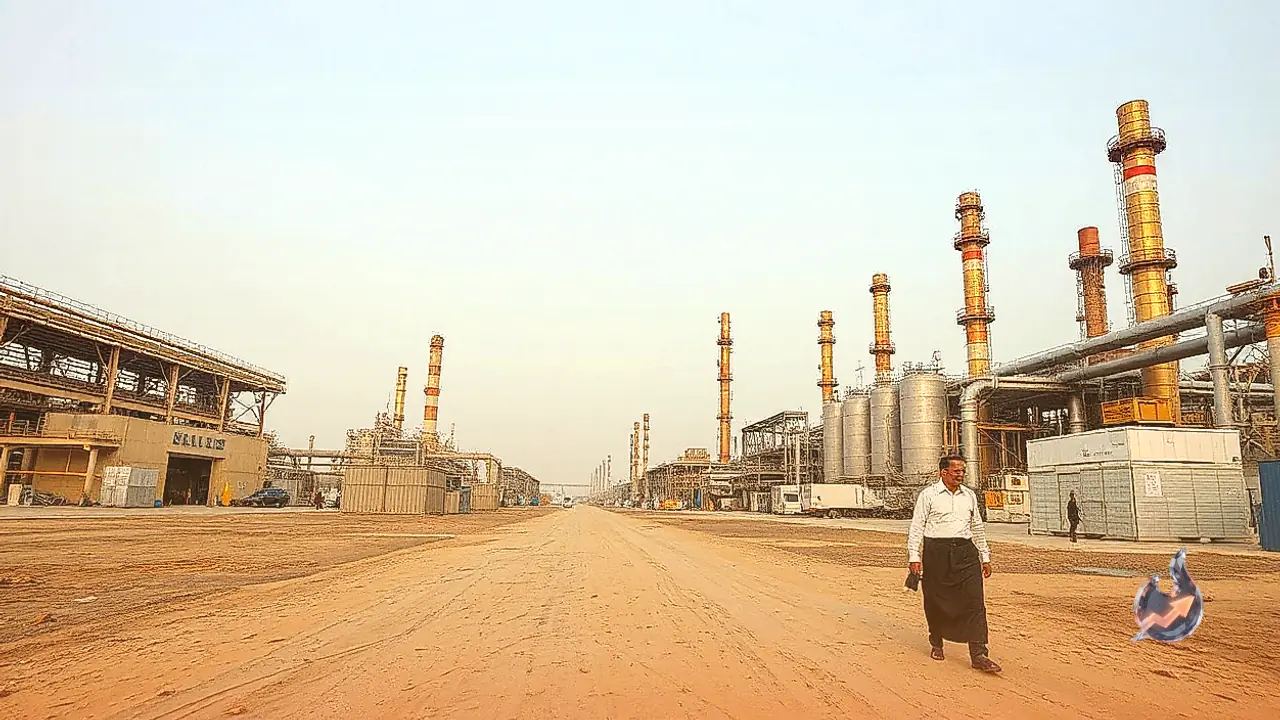

Concluding his official trip to India, United States Secretary of State Marco Rubio arrived in Jamnagar, Gujarat, to tour the extensive manufacturing complex operated by Reliance Industries. Chairman and Managing Director Mukesh Ambani alongside Executive Director Anant Ambani personally welcomed the visiting American delegation. Marco Rubio was accompanied by his wife Jeanette Dousdebes Rubio and the US Ambassador to India Sergio Gor. The delegation spent several hours reviewing the world's largest single-site petroleum refining complex, alongside Reliance's wildlife rescue facility Vantara, expanding new energy gigafactories, and ongoing data center construction sites, before departing directly for the United States.
High-Level Review of Industrial Operations and Future Technologies
Upon their arrival at the Jamnagar site, the delegation received a comprehensive briefing regarding the technological complexity, scale, and operational integration of the refining infrastructure. The discussions expanded into the energy transition space, exploring ongoing work on Reliance's green energy manufacturing hubs and high-performance computing centers. Mukesh Ambani and Anant Ambani outlined their long-term roadmap aimed at transforming Jamnagar into a global nexus for deep-tech innovation, renewable materials, and cutting-edge industrial manufacturing.
The bilateral interaction focused on key structural themes including capital investments in digital networks, long-term stability of global fuel distribution, technological exchanges, and securing critical supply lines across continents. The leadership teams evaluated emerging commercial ventures spanning traditional fossil fuels and zero-carbon technologies between Reliance and leading American enterprises. During this high-level diplomatic engagement, Akash Ambani, Managing Director of Jio Platforms, remained focused on directing structural preparations for the telecommunications and technology company's planned initial public offering.
India's Refining Strength and Global Crude Realignment
A day prior to his arrival in Gujarat, Rubio publicly recognized India as a pivotal superpower in petroleum processing. The US Secretary of State emphasized that international energy security would benefit significantly if Indian refiners increased their uptake of crude oil from Venezuela while expanding their intake of American energy commodities. Washington seeks to encourage Indian facilities to process heavier volumes originating from the Western Hemisphere, thereby strengthening regional liquidity and diversifying crude supplies away from volatile supply corridors.
The Jamnagar refining hub possesses an enormous daily processing capacity of approximately 1.4 million barrels of crude oil. Through its integrated processing units, the complex supplies crucial volumes of refined automotive fuels, diesel, and petrochemical feedstocks both for Indian consumption and for vital export channels worldwide. The facility's operational agility allows it to process diverse and challenging grades of crude, cementing its position as an indispensable balancing force across international energy markets.
Surging American Fuel Costs and Strategic Energy Cooperation
Rubio's physical inspection of Jamnagar unfolds against an increasingly delicate political and economic backdrop in the United States ahead of approaching midterm elections. The domestic price of diesel in the United States has climbed to 6.28 dollars per gallon, generating acute operational costs for commercial freight, agriculture, and general consumer goods. Elevated energy expenses have sustained inflationary pressures, making domestic fuel affordability a primary national priority for American policymakers.
Collaborating with mega-refining facilities such as Jamnagar provides Washington with a practical mechanism to address structural supply shortages. By converting abundant global crude streams into usable distillate fuels on an unprecedented scale, large-scale refiners can help inject substantial product liquidity into international sea lanes. Such commercial cooperation serves to ease pricing pressures on refined products while enhancing trade volumes between American energy suppliers and Indian downstream infrastructure.
Strategic Footprint in Texas and Long-Term Offtake Deals
Reliance's expanding energy engagement with the United States extends beyond cross-border fuel shipments directly into domestic American processing infrastructure. The company has tied up with a planned coastal refining project situated in Brownsville, Texas, led by America First Refining. This greenfield venture has been structured to handle a daily processing capacity of 168,000 barrels of crude oil.
Specifically designed to refine light, sweet shale oil harvested from rich American domestic basins, the Brownsville facility is poised to become the first major ground-up oil refinery constructed within the United States in nearly five decades. Reliance Industries has already concluded an extensive, long-term commercial off-take contract to purchase refined petroleum output from this upcoming Texas plant, creating a tangible transatlantic bridge in downstream operations.
Bilateral Trade Progress and the Mumbai Diplomatic Engagements
Preceding the Jamnagar inspection, Rubio met with Indian External Affairs Minister S. Jaishankar in Mumbai on Tuesday for extensive bilateral deliberations. Their strategic conversation covered a wide spectrum of mutual interests, including defense procurement, supply chain security, cross-border investment, and joint ventures in critical and emerging technologies. Both governments have been actively engaged in ironing out remaining points of friction to finalize a comprehensive bilateral trade framework.
Following those exchanges, Rubio indicated that negotiating teams were down to resolving only a handful of outstanding issues before a formal accord could be reached. In parallel remarks, US President Donald Trump highlighted the momentum behind these bilateral discussions, declaring that the United States and India are exceptionally close to securing a historic trade agreement that represents a distinct and modernized upgrade over past bilateral pacts.