




















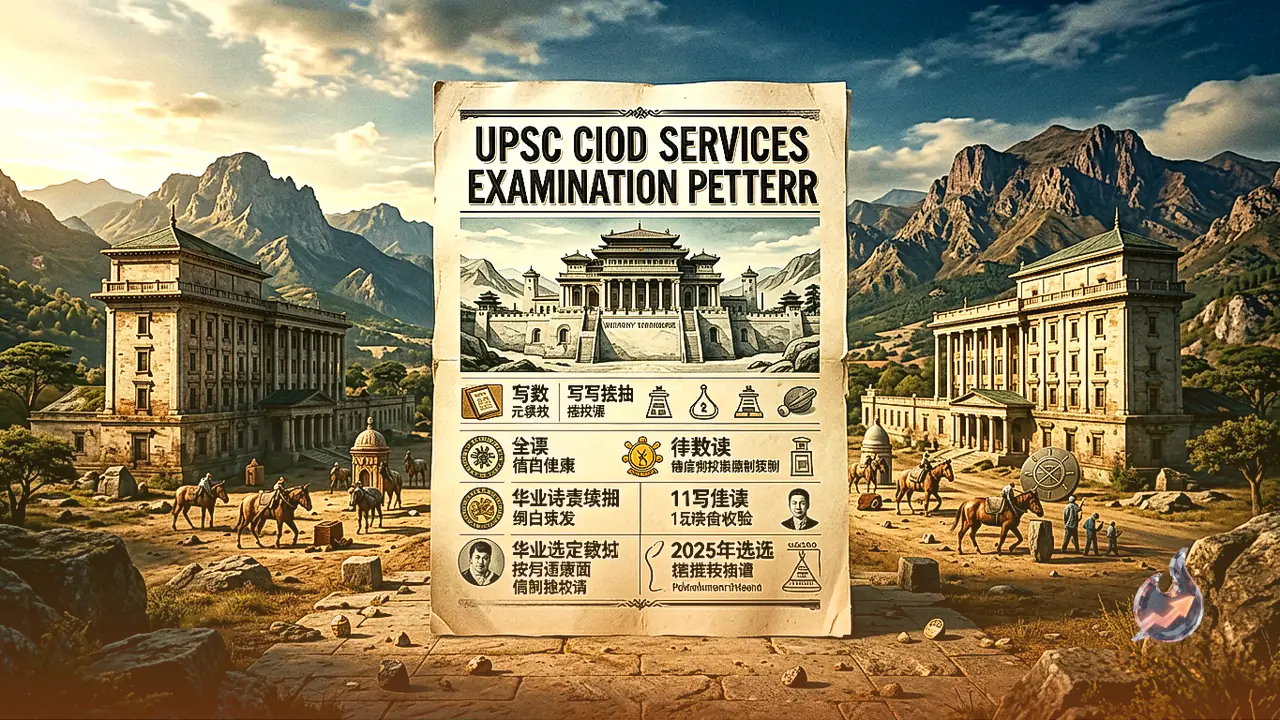

The Civil Services Examination conducted by the Union Public Service Commission (UPSC) stands as one of the most competitive and rigorous recruitment processes in India. Designed to select candidates for prestigious administrative roles such as the Indian Administrative Service (IAS), Indian Police Service (IPS), and Indian Foreign Service (IFS), navigating this exam requires a crystal clear understanding of its structural design. Aspiring candidates frequently seek clarity regarding the total number of papers they must attempt across the entire selection process and how marks are distributed between qualifying tests and final merit lists. The overall evaluation unfolds across three sequential stages: the Preliminary Examination, the Main Examination, and the Personality Test.
Stage 1: Preliminary Examination Structure and Qualifying Criteria
The journey begins with the Preliminary Examination, which serves as a screening mechanism to filter candidates for the descriptive Main Examination. Held on a single day across two separate sessions, the Prelims consists entirely of objective, multiple choice questions (MCQs) spanning two compulsory papers
- Paper 1 (General Studies / GS): This paper contains 100 questions carrying a total of 200 marks. The syllabus covers Indian history, geography, polity, economy, environmental ecology, and national and international current events. The cutoff score required to qualify for the Main Examination is calculated strictly based on the marks obtained in this General Studies Paper 1.
- Paper 2 (Civil Services Aptitude Test / CSAT): Comprising 80 questions for 200 marks, CSAT tests candidates on basic numeracy, logical reasoning, analytical capability, and reading comprehension. CSAT functions strictly as a qualifying paper. Candidates must score a minimum threshold of 33 percent, which translates to approximately 66 marks out of 200. Marks earned in CSAT are not added to the Prelims cutoff calculation.
Stage 2: Main Examination Framework and Subject-wise Breakdown
Aspirants who clear the Prelims cutoff advance to the Main Examination, a comprehensive descriptive written test designed to evaluate in-depth knowledge and analytical expression. The Main Examination comprises a total of 9 written papers divided into two distinct functional categories
1. Qualifying Language Papers (2 Papers):
The first segment of the Mains features two compulsory language tests. Paper A allows candidates to choose any one Indian language included in the Eighth Schedule of the Constitution (such as Hindi). Paper B assesses proficiency in the English language. Both language papers carry 300 marks each. Aspirants must secure a minimum of 25 percent marks in both papers to qualify. Scores from these language papers are excluded from the final merit rank, but passing them is mandatory for evaluating the remaining Mains answer sheets.
2. Merit-Ranking Papers (7 Papers, 250 Marks Each):
The candidate's core written performance is evaluated through 7 merit-ranking papers, each allocated 250 marks, bringing the written merit total to 1750 marks
- Essay Paper: Candidates are required to write two comprehensive essays on topics selected from given prompts, evaluated out of 250 marks.
- General Studies Paper 1 (GS Paper 1): Covers Indian heritage, culture, world history, physical geography, and Indian societal dynamics for 250 marks.
- General Studies Paper 2 (GS Paper 2): Evaluates knowledge of governance, the Constitution of India, polity, social justice initiatives, and international relations for 250 marks.
- General Studies Paper 3 (GS Paper 3): Focuses on the Indian economy, science and technology, environmental protection, biodiversity, and internal security management for 250 marks.
- General Studies Paper 4 (GS Paper 4): Assesses ethical reasoning, moral integrity, and administrative aptitude for 250 marks.
- Optional Subject Papers: Candidates choose one optional subject from the prescribed list, which is tested across two separate papers (Optional Paper 1 and Optional Paper 2), each carrying 250 marks.
Stage 3: Personality Test and Final Evaluation
Candidates who secure sufficient marks across the 1750-mark written Mains papers earn an invitation to the final stage, the Personality Test or Interview round, which carries 275 marks. Unlike the written papers, this phase assesses candidate personality, intellectual alertness, critical thinking, leadership potential, and balance of judgment rather than sheer academic memory. The interview panel frequently draws questions from the candidate's Detailed Application Form (DAF), probing details regarding academic background, home state, hobbies, and personal perspectives.
Final Merit Calculation and Rank Determination
Understanding the final arithmetic of the Civil Services Examination requires distinguishing between the total written papers attempted and the marks counted for ranking. In total, candidates sit for 11 written examinations throughout the process (2 during Prelims and 9 during Mains). However, final merit ranks and service allocations (such as IAS, IPS, or IFS) are determined strictly out of a total score of 2025 marks. This aggregate combines the 1750 marks from the 7 Mains merit papers with the 275 marks from the Personality Test, aligning final ranks with service preferences submitted by candidates.