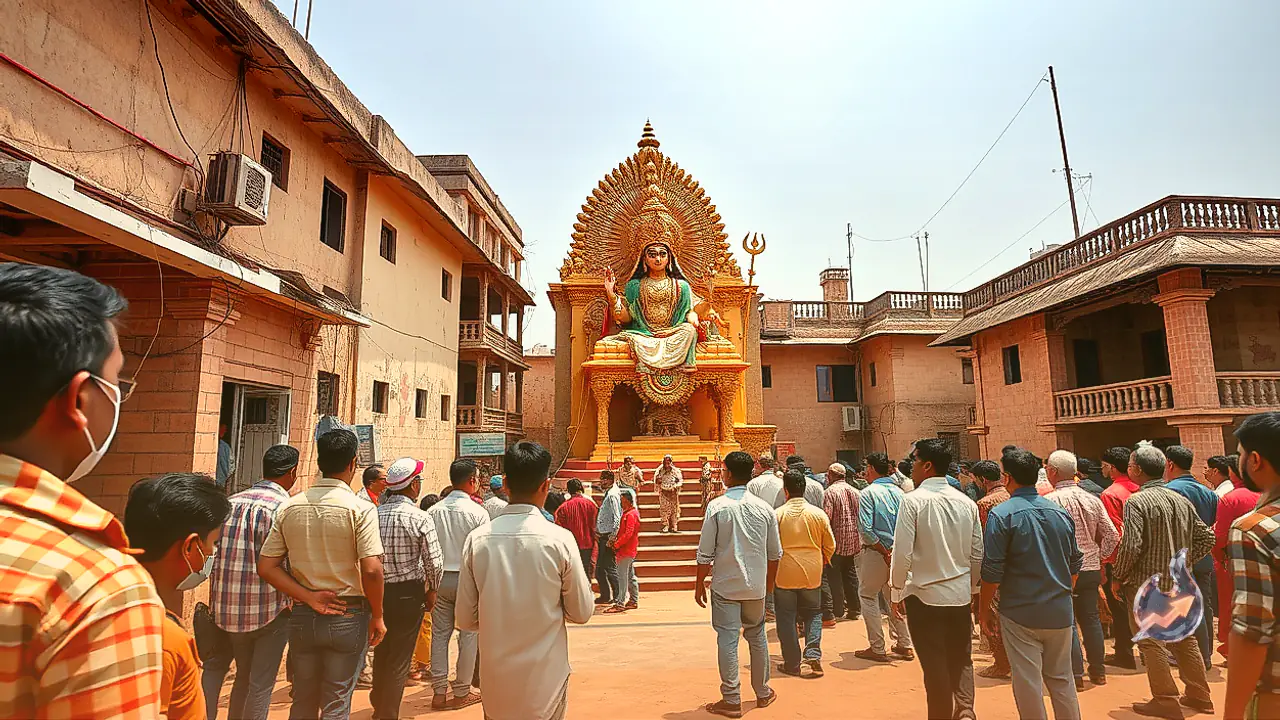



















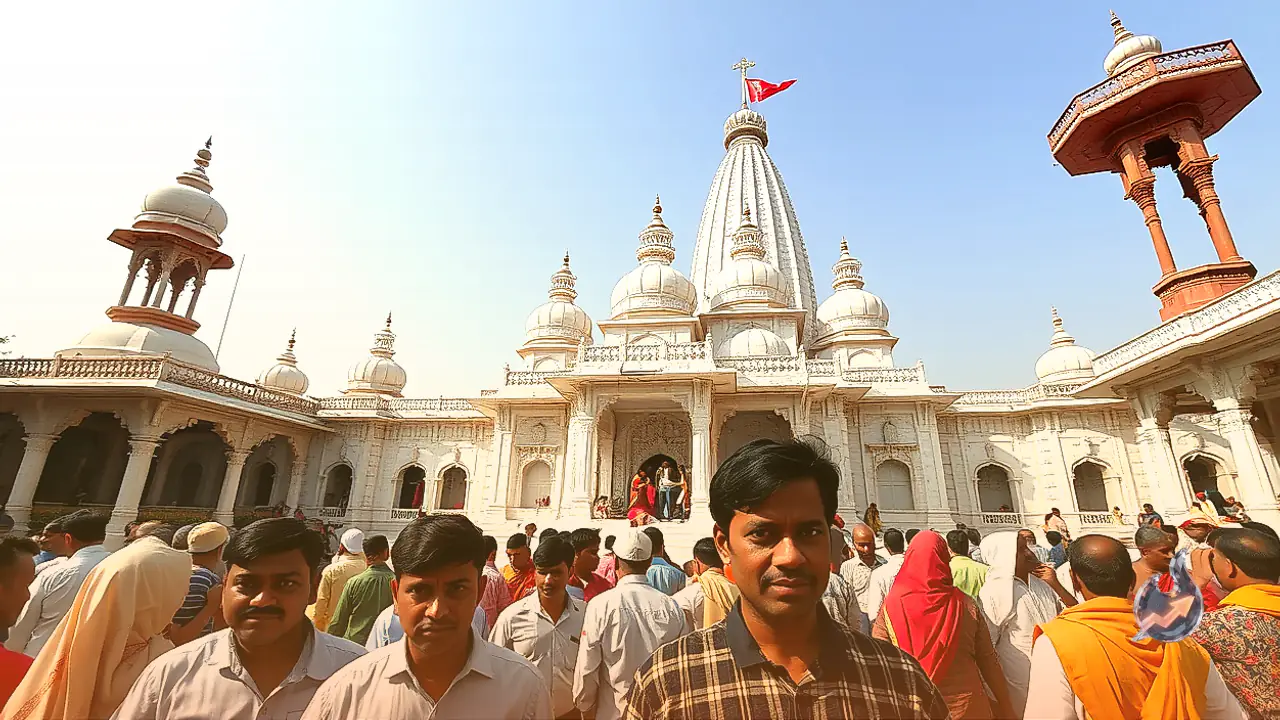

A grand religious and architectural landmark is rapidly taking shape at Kharnal in the Nagaur district of Rajasthan, the revered birthplace of folk deity Veer Tejaji Maharaj. The ambitious undertaking has captured nationwide interest among devotees and architecture enthusiasts due to its rare craftsmanship, time-tested engineering practices, and exclusive use of materials. Built with an estimated outlay of approximately 200 crore rupees, the shrine stands out because no secondary stone or composite slab is being introduced into the structure. The entire sanctuary is being erected exclusively with world-famous pure white Makrana marble, lending an exquisite radiance and timeless resilience to the sprawling complex.
Ramzan, Master Artisan of Ayodhya Sanctum, Leads Stone Carving
The intricate stonework and artistic execution of the sacred project are being guided by seasoned craftsmen. Ramzan, a renowned master sculptor from Makrana celebrated for his distinguished work on the sanctum sanctorum of the Ram Temple in Ayodhya, is heading the carving and stone-dressing operations as chief artisan. Under his direct watch, every slab is being cut and sculpted with remarkable precision. Construction milestones reveal that roughly 35 to 40 percent of the total project has been executed so far. With the foundation and primary lower framework firmly in place, work is now set to advance rapidly toward the expansive upper domes and elevated tiers of the complex.
Foundation Depth and Mortar-Free Metal Interlocking Technique
Engineered to endure for centuries, the temple rests upon a massive 32-foot-deep foundation designed to bear immense stone loads. Approximately 25 feet of this foundational base sits completely underground, while 7 feet rises above surface grade to form a sturdy plinth. Rising directly from this base, the primary framework has already reached a height of about 20 feet. The defining characteristic of the building methodology is the total absence of cement, sand, or conventional mortar. Drawing upon traditional Indian monumental masonry, large blocks of Makrana marble are secured to one another through an interlocking system reinforced with heavy strips of copper and brass, providing structural stability against ground shifts and weathering.
108-Foot Height and an Array of 306 Sculpted Pillars
According to the project design, the three-storey primary temple is planned to achieve a pinnacle height of around 108 feet, crowned by an imposing spire that will be visible across substantial distances. The sprawling halls will be supported by a total of 306 intricately carved stone pillars. To maintain strict artistic standards, a dedicated sculpting workshop has been organized in Makrana, where nearly 100 skilled artisans work under Ramzan's guidance to prepare and carve raw blocks. Concurrently, a specialized crew of 15 to 20 craftsmen operates at the Kharnal site, assembling the sculpted components and securing the metal joints. To date, around 17,000 to 18,000 cubic feet of finished marble has arrived in Kharnal, against an estimated overall requirement of roughly 100,000 cubic feet to bring the complete shrine to fruition.
Architectural Elements Drawn from Somnath, Sanwariya Seth, and Ayodhya
The visual identity of the Kharnal temple incorporates distinctive traits from several iconic religious monuments across India. The layout and sanctum sanctorum draw inspiration from the grand Somnath temple, while the vertical profile and spire reflect the ornate silhouette seen at the Sanwariya Seth temple. Visitors approaching the main entrance will observe design motifs echoing the grand gateway of the Ayodhya Ram temple. In addition, the 306 pillars feature detailed carvings in the classical South Indian Dravidian tradition, chronicling pivotal episodes, miraculous events, and tales of sacrifice from the life of Veer Tejaji Maharaj.
99 Percent Calcium Composition Prevents Discoloration Over Decades
Chief sculptor Ramzan emphasized that the Makrana marble selected for this project possesses an exceptional level of mineral purity. The high-grade stone contains nearly 99 percent calcium, with iron content reduced to virtually negligible traces. The lack of iron elements prevents the marble from oxidizing and developing the yellowish tint commonly seen in lesser stones exposed to air and moisture. Furthermore, continued washing, maintenance, and natural surface wear over decades are expected to polish the calcium crystals, enhancing the marble's natural gleam rather than causing dullness. Upon completion, the shrine at Kharnal is poised to stand as a singular synthesis of devotional reverence and monumental craftsmanship.