























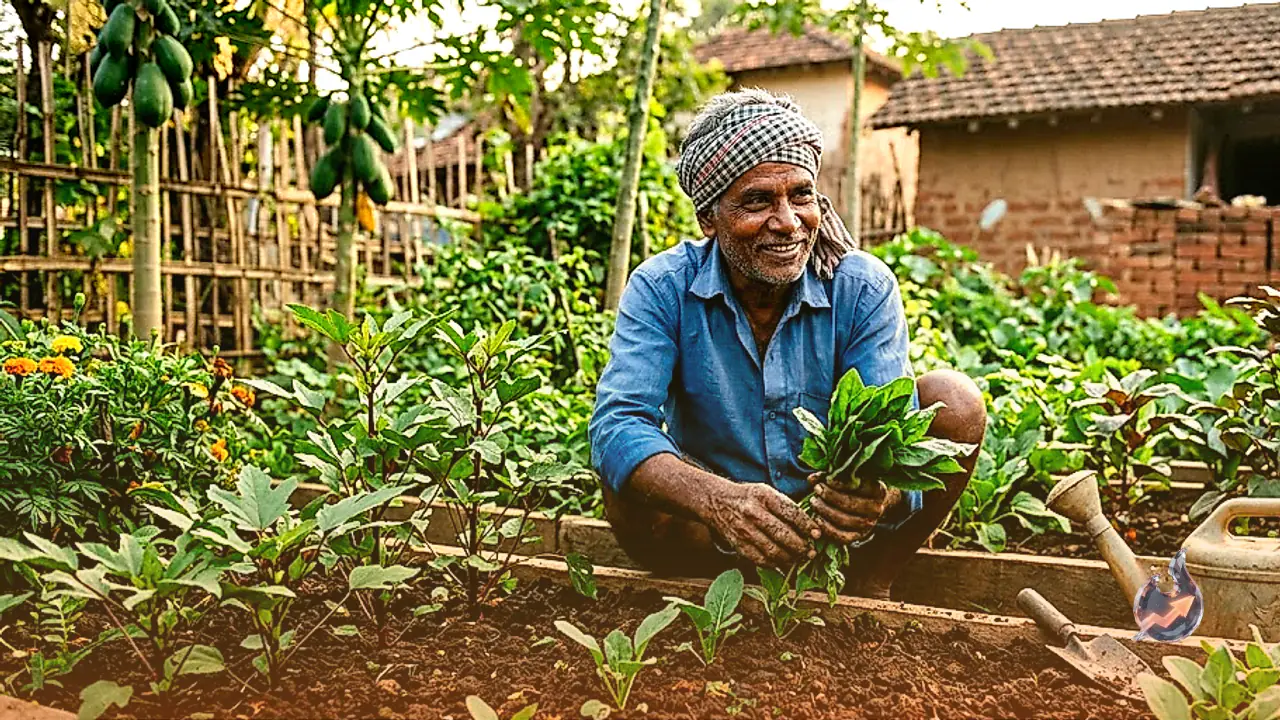

Cultivating native leafy greens at home offers a fresh, chemical-free dietary option, and Bastar’s regional specialty Khatta Bhaji is turning out to be an ideal choice for home gardeners. Chaitan Kashyap, a local resident of Bastar, has successfully cultivated this popular sour leafy vegetable right inside his own kitchen garden. According to Kashyap, the entire gardening process is straightforward enough for anyone to replicate in a backyard plot or even within standard balcony containers.
Soil Preparation and the Sowing Routine
Setting up the planting bed requires basic garden tools and minimal labor. Chaitan Kashyap explains that the ground must first be worked and loosened thoroughly using a spade before the seeds are introduced. Once the soil bed is smooth and ready, the seeds are dispersed evenly across the plot. A top layer of cow dung manure is immediately spread over the scattered seeds to preserve moisture and supply organic nutrients. With proper routine watering and care, the seeds reliably begin germinating just one week after sowing.
Organic Cultivation on a Shoestring Budget of 100 to 150 Rupees
One of the strongest arguments for planting this native green is its minimal financial overhead. Kashyap estimates the overall startup expenses to be somewhere between 100 and 150 rupees. The entire growth cycle relies completely on organic inputs, depending almost solely on farmyard cow manure rather than synthetic fertilizers. This low-cost approach makes homegrown cultivation accessible without relying on expensive commercial plant feeds or specialized supplies.
Disease Resilience and an Extended Five-Month Cropping Season
The crop displays strong natural resistance against widespread garden pests, making routine upkeep uncomplicated for everyday growers. While major disease outbreaks remain uncommon, Kashyap points out that if perforated foliage develops, an appropriate pesticide spray can be applied to protect the plant. The foliage matures quickly, becoming ready for the kitchen table within 30 days or roughly one month from seed planting. Following the first harvest, the plant continues to produce edible greens consistently for four to five months. The rare mix of low setup investment, effortless plant care, and an elongated harvesting timeline makes it exceptionally practical for residential horticulture.