


















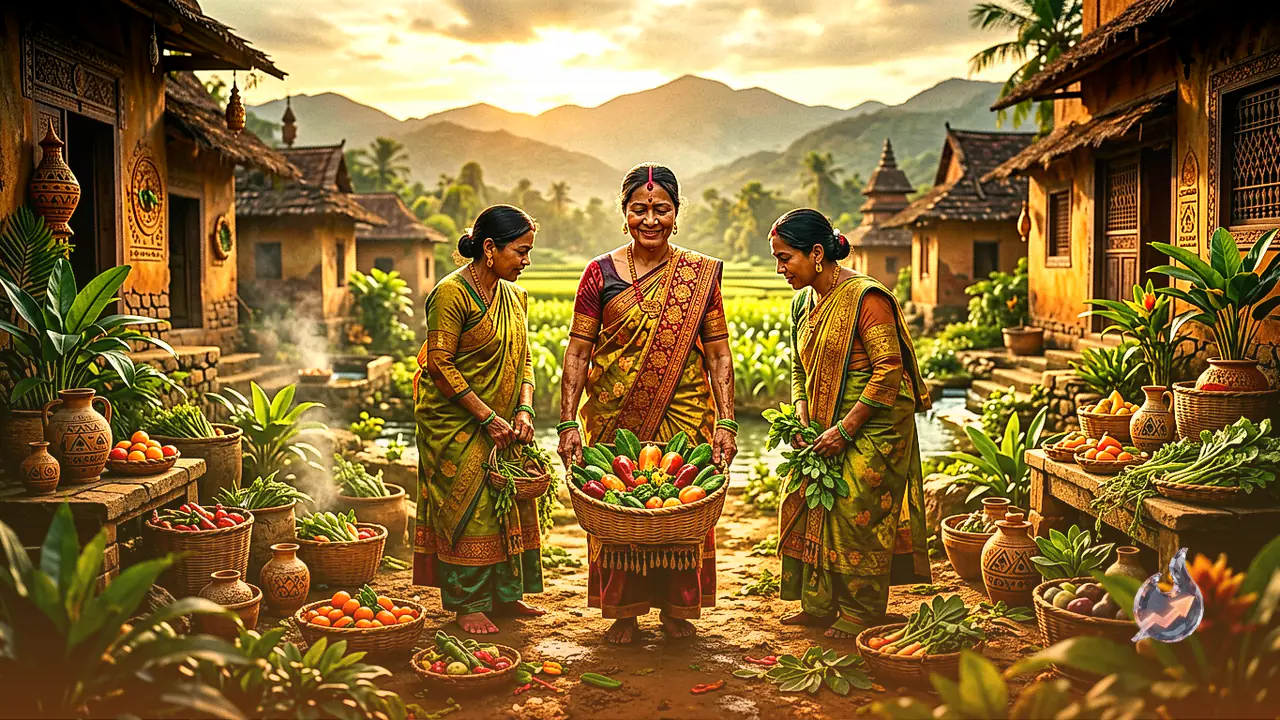

The state of Chhattisgarh, popularly referred to as the rice bowl of India, shares an intimate bond between its local culture, agricultural lifestyle, and natural environment. Festivals in this region carry a unique identity deeply rooted in rural traditions and farming practices. Among these prominent folk celebrations is Kamarchhat, also known across various regions as Halchhat, Halshashthi, or Harchhat. Observed on the Shashthi tithi of the Krishna Paksha in the month of Bhadrapada, this festival features mothers observing a rigorous fast for the health, long life, and prosperity of their children. Far beyond a mere religious ritual, Kamarchhat integrates maternal devotion with water conservation, environmental ethics, and traditional ecological knowledge. Senior writer and former chairman of the Chhattisgarh Rajbhasha Commission, Dr. Vinay Pathak, provided detailed insights into the history, legends, rituals, and scientific significance of this unique festival.
Agricultural Roots and Connection to Lord Balarama
In an agrarian nation like India, agricultural practices and animal husbandry form the backbone of rural society. In Chhattisgarh, festivals celebrating farming tools and livestock hold paramount cultural importance alongside events like Hareli and Bahula Chauth. Kamarchhat is traditionally dedicated to Lord Balarama, the elder brother of Lord Krishna, who is worshipped as Haldhara. His primary weapon was the plough, an instrument that symbolised agricultural prosperity and sustenance. Consequently, the festival pays reverence to the plough and the agrarian way of life. Alongside Lord Balarama, Goddess Shashthi, also known locally as Chhathi Devi, is worshipped as the divine protector and guardian of children.
The Legend of the Milkmaid and Moral Lessons
Several folk narratives are linked with the celebration of Kamarchhat, with the tale of a milkmaid being central to the tradition. As explained by Dr. Vinay Pathak, the narrative revolves around a Gwalin who sustained her family by selling cow's milk. Due to an incident involving truth and dishonesty, her child met an untimely demise. Devastated by the loss, the milkmaid realized her lapse, repented deeply, and performed dedicated prayers to Goddess Shashthi. Impressed by her sincere penance and devotion, the deity restored the child to life. This folk story continues to impart strong moral lessons regarding truthfulness, righteous conduct, and divine grace within the community.
Morning Mahua Rituals and Creation of the Sagari
On the day of Kamarchhat, fasting women initiate their morning routine by cleansing their teeth using twigs from the Mahua tree. This practice highlights the historical dependence of rural Chhattisgarhi households on native botanical species. Following morning cleansings, women gather in community groups to prepare for the main worship. A central tradition of Kamarchhat involves building a mini reservoir called a Sagari. Participants dig a small pit in the ground, fill it with water, and plant various native flora around its perimeter, including Ber, Palash (known locally as Parsa), and flowering stems of Kans grass. The ritual worship of the Sagari and surrounding vegetation represents deep reverence for forests, biodiversity, and natural water bodies.
Hydrological Predictions and Environmental Wisdom
The construction of the Sagari holds significant traditional value regarding weather forecasting and water table assessment. Local beliefs hold that the water retention of the Sagari throughout the day offers clues about seasonal groundwater levels. If the water inside the Sagari remains stable and does not dry up during the rituals, it is interpreted as a positive indicator of healthy water levels and adequate rainfall for agricultural crops. Conversely, a rapid depletion of water is seen as a sign of potential water scarcity and impending challenges for seasonal yields. This custom illustrates how traditional festivals embedded environmental monitoring within spiritual practices.
The Putka Ritual for Child Protection
After completing the Sagari worship, mothers perform a specific ritual directly aimed at blessing their children. Using a traditional white clay known locally as Chhui, women wrap the clay in a piece of cloth and moisten it with water to form a small stamp called a Putka. This wet clay mark is then applied onto the backs of their children. The practice is believed to bestow physical strength, robust health, and longevity upon the offspring while invoking protective blessings. The gesture underscores the deep maternal affection that anchors the entire day's observances.
Preserving Cultural Heritage in Modern Times
Even amid modern lifestyles, the observance of Kamarchhat remains vibrant across both rural and urban areas of Chhattisgarh, including Bilaspur. Women continue to follow every step of the fasting regimen and ritual offerings with complete devotion. Dr. Vinay Pathak noted that the festival harmoniously combines spiritual faith with cultural preservation and environmental consciousness. By bringing together motherhood, farming traditions, water conservation, and forest worship, Kamarchhat endures as a vital festival that keeps the rich cultural lineage of Chhattisgarh alive for generations to come.