






















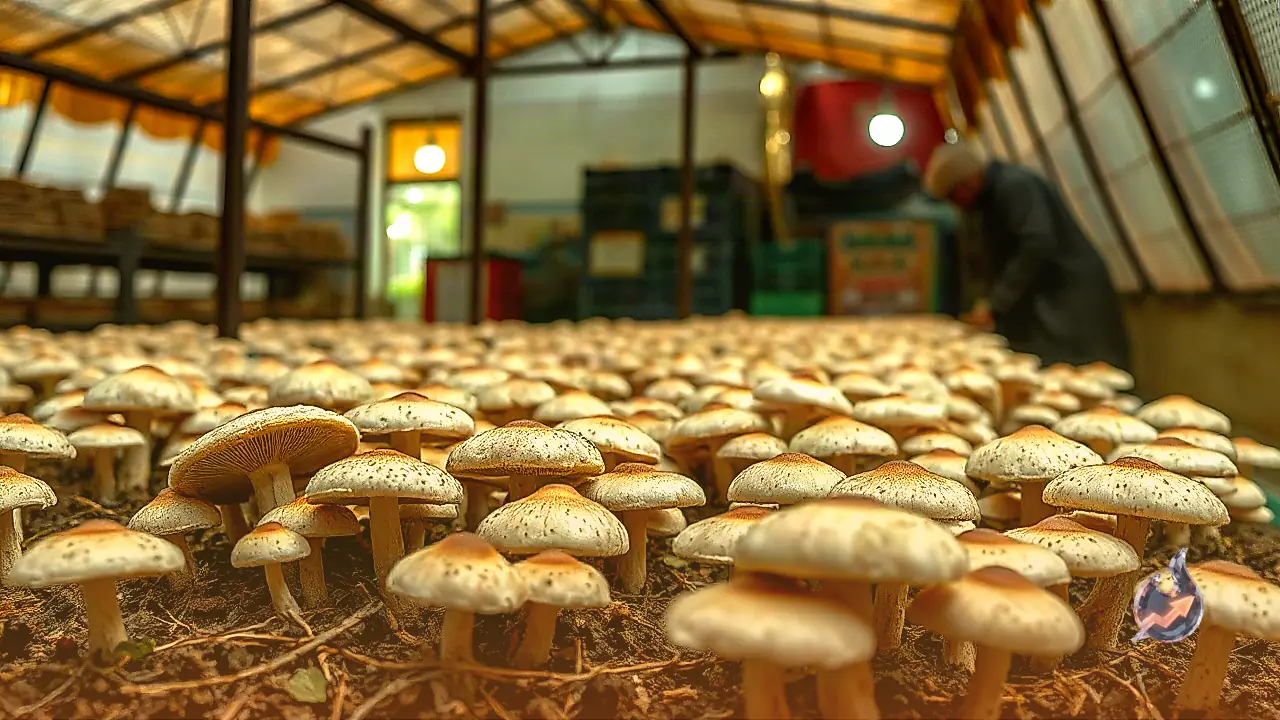

With the changing weather across the Surguja district of Chhattisgarh, farming communities are discovering highly profitable agricultural alternatives beyond conventional crop cycles. Button mushroom cultivation has emerged as an attractive enterprise that growers can initiate by preparing compost right away for early October planting. The venture does not demand massive financial outlays or sophisticated climate-controlled facilities. Any farmer or home-based entrepreneur can produce fresh mushrooms inside an ordinary small room without using an air conditioner. Agricultural specialists point out that following a few essential management practices ensures a seamless harvest and handsome profits.
Compost Preparation Timelines and Weather Advantage
According to agriculture expert Dr Veer Singh, the present period is ideal for growers to assemble and decompose their compost mixtures. The entire composting process takes approximately one full month to mature. Once the nutritional bed is ready, farmers can begin spawning the mushroom seeds during October or November. Ambikapur and its neighbouring geographical tracts experience a cool seasonal climate that naturally suits the environmental requirements of button mushrooms. Because the natural conditions remain cool and stable, growers can execute the operation using ordinary household setups without needing air conditioning during the initial cultivation phases.
Essential Ingredients for Quality Compost
Achieving healthy mushroom flushes relies directly on the nutritional balance of the prepared substrate. Cultivators need clean straw made of wheat or paddy, along with wheat bran, urea, gypsum, and calcium ammonium nitrate. Once these components are thoroughly mixed and piled into heaps, regular turning becomes indispensable. Dr Veer Singh notes that workers must turn the composting pile every two to three days. This routine aeration ensures uniform decomposition, breaks down the raw fibres, and converts the raw inputs into a balanced, nutrient-rich growing base.
Spawning Techniques and Space-Saving Vertical Racks
After nearly a month of careful decomposition, the compost is ready for spawning, which is the process of mixing mushroom mycelium seeds into the substrate. Farmers operating in constrained spaces can install vertical bamboo or wooden racks to optimise their room capacity. Alternatively, growers can pack the spawned compost inside plastic bags measuring roughly 18/24 inches. Utilising these durable polybags and layered shelving arrangements enables growers to maximise production density even within a compact residential space, keeping operational costs exceptionally low.
Production Economics and Cost of Three Quintals of Compost
Dr Veer Singh explains that formulating compost for button mushrooms tends to involve slightly higher expenses than substrates used for other mushroom varieties. Preparing about three quintals of compost demands an initial investment ranging between 3000 and 4000 rupees. Nevertheless, this expenditure is swiftly offset by the robust market prices and consistent customer appetite that button mushrooms command throughout the year, offering cultivators reliable and handsome profit margins.
Commercial Channels from Local Dairies to Wedding Banquets
Producers benefit from flourishing marketing avenues situated directly within their immediate locality. Retail buyers frequently purchase a 200-gram packet for around 50 rupees across regional markets. Cultivators can readily distribute their output through neighbourhood dairies, grocery stores, vegetable outlets, and local hotels or restaurants. Furthermore, demand surges considerably during weddings, birthday gatherings, and festive catering events, establishing a stable commercial ecosystem for growers throughout the cooler months.
Crucial Standards for Substrate Quality and Moisture Balance
The overall yield and commercial viability of a mushroom unit hinge fundamentally on the hygiene and structure of the compost bed. Farmers must source clean, premium straw that is completely free from rotting debris or contamination. It is equally essential to build a compost heap of sufficient volume; a pile that is too small cannot generate the internal heat necessary to drive proper thermal decomposition. Once finished, the compost must maintain a moisture content between 30 and 40 percent, display a rich brown hue, and stay completely devoid of sharp ammonia gas odours. Diligent turning throughout the rotting phase ensures that foul gases escape while aerobic decomposition proceeds smoothly.